A Map Is a Folded Sequence, Not a Flat Sheet
A pocket tourist map is usually folded in two directions: one set of folds makes long accordion-like panels, and another set folds those panels into a compact packet. The creases alternate between folds that rise toward you and folds that tuck away. Together, they form a three-dimensional pattern—not just a grid of lines.
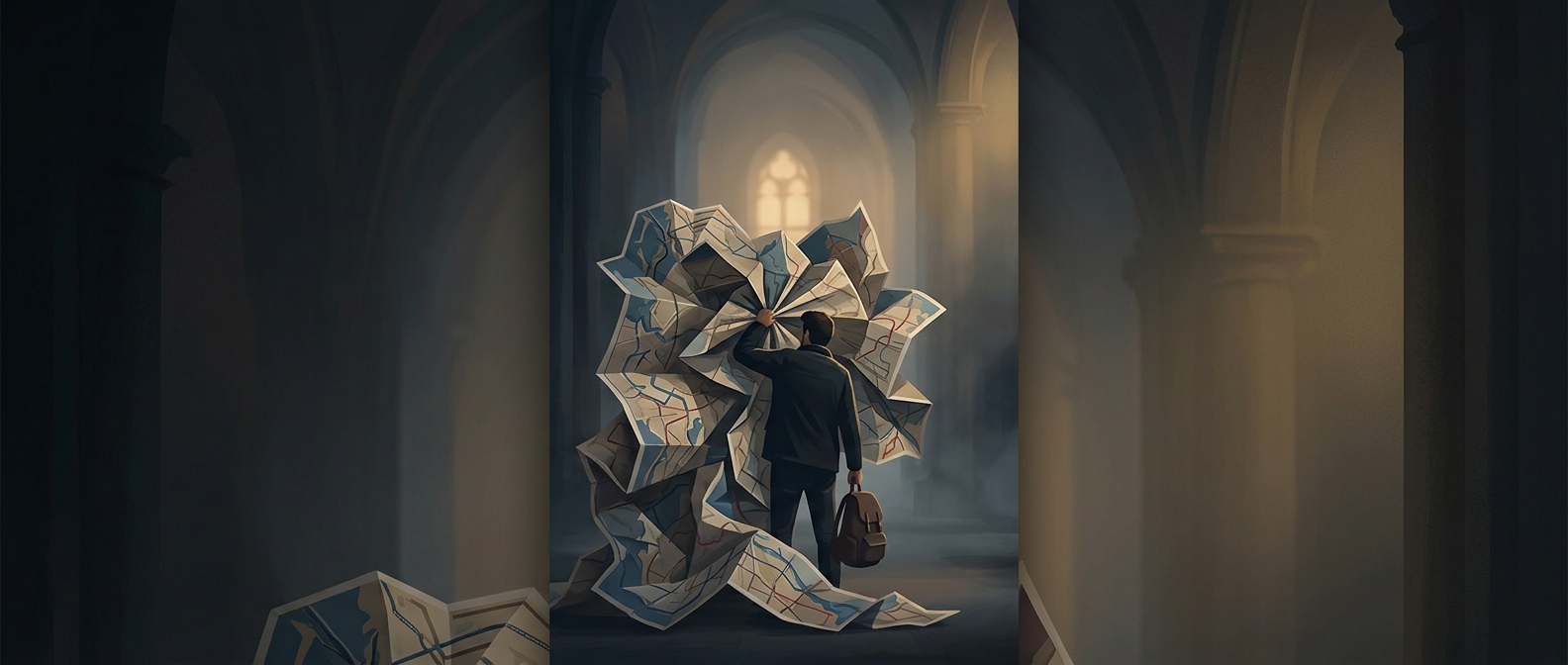
When you open the map all the way, its panels spread out and the fold pattern becomes harder to manage. If you start folding at the wrong crease, one panel may buckle against another, or the map may seem to have an extra flap that will not lie flat. The glossy coating can make the paper slide, while the old creases still encourage it to bend in their original directions.
Rebuild the Pattern One Direction at a Time
The easiest approach is to avoid forcing the whole sheet at once. Find the main parallel creases and bring them back into an accordion, alternating the folds so the panels stack neatly. Then fold that strip along the crosswise creases. If the map resists, flatten it and check which way each crease originally bent; pressing harder usually makes a misplaced fold worse.
This is why a map can be simple to open but awkward to restore: opening only requires pulling panels apart, while closing requires coordinating several folds in the right order. A small misalignment at one crease can shift every panel that follows. In a crowded station or beside a road, the practical trick is to keep the map partly folded and expose only the area you need—then there is less paper, and less folding pattern, to wrestle back into your bag.