Before Capcom made games, it made the machines that carried them
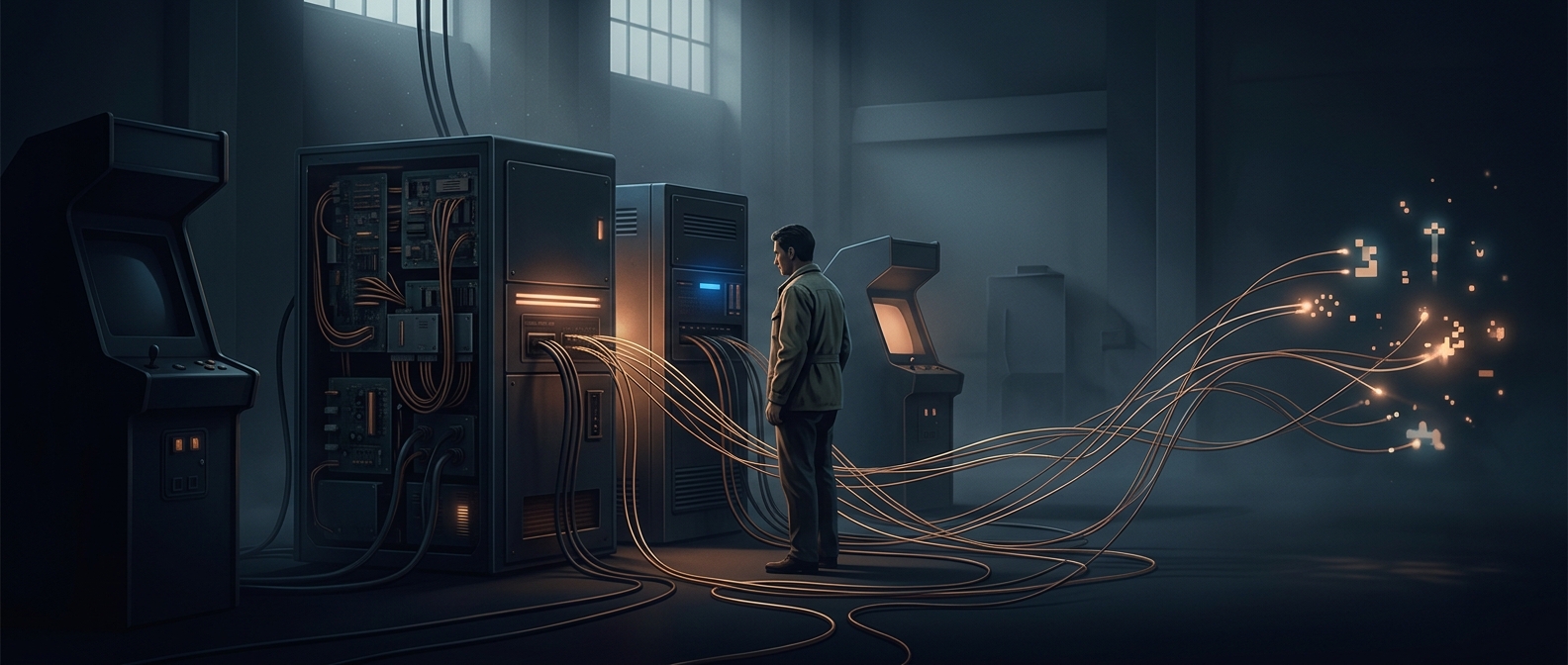
Capcom’s early business was in electronic game machines—the physical equipment installed in amusement venues—not the famous game software people would later associate with the company. That put it on the hardware side of the arcade business: its products had to function as machines that venues could operate, rather than simply as titles players could recognize by name.
The distinction matters because an arcade game is part of a larger setup. A venue needs equipment on the floor; players use it there, often by inserting coins. Making those machines meant working in the commercial world around play, where a game had to exist as a usable piece of equipment, not just an idea on a screen.
From arcade equipment to arcade identity
Capcom’s later reputation for fighting games and tournaments can make its beginning seem inevitable, but the company’s early work was a different kind of business. Manufacturing machines placed it close to the venues where arcade games were played, while its later fame came from the software and competition built around those games.
That shift is the striking part of Capcom’s origin: the company first helped put electronic games into commercial spaces, before becoming known for the games themselves.