Why a cable can make a mouse feel heavy
A wired mouse does not need much force to move, but its cable can catch on a desk edge, brush against objects, or bunch up behind the mouse. Each small snag adds resistance at an unpredictable moment. That can make the cursor feel less responsive even when the mouse itself glides smoothly.
How the anchor changes the pull
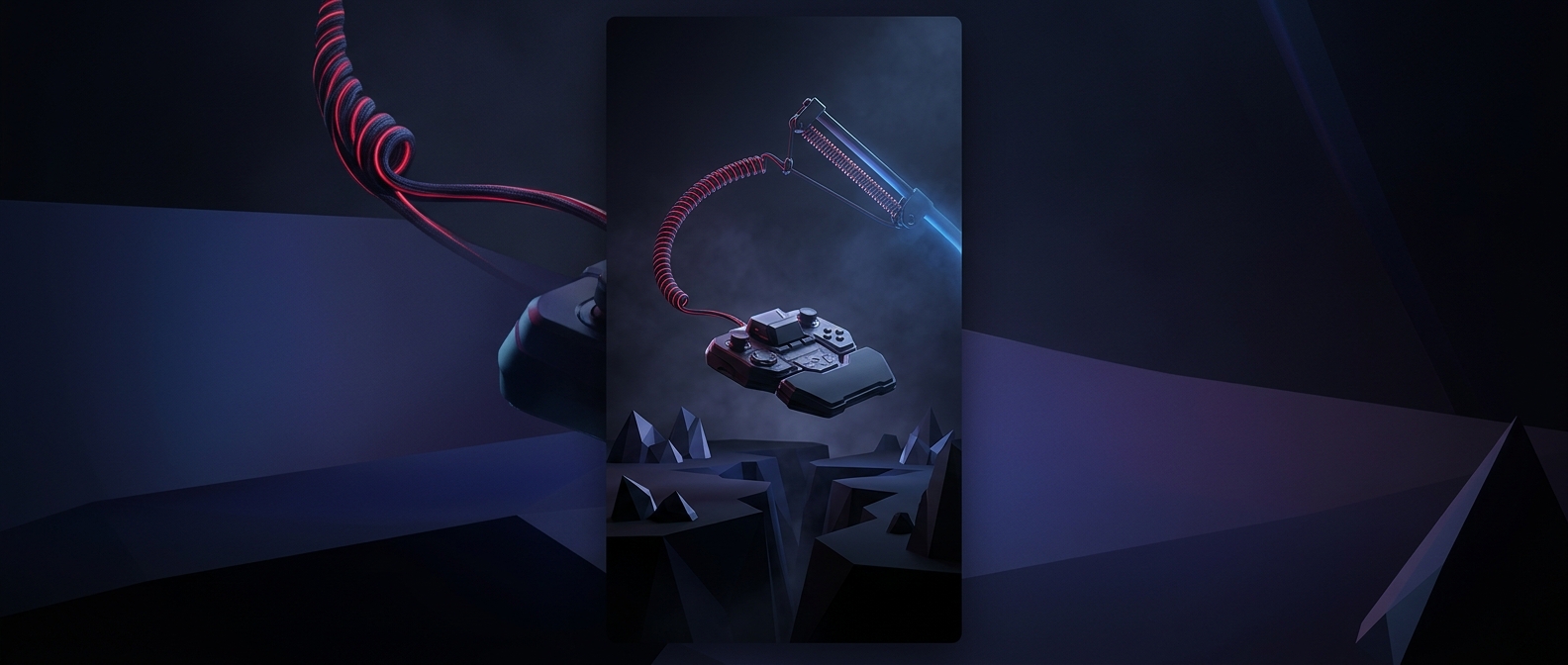
A mouse bungee holds part of the cable in a raised, flexible arm. As the mouse moves, the arm bends and releases cable rather than letting the full length trail across the desk. The cable still pulls on the mouse, but the arm helps keep that pull steadier and reduces contact with the desk surface.
The spring-loaded support also manages slack: enough cable can extend for movement, while extra length stays gathered near the anchor instead of looping around the mouse or catching on nearby objects. Its position matters; placed too close, it may tug sharply, while placed too far away, more cable can still drag across the desk.
A small fix with a practical limit
The device does not make a wired mouse wireless or remove every source of resistance. It simply controls where the cable bends and rests. For someone who moves a mouse quickly or has a crowded desk, that can make movement feel more consistent—and keep the cable from repeatedly scraping or snagging on the same edge.