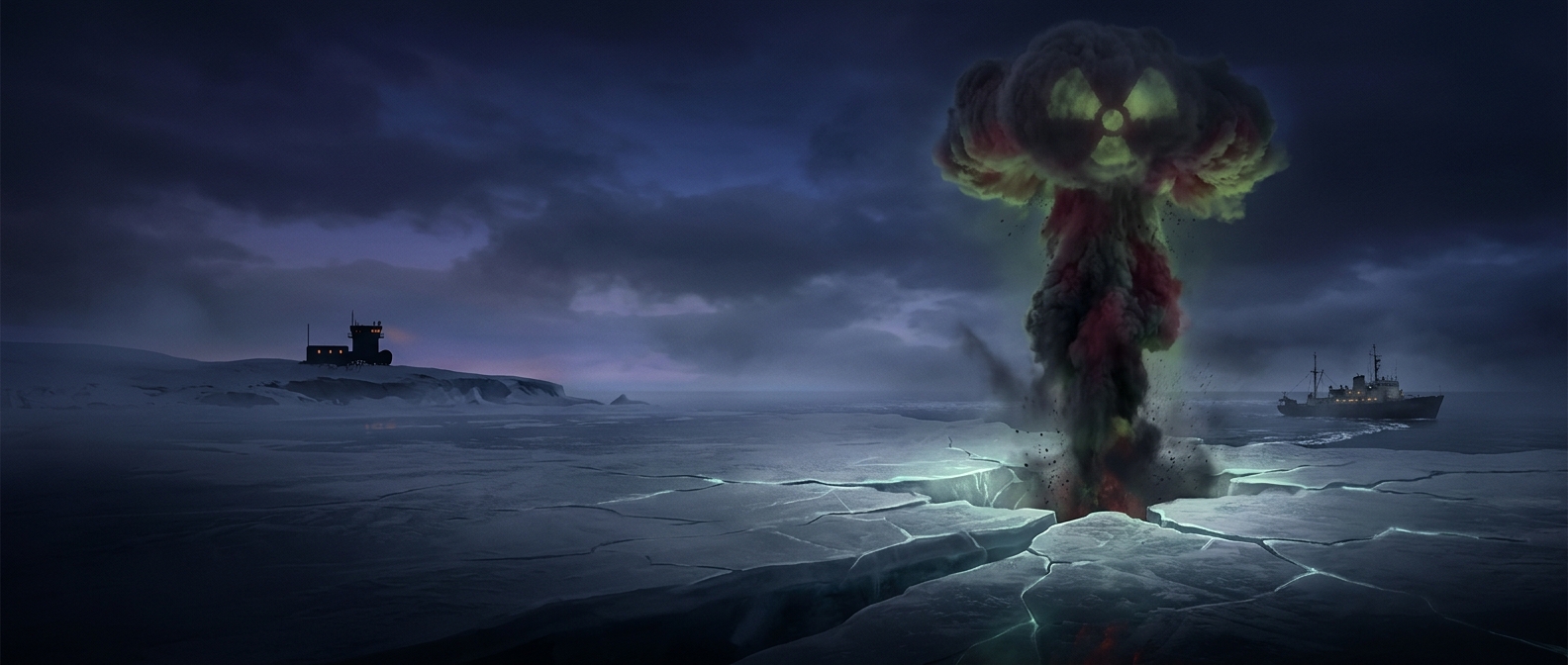
Why a Nuclear Blast Makes Two Flashes
Vela satellites were built to watch for nuclear explosions in the atmosphere. Their optical sensors looked for a distinctive pattern: an extremely bright, brief flash, followed by a second, longer-lasting glow. A nuclear detonation can produce that pattern because its first burst of radiation heats the surrounding air rapidly; as the fireball expands and cools, the visible light changes and brightens again.
The sequence is more informative than a single bright spot. A flash could come from sunlight glinting off an object or from another transient event, but a timed pair matching the expected pattern is harder to dismiss. In 1979, a Vela satellite recorded such a signal over the southern oceans.
A Signature Is Not an Identification
The satellite measured light, not a weapon or its maker. Its instruments could indicate that an event resembled a nuclear explosion, but they could not directly establish what produced the light, who was responsible, or where any device had been detonated. Those questions required investigators to compare the satellite record with other evidence and examine how the sensors themselves might behave.
That left room for competing interpretations. Some investigators considered the signal evidence of a clandestine nuclear test; others argued that an unusual sensor event or another non-nuclear cause could explain it. The dispute was not simply about whether the satellite had registered a real signal. It was about whether that signal uniquely matched a nuclear blast closely enough to support a conclusion.
Why the Mystery Lasted
A detector can be very good at recognizing a pattern without being able to identify its source in every case. When a system is designed to catch an event that governments might conceal, its warning matters—but so does the possibility that a rare instrument effect can imitate the warning. Reconstructing the 1979 signal therefore became a problem of inference, not just reading a measurement.
The episode’s enduring lesson is concrete: a nuclear-warning sensor can capture a suspicious signature without settling what happened. The two flashes were a powerful clue, but not a name tag.