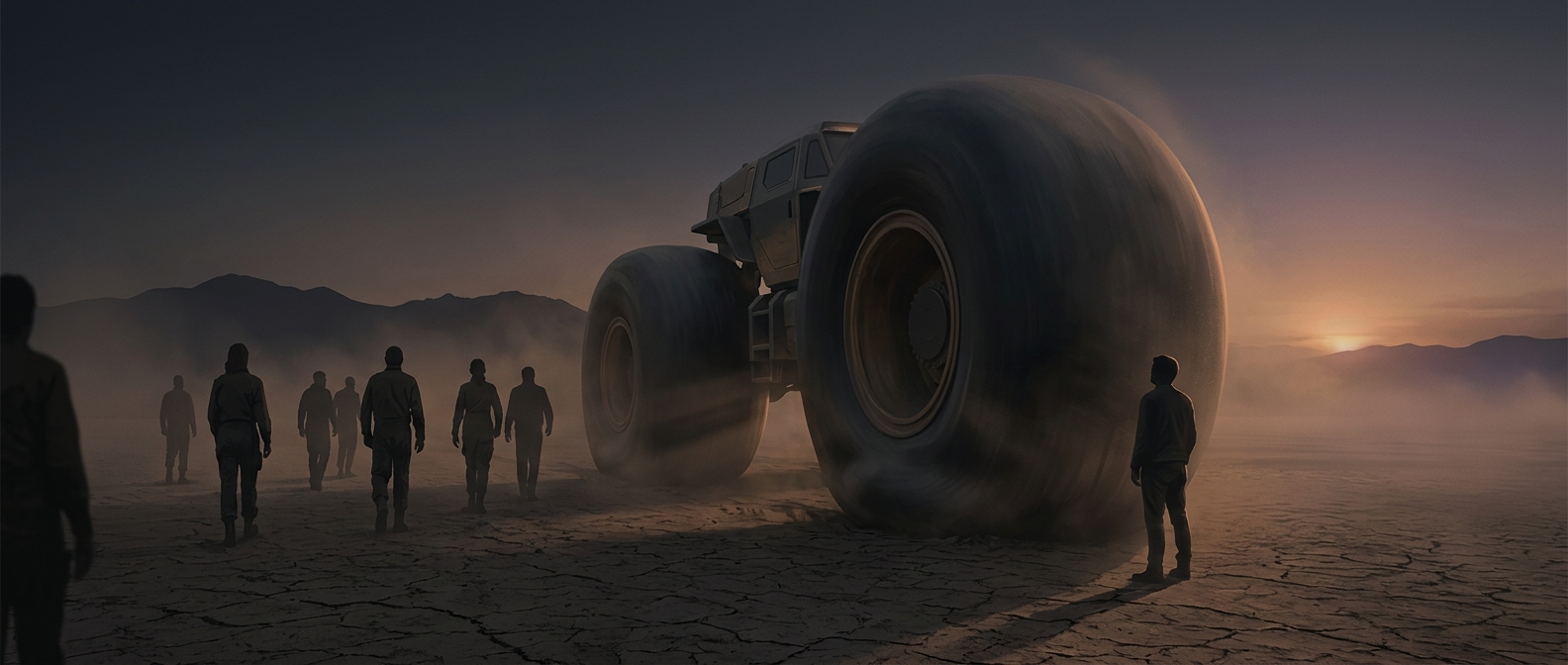
Why the wheels can pass on either side
A truck’s tires do not sit directly beneath its entire body. They attach to axles, while the chassis—the structural frame carrying the cab and cargo—sits higher up. On some trucks, that arrangement leaves enough open space between the tires for a person lying in a very particular position to be below the frame as the wheels pass beside them.
The key is alignment: the person must fit within the gap between the tires, and the truck must travel straight enough for its wheels to stay on either side. The frame’s height and the width between the wheels determine whether that gap exists at all.
A narrow gap, not a protected space
The open area is not a designed safety zone. Trucks differ in height and layout, and the underside is not necessarily clear: axles, suspension parts, exhaust components, and other equipment can hang below the frame. A bump or dip can change the distance between the chassis and the ground as the suspension moves. Steering can also shift a wheel’s path, while additional axles may follow a different line from the front wheels.
Even when the frame clears, a small change in position can put a tire over the person instead. The same heavy vehicle that leaves a gap down its center can therefore crush someone if its track shifts by only a little. The apparent clearance comes from the geometry of one vehicle and one path—not from any reliable protection.