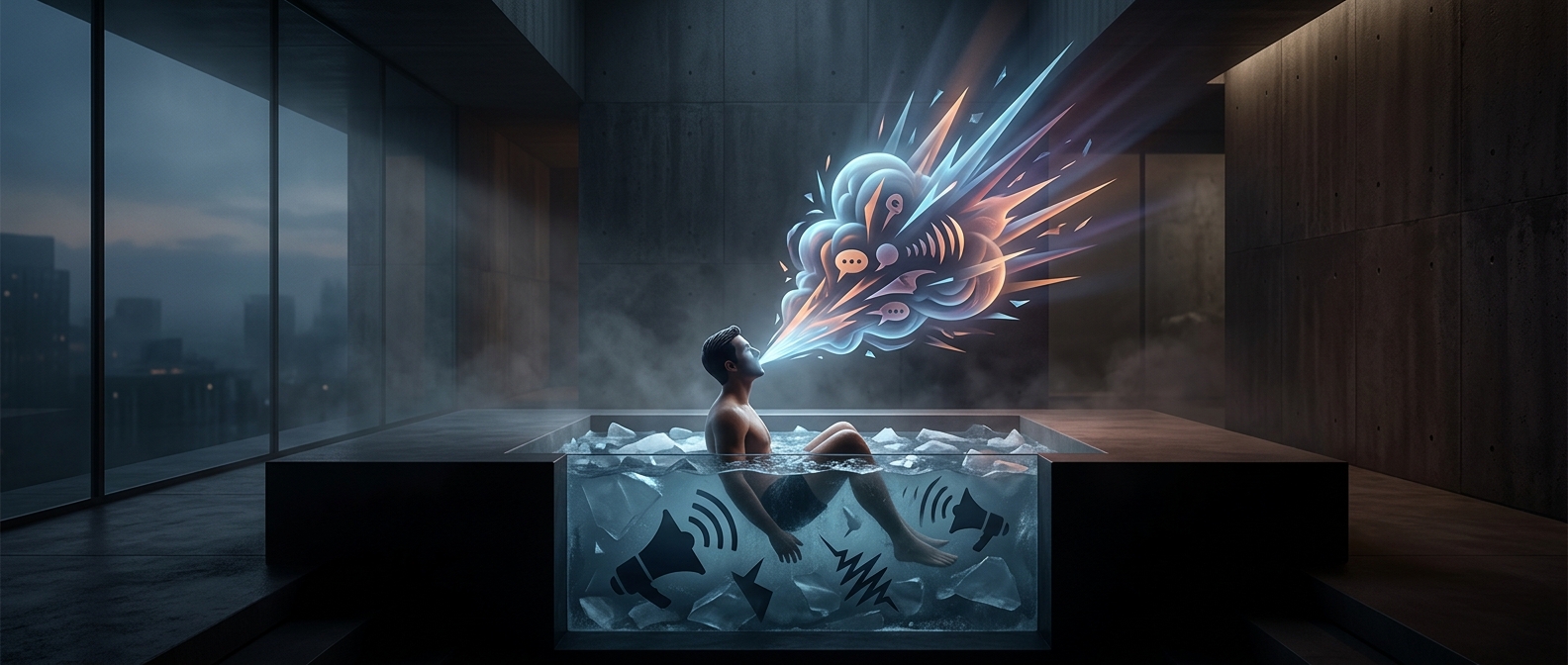
Why the First Seconds Feel So Intense
Sudden cold activates the body’s cold-shock response: temperature sensors in the skin send an alarm that rapidly shifts the nervous system into a more alert state. Breathing can become fast and hard to control, while blood vessels near the skin tighten to conserve heat. The heart may beat harder as the body adjusts to the abrupt change.
That gasp-and-breathe reaction is more than discomfort. In water, an involuntary gasp can pull water into the airway, which is one reason an unexpected plunge is riskier than a cold shower. The response is strongest at first and can ease as the body adapts, but feeling calmer does not mean the cold has stopped stressing the body.
The Sensation Is Not Proof of a Benefit
A dramatic physical reaction can make an ice bath feel as if it must be doing something useful. But intensity is not evidence: the body’s alarm response shows that it has detected a sharp temperature change, not that a particular health or recovery benefit has occurred. Claims about benefits depend on what outcome is being measured, and the evidence does not make every promised effect certain.
Cold immersion also places extra demands on circulation. People with heart or blood-vessel conditions may face particular risks, and anyone who becomes faint, confused, numb, or unusually short of breath should get out and warm up. The vivid part of an ice bath is easy to notice; the more important question is whether the specific benefit being sought is worth provoking that response.