A currency name chosen for its sound
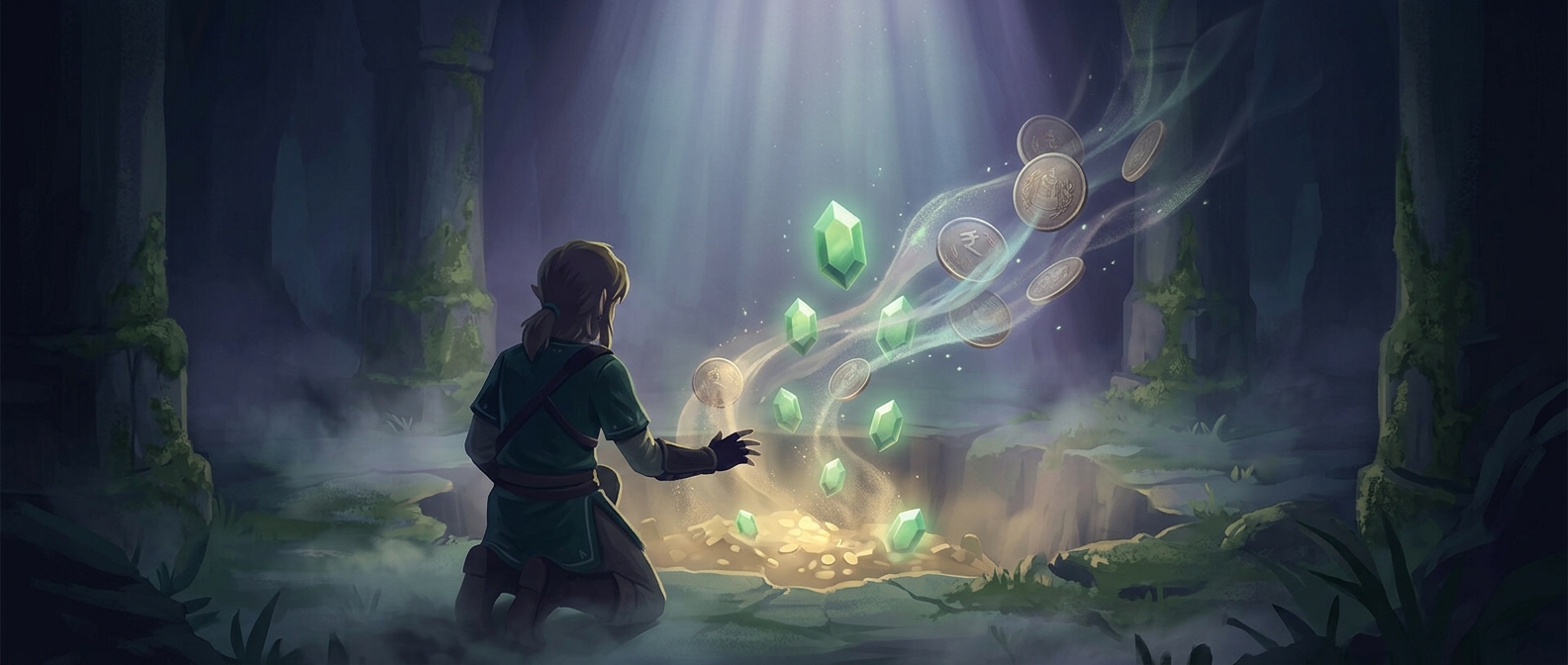
In The Legend of Zelda, “rupee” names the money Link collects and spends. The word is also the name of India’s currency, but Shigeru Miyamoto’s stated reason for choosing it was its sound: he thought it felt cute and sparkly, not that he was invoking India.
That distinction matters because a familiar real-world word can suggest a deliberate cultural reference even when its role in a game is simply to name a fictional object. Here, the name’s bright, playful feel fits the little gems that stand in for money across the series.
When a word becomes part of a game’s texture
Rupees make an abstract number visible. Instead of merely adding funds to a balance, the game lets players find and collect a jewel-like object, then trade it for useful items. The name and the gem imagery work together: money feels like a thing in the world, not just a line in a menu.
That small sound choice has become part of Zelda’s vocabulary. For players, “rupee” usually calls to mind a colored collectible and the purchases it enables—not a conversion rate or a national currency. It is a reminder that a game’s invented world can acquire its own associations even when one of its words already belongs to the real world.