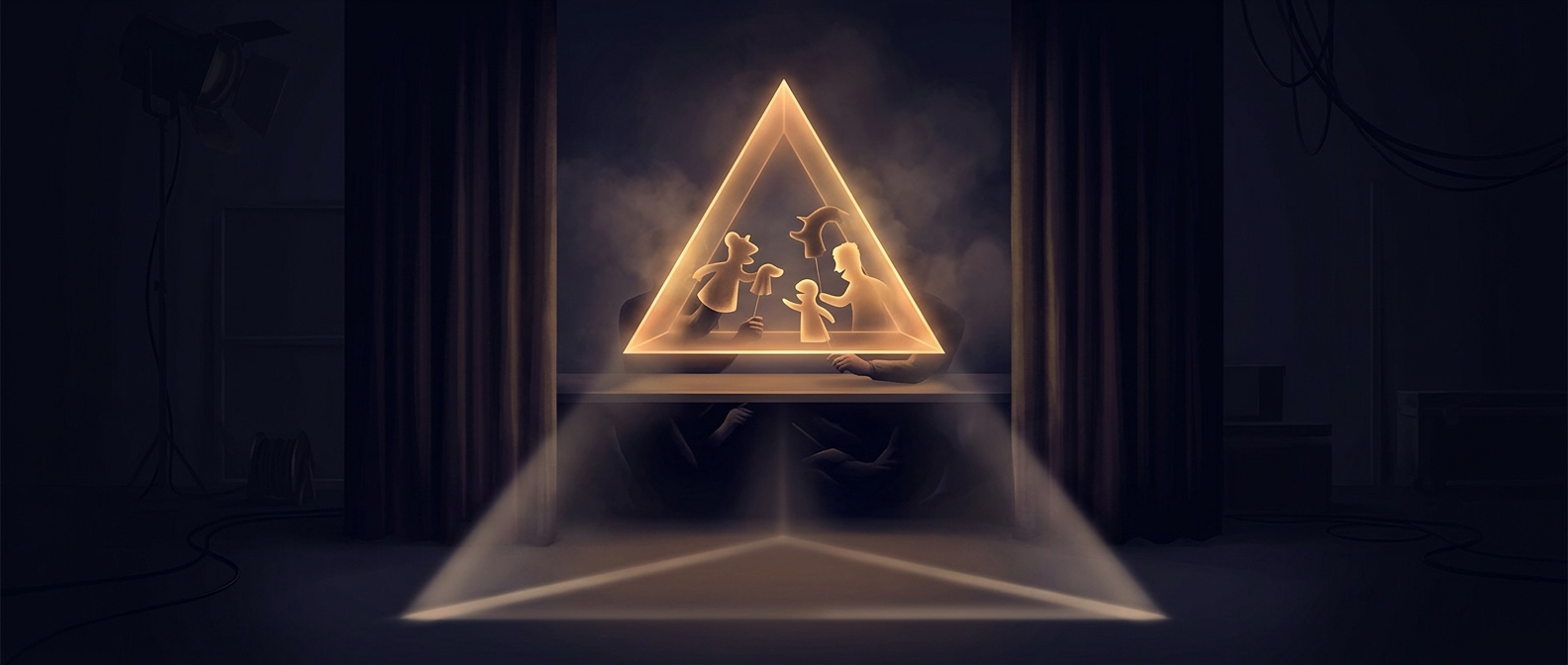
The performer disappears; the puppet stays in view
A Muppet had to occupy the camera’s attention while the person controlling it remained unseen. That meant a performer could not simply hold the character at a comfortable height: the puppet had to rise into the shot, often with the performer’s arm extended above their head. The camera’s lower edge concealed the operator, turning an ordinary framing choice into a physically demanding job.
Keeping the performer’s eyes on a floor monitor solved a different problem. The puppet was above the performer, so looking up at it would pull the performer’s gaze out of the scene—and could make it harder to tell how the character appeared on camera. The monitor let the operator check the shot while controlling the puppet without bringing their own face into view.
A screen becomes the puppet’s mirror
That monitor was more than a convenience: it gave the performer a camera-facing view of the character. Small adjustments to the puppet’s position or movement could be judged as they appeared to viewers, rather than by looking directly at the puppet from below. The performer was effectively working in two directions at once—arms raised toward the character, eyes lowered toward the monitor.
The tradeoff was that the camera could hide the effort, but not remove it. Holding an arm aloft for a scene puts sustained strain on the shoulder, especially when the operator must also make controlled movements. The polished illusion on screen depended on an awkward division of labor: the puppet occupied the audience’s frame, while the performer’s body bore the work just outside it.