A child’s nickname became a character’s name
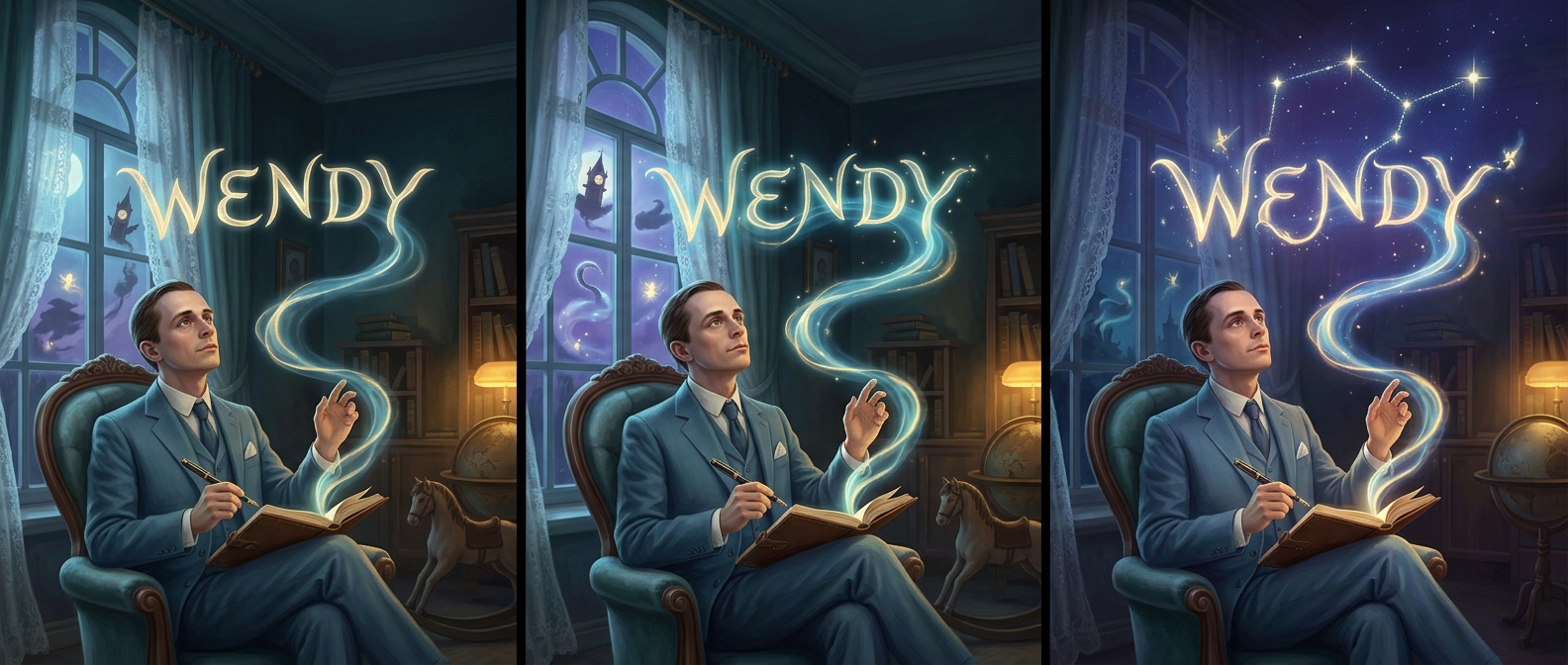
Before Wendy Darling appeared in Peter Pan, Wendy was an unusual choice as a girl’s given name. J. M. Barrie drew on a child’s affectionate nickname for him: Margaret Henley, the young daughter of poet William Ernest Henley, playfully turned “friend” into “fwendy-wendy.” Barrie later said the sound stayed with him.
That gave him a name that felt intimate and fresh for the girl who cares for Peter and the Lost Boys. It was not necessarily a name Barrie invented from nothing; the important change was that he carried it from a private family joke into a work seen by a much wider audience.
The stage made the name familiar
Barrie’s play Peter Pan opened in London in 1904, and its popularity helped make Wendy recognizable to audiences. The character’s name then reached still more readers through Barrie’s 1911 novelization, Peter and Wendy.
The story gave the name something memorable to attach to: Wendy is both a child drawn into adventure and a figure associated with care and home. As generations encountered the character, a name once heard in a toddler’s playful mispronunciation became an ordinary option for real children. Barrie’s influence was less about inventing “Wendy” than about giving it a famous, lasting place in popular culture.