From a bridge crossing to a hidden world
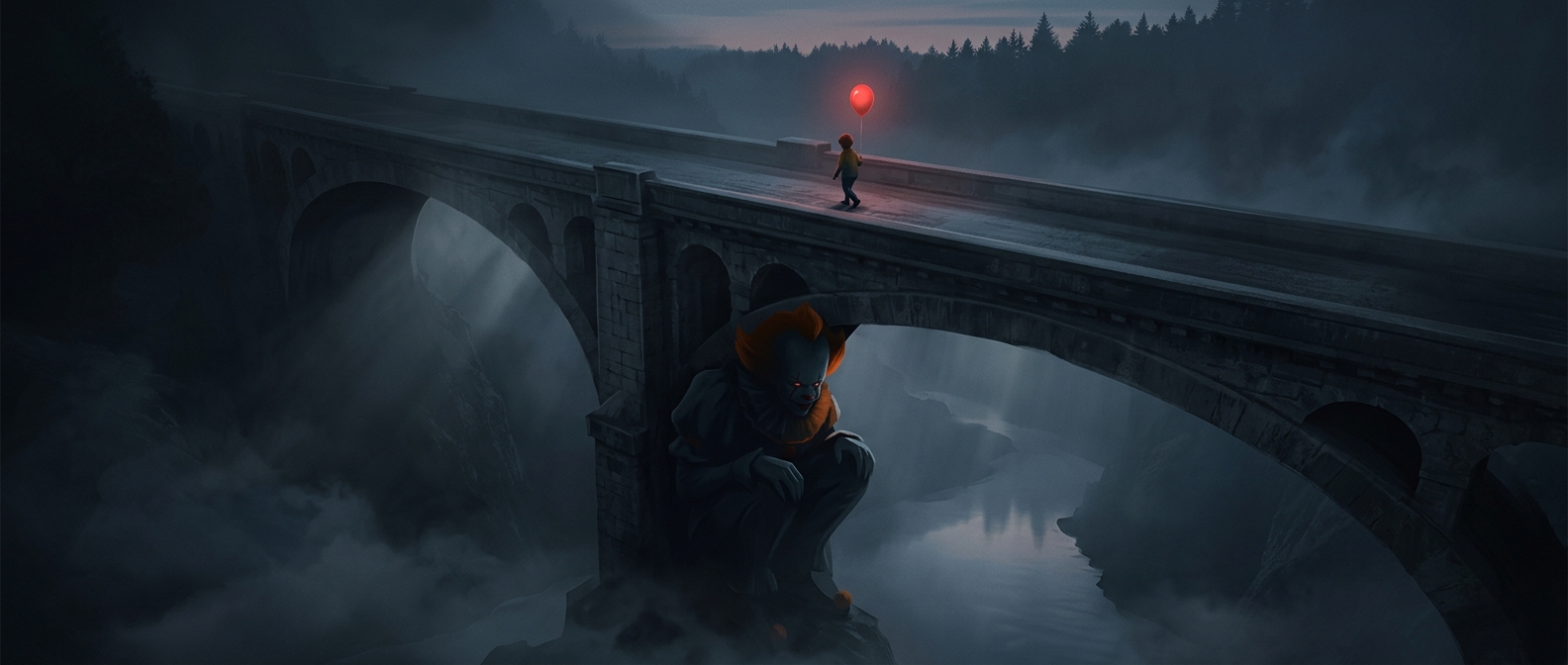
The troll in “The Three Billy Goats Gruff” makes a crossing dangerous: someone must pass over the bridge, and the creature waits below. That simple setup gives a horror story a ready-made structure—an ordinary route, a concealed threat, and the fear of what might be waiting when people pass by.
King’s change of setting alters the feel of that structure. A bridge is a visible landmark; a sewer is part of the town’s unseen underside. It carries away what residents would rather not think about, while running beneath familiar streets. Placing a monster there makes the familiar town feel as if it has a second, sinister layer.
Why make the troll a clown?
A clown is a more unsettling shape for a threat than a creature plainly identified as a troll. It combines an inviting, recognizable appearance with the possibility of danger. That mismatch gives the monster a way to intrude on ordinary life rather than remain a figure from an old tale.
The transformation is more than a change of costume. A fairy-tale obstacle becomes a threat associated with the hidden spaces of a modern town, and the creature can appear in a form people recognize. The old story’s fear of crossing a bridge becomes fear that danger is already beneath the streets.