The Training Data Starts on Real Roads
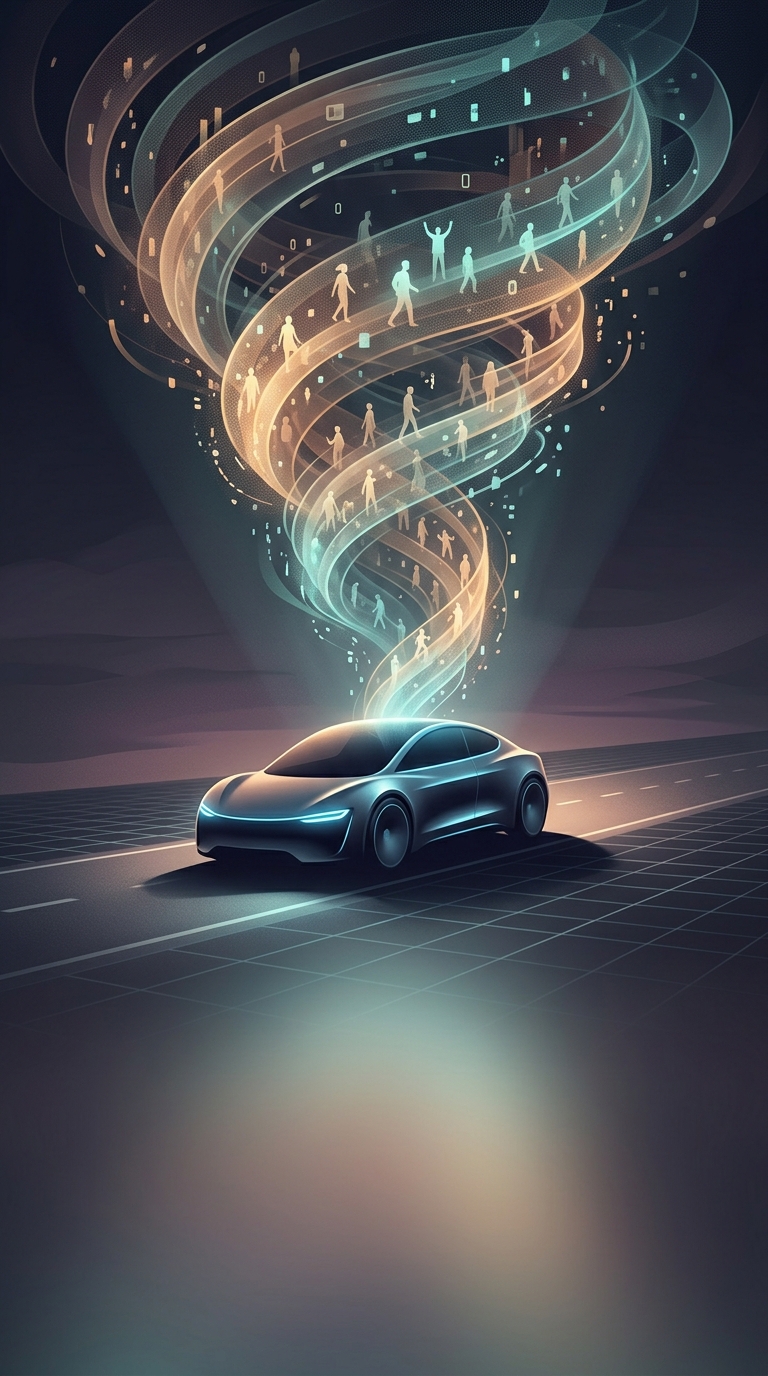
Autonomous-vehicle companies gather much of their driving data with cars fitted with cameras and other sensors. Some are test vehicles driven by trained employees; others operate as part of a company’s fleet. As they travel, their sensors record what the vehicle can see and measure: lane markings, traffic lights, nearby cars, pedestrians, and the movement of the road around them.
A recording alone is not a driving lesson. Engineers and software tools turn selected moments into examples the system can learn from. They may mark where a pedestrian is, identify a stop sign, or show which path a vehicle should take. The resulting data helps train perception systems—the parts of the software that interpret the surroundings—and planning systems, which choose what the car should do next.
The Unusual Moments Matter Most
Ordinary driving supplies useful patterns, but rare situations can be more instructive: a partly hidden cyclist, confusing roadwork, or an emergency vehicle approaching an intersection. Companies can search large collections for these difficult moments and use them to test or improve the software. That makes the data pipeline selective: the goal is not simply to save every mile, but to find examples that expose a weakness or teach a useful distinction.
Real-world recordings are not the only source. Developers can also use computer simulations to create repeatable scenarios, including combinations that would be difficult or unsafe to stage on public roads. Simulations let engineers change conditions—such as visibility or the position of another vehicle—and see how the system responds. But simulated scenes must be realistic enough to transfer to actual driving, so road data remains important.
A Loop Between Driving and Software
The process is iterative. A test car encounters a situation, engineers examine the data, and the software is updated and evaluated again. The valuable resource is not just a huge volume of footage; it is a growing collection of carefully selected examples of how the world behaves—and how the car should respond.