Why an esoteric diagram can become a long project
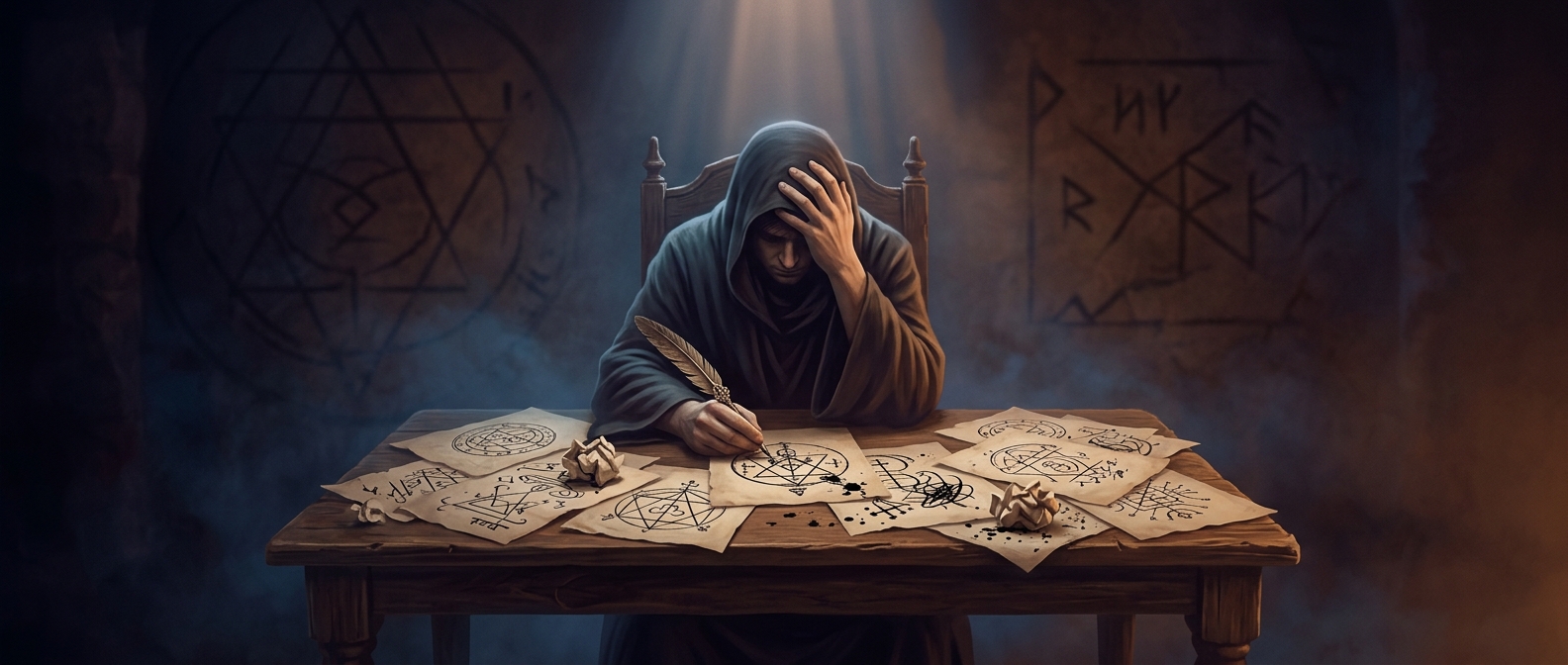
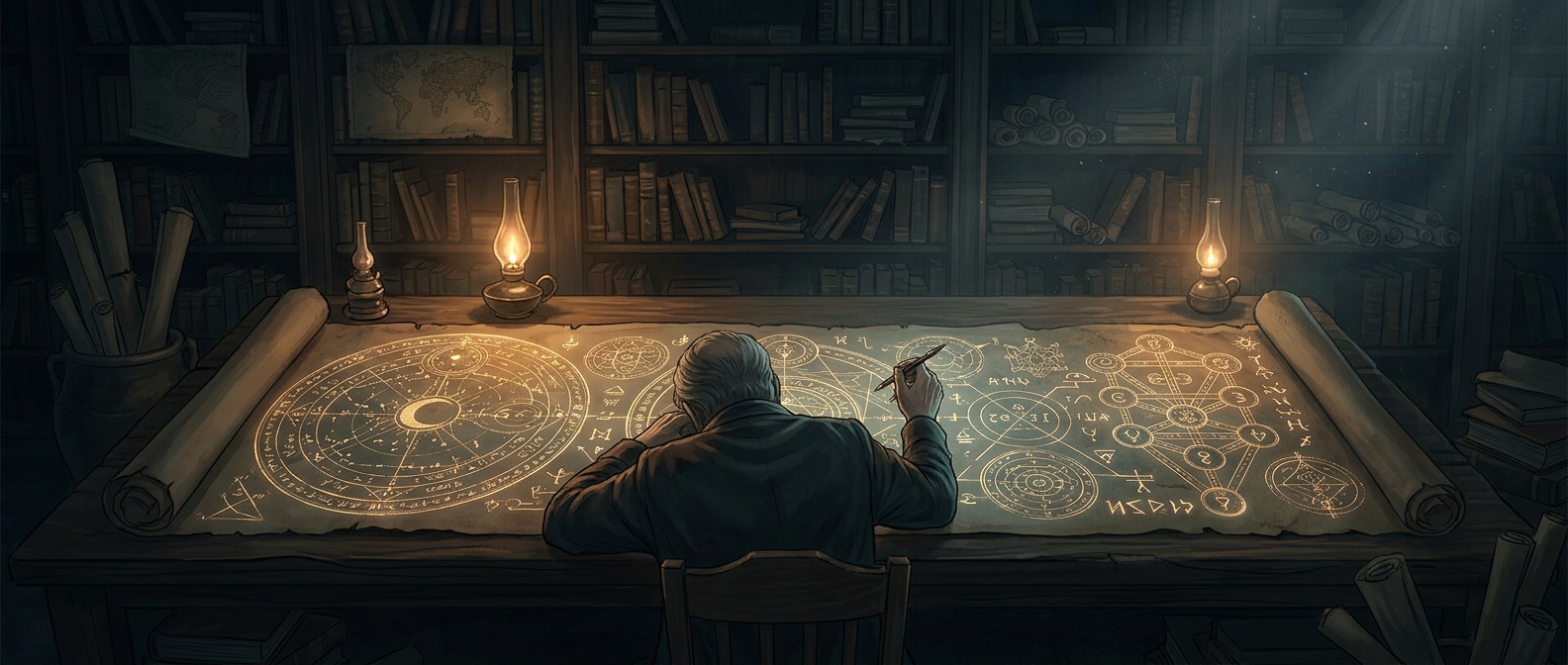
An elaborate esoteric diagram is often more than a picture. Depending on the tradition, it may arrange symbols, words, shapes, and boundaries in a prescribed pattern. Drawing it by hand means keeping track of both the individual marks and how they relate: a symbol placed slightly off-center or a line drawn in the wrong order can make the page harder to follow or require starting that section again.
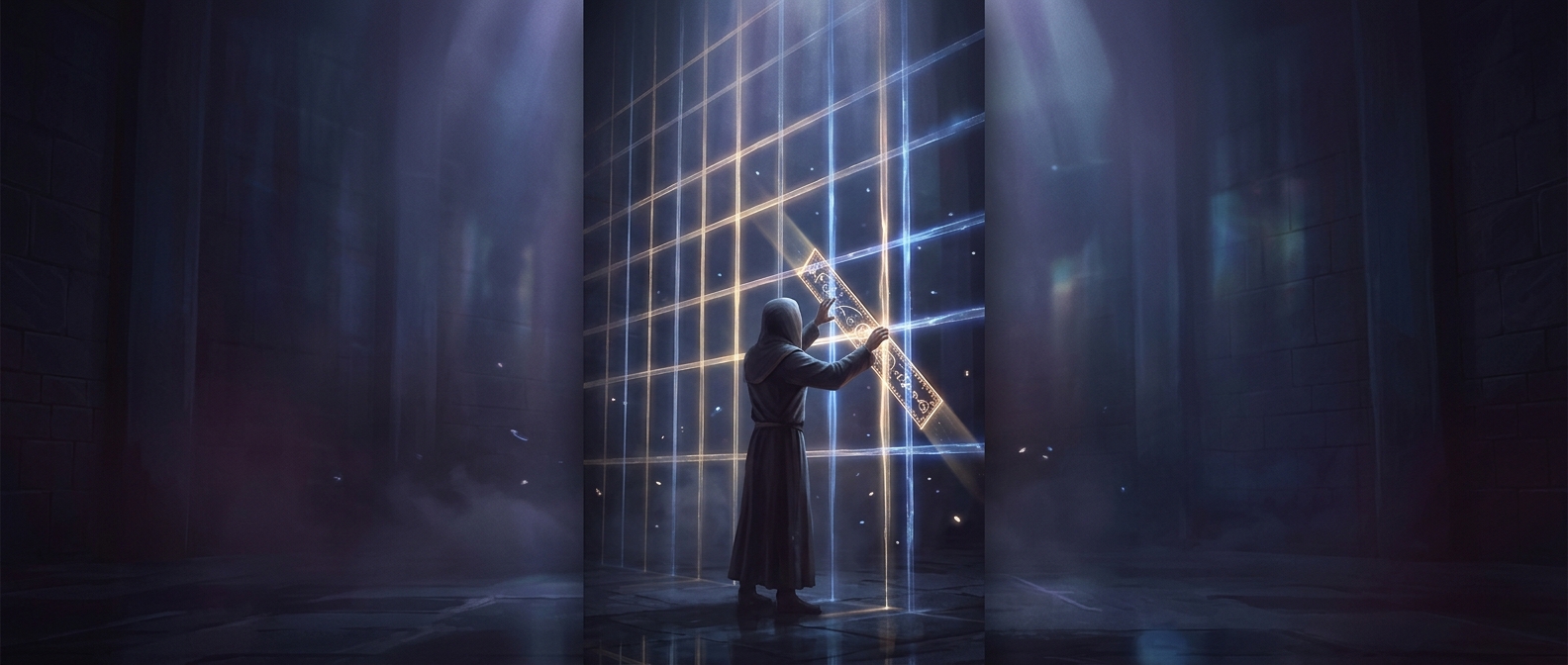
The geometry adds work. Concentric circles, evenly spaced divisions, and mirrored shapes may look simple once finished, but they take planning to lay out neatly without a template. Then the practitioner has to add the smaller details without crowding the design. A mistake can lead to erasing, redrawing, or abandoning the page.
When the drawing itself is part of the work
In some practices, making the diagram is not merely preparation for using it; the careful sequence of drawing can itself be meaningful. That turns speed into a tradeoff. Rushing may undermine the order or attention the practitioner wants to bring to the work, while proceeding carefully can consume far more time than expected.
That helps explain why a diagram may be left unfinished: the maker has reached the point where completing every line costs more time and effort than the session can accommodate. A half-drawn design is a reminder that, in these practices, the finished image may depend as much on patient construction as on the symbols it contains.