The sound begins as pressure pulses
Each cylinder firing pushes hot gas into the exhaust system in a quick surge. Those surges create pressure waves: tiny, rapid changes in air pressure that travel down the pipe as sound. If they leave the tailpipe with little interference, the sharp pulses combine into the familiar loud exhaust roar.
How the muffler interrupts the waves
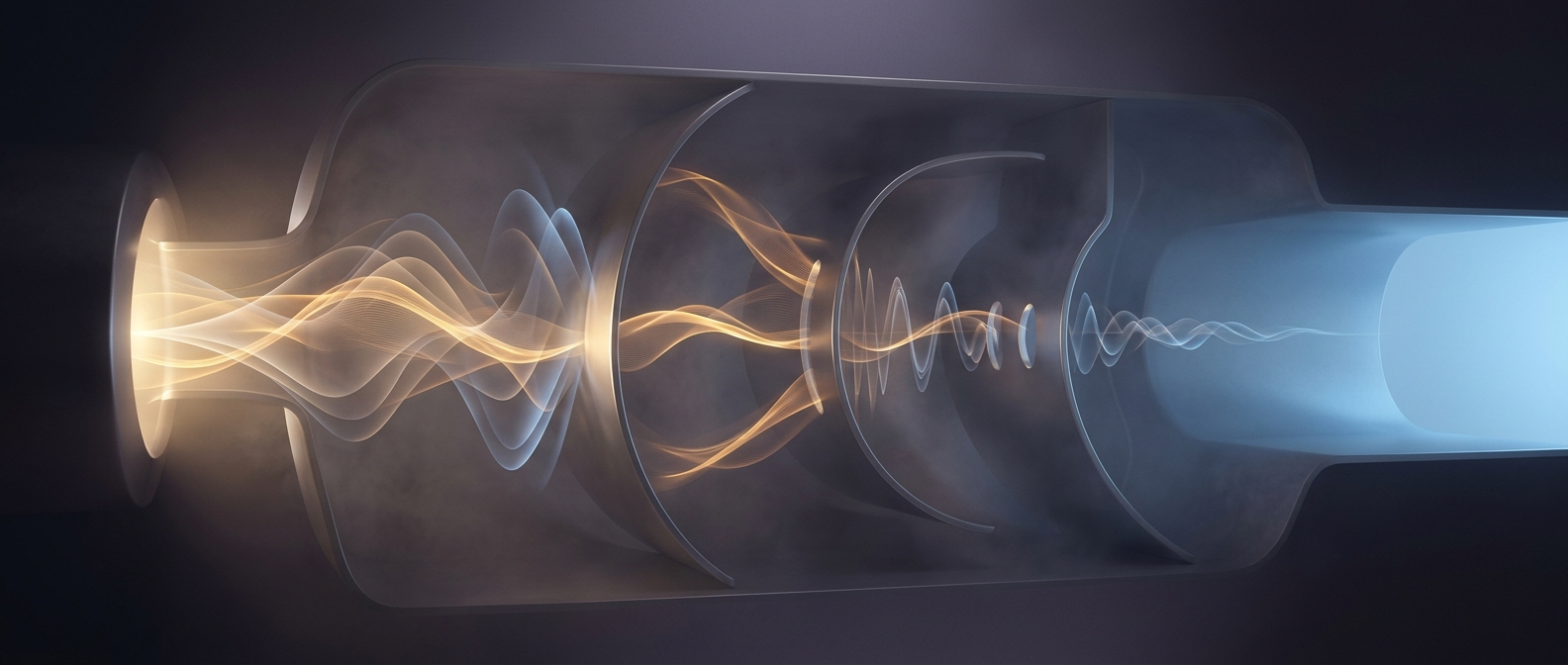
Inside a muffler, the exhaust follows a designed route through chambers and perforated tubes—pipes with small holes along their walls. The holes let pressure waves spread into adjoining spaces, where they reflect and meet other waves. At carefully chosen distances, some waves arrive out of step with others, reducing the pressure changes that reach the tailpipe.
The chambers also make sound energy lose strength as it bounces around and interacts with the muffler’s walls and internal materials. The exhaust still flows out; the muffler is not a plug. Its job is to quiet the waves while providing a path for the gas to escape.
Quieting sound without choking the engine
That creates an engineering tradeoff. A more restrictive route can impede exhaust flow, while a freer route may let more sound through. Muffler designers shape the tubes and chambers to control noise without adding excessive resistance to the engine’s exhaust.
So the muffler does not silence each explosion at its source. It reshapes and weakens the pressure waves on their way out—turning a series of abrupt blasts into a much less forceful sound at the tailpipe.