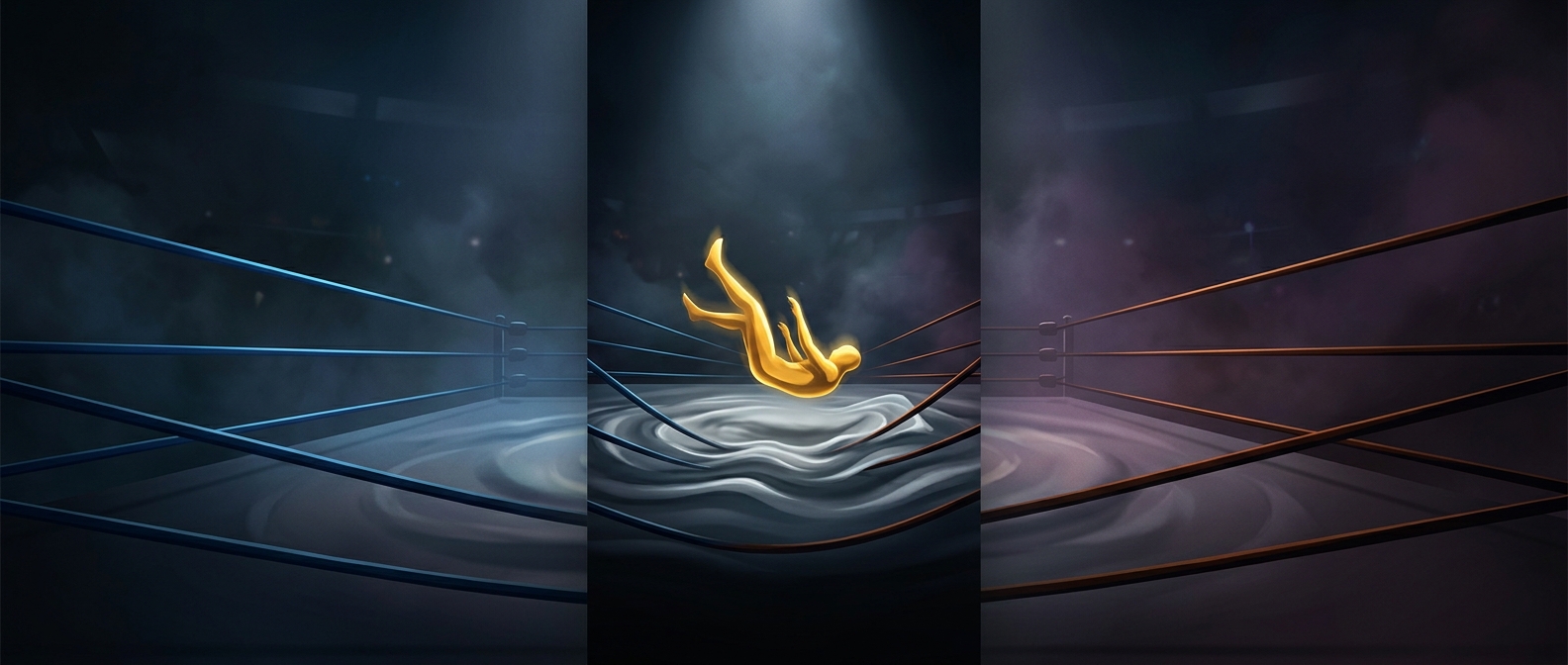
Why a Wrestling-Ring Landing Still Hurts
A ring is built to give under a fall, not to cushion it like a thick mattress. Its canvas-covered padding sits above a firm platform, so when a wrestler lands, the surface yields only a little before the force meets the structure underneath. That firmness helps the ring stay stable for footwork and grappling—but it also means a fall can send a sharp jolt through the body.
The impact is often spread across more than the point that appears to hit first. Wrestlers learn to time a fall and use their arms, back, or other broad areas to distribute force, while keeping the head and neck protected. The choreography matters: a partner’s position, the timing of a move, and the landing angle can change how much force one person takes. These skills reduce risk; they cannot make a hard landing harmless.
The Sound Is Part of the Construction
The rigid platform also helps create the ring’s distinctive thump. A wrestler striking the canvas can make the surface and frame vibrate, adding a loud report that carries through the venue. Performers may use a hand or forearm to add to that sound, but the ring’s structure helps it resonate.
That combination is the design tradeoff: a firm, responsive surface supports movement and produces dramatic impact sounds, while offering far less cushioning than its appearance suggests. The next time a wrestler hits the mat, the noise may be theatrical—but the force behind the landing is real.