Why a scooter may slow to a walking pace
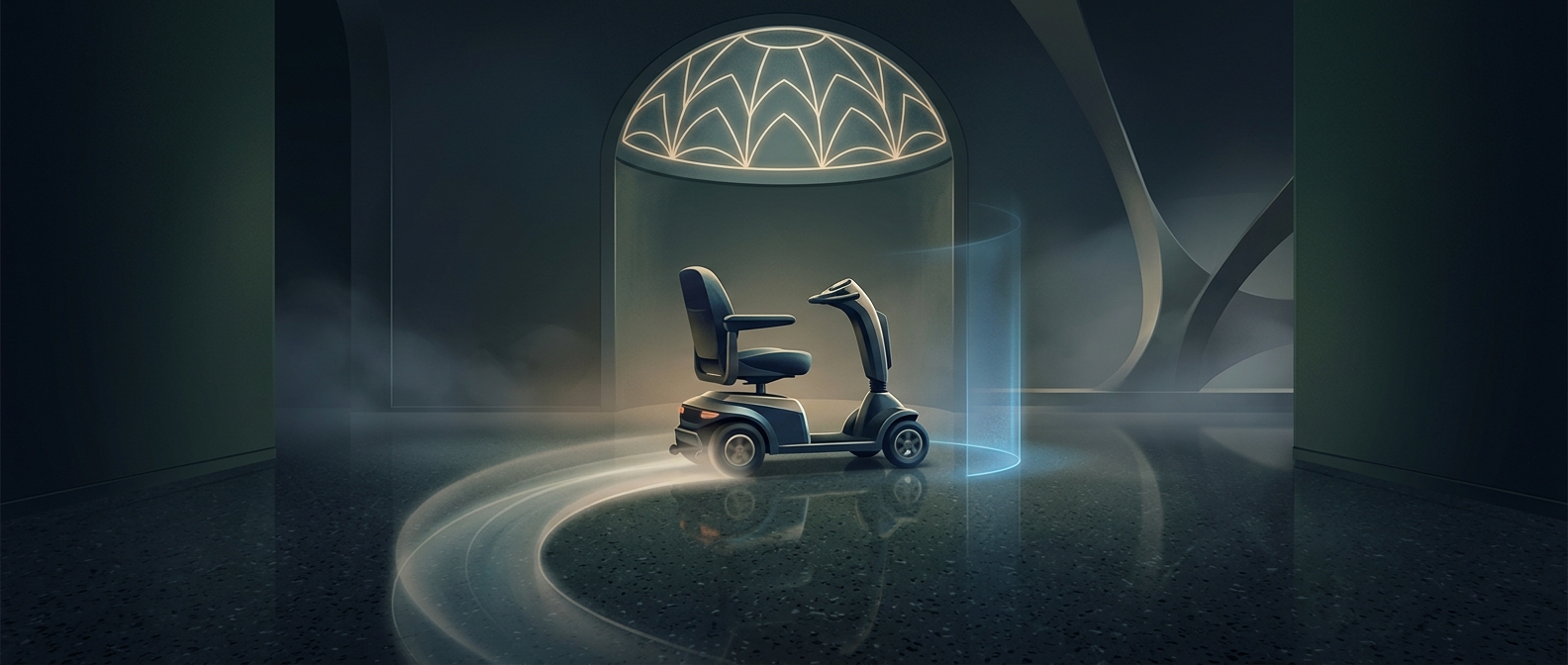
A mobility scooter’s throttle tells its control system how much power the rider wants. A speed limiter places a ceiling on the result: pressing the throttle farther can still ask for more, but the scooter will not accelerate past the selected maximum. On models with an indoor setting, that ceiling is lower to make close-quarters travel easier to manage.
The limiter is generally a setting or mode, not a detector that recognizes walls or realizes the scooter has entered a building. The rider selects the slower setting when appropriate; the scooter’s controller then restricts the speed it allows the motor to reach.
Control matters more in tight spaces
Indoors, a scooter may need to pass through doorways, turn around furniture, or move near other people. At a lower maximum speed, the rider has more time to respond and can make small steering or throttle adjustments without the scooter rapidly building speed. That can make precise movement less demanding, especially in narrow corridors or crowded rooms.
A speed cap does not make every indoor maneuver safe by itself. The rider still has to steer carefully, watch for obstacles, and account for the scooter’s size and turning space. The practical advantage is that the throttle has less speed available to deliver: even when pressed fully, it cannot push the scooter beyond the limit set for that mode.