How a board becomes a computer
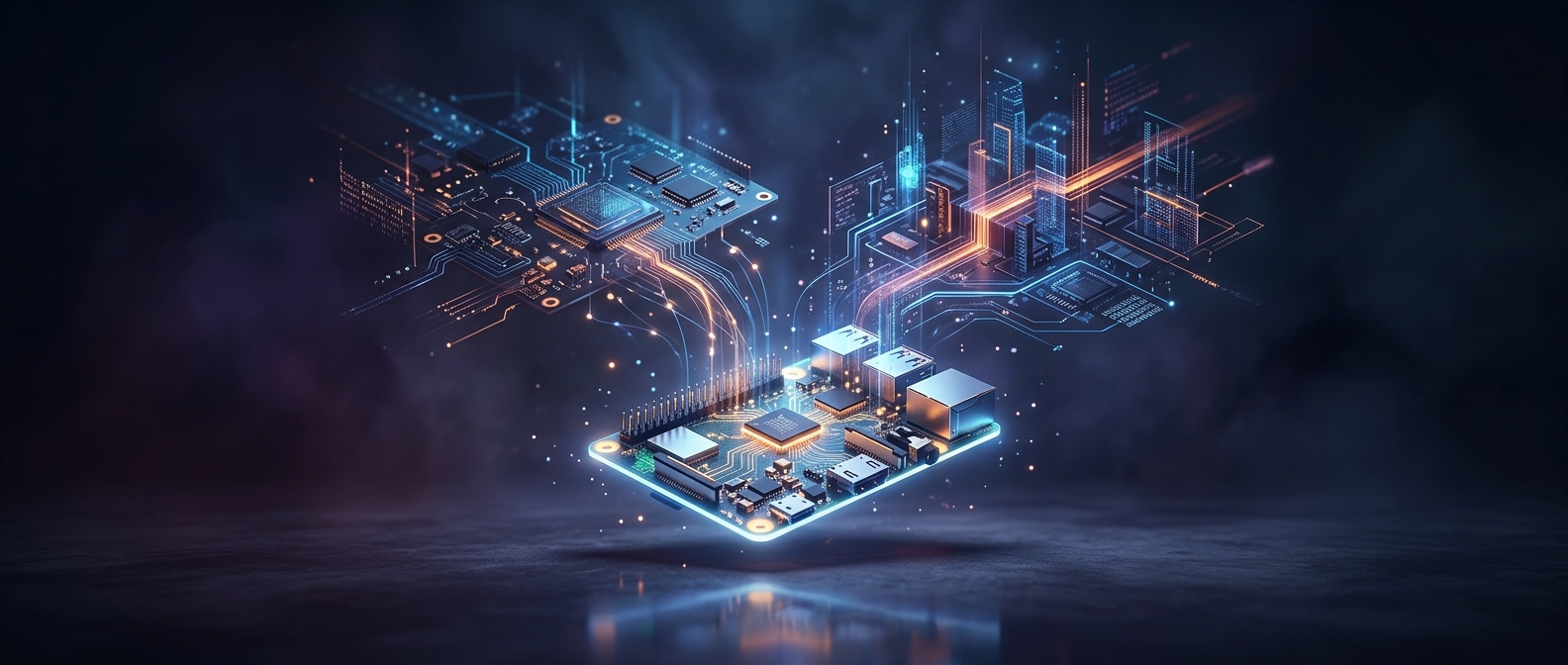
A Raspberry Pi concentrates the parts that would otherwise be spread across a computer’s motherboard. Its processor handles instructions, memory holds the programs and data currently in use, and connectors let it communicate with other devices. On many models, a microSD card provides storage and holds the operating system—the software that manages the hardware and lets applications run.
The processor and other major components are integrated into a system-on-chip, a single package that combines several computing functions. Putting those functions together saves space and power, but the board still needs practical ways to connect to the outside world. USB ports accept peripherals such as a keyboard; a display connector sends video to a monitor; and network connections can link it to the internet or a local network.
Small size means choosing what to leave out
The board is not a complete laptop shrunk down. It generally has no built-in screen, keyboard, battery, or case, so those must be supplied separately. That tradeoff keeps the computer compact and lets a project use only the connections and accessories it needs. A monitor and keyboard can turn it into a desktop, while the same board can instead be tucked inside a device and controlled over a network.
Its small size also does not make every task equally suitable. A desktop operating system can provide familiar windows and applications, but processor capability, memory, cooling, and storage vary by model. Intensive workloads may feel slower than on a larger computer, and a bare board needs an appropriate power supply and protection from damage.
One computer, many roles
Because the same general-purpose board can run software while also connecting directly to sensors, lights, cameras, and other hardware, it bridges two worlds: ordinary computing and physical projects. A single setup can collect a sensor reading, make a decision in software, and switch an attached output. The screen is optional; what makes it a computer is its ability to run programs and interact with other devices.