From Gray Values to Color Layers
A black-and-white frame records brightness, not a hidden color channel. A pixel’s gray value can come from very different colors: a bright patch might be a white shirt, a yellow wall, or sunlit skin. That makes colorization an inference problem, not a matter of simply revealing information already stored in the image.
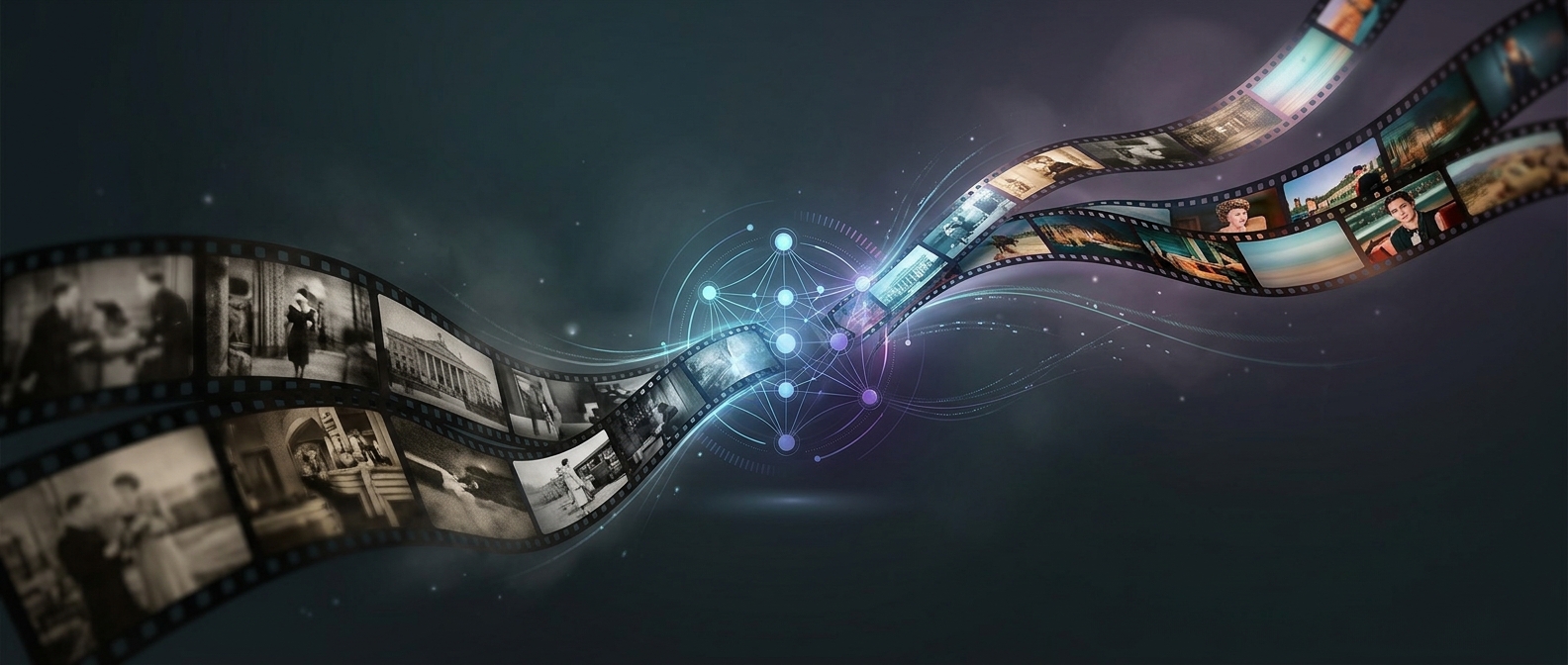
A model typically analyzes the frame’s shapes and textures, then predicts color values for regions such as faces, clothing, sky, and foliage. In digital images, color can be represented separately from brightness, so the program can add estimated hues while retaining much of the original film’s shading and contrast. This helps preserve the look of light and shadow rather than painting over the image with flat patches.
Why a Film Needs More Than One Good Guess
Colorizing a moving image adds a problem that a single still does not have: the colors must remain stable from frame to frame. If a jacket shifts from brown to blue as the actor moves, the result flickers. Systems therefore use information from neighboring frames to track objects and carry color choices through motion. Editors may still correct regions that drift, blur, or become difficult to follow.
The image itself also sets limits. A gray tone does not uniquely identify a color, and the model cannot know whether a particular costume was red or green unless that information survives elsewhere. Even accurate-looking color can reflect assumptions about common objects rather than the specific scene’s original materials, lighting, or film processing.
That is why colorized versions are best understood as interpretations of the surviving picture. They can make faces, settings, and movement easier for some viewers to read, but they also add decisions that were never recorded in the monochrome frame. A vivid color on screen may be convincing—and still be one of several colors the original scene could have had.