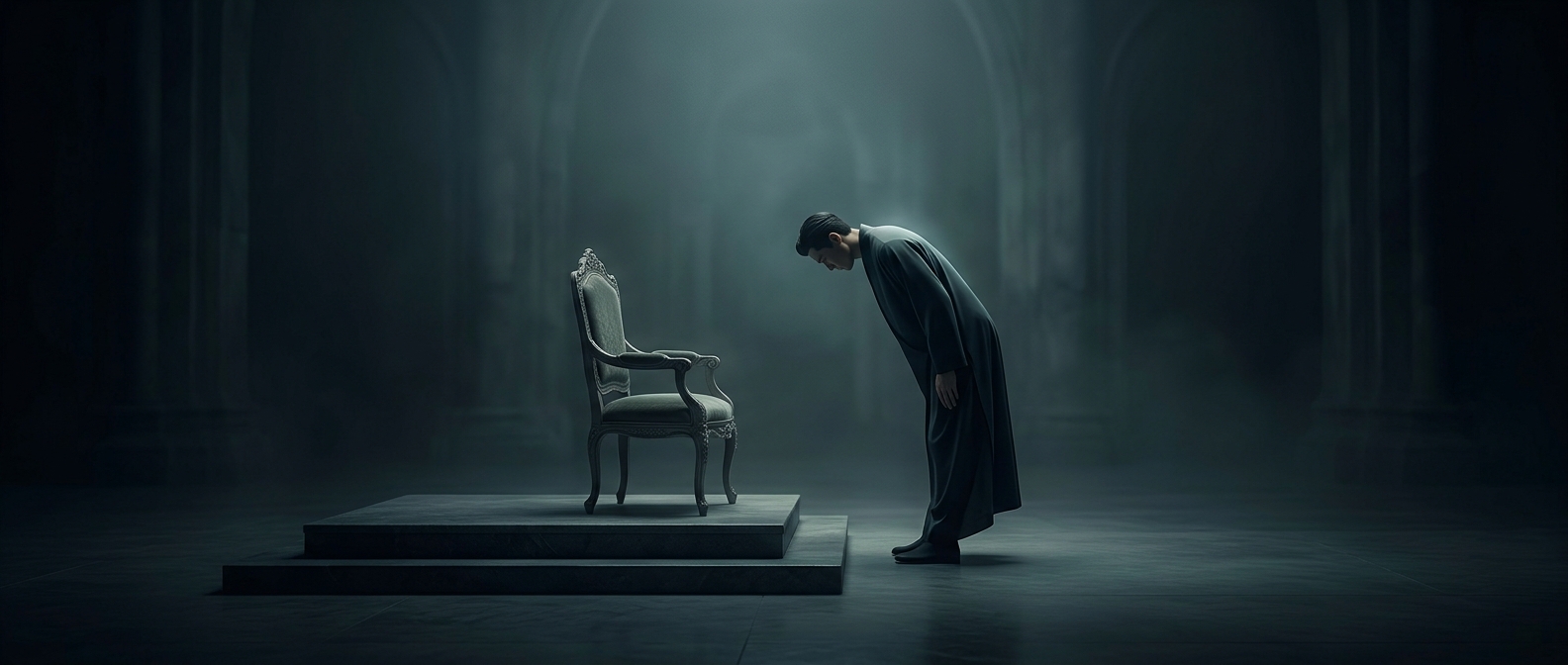
When an Empty Chair Still Holds Authority
A chair can stand for more than the person who once sat in it. In a formal setting, it may represent a leader’s office, decisions, or continuing influence. Bowing toward the empty seat therefore directs respect toward what the chair signifies—not necessarily toward the furniture itself or a belief that the absent person is physically present.
How an Object Becomes a Focus
Rituals often give an abstract idea a visible point of reference. Authority, loyalty, and remembrance are difficult to address directly; a familiar seat makes them concrete. The gesture becomes legible because people share the association between that particular chair and the leader.
The absence can make the meaning more striking. With no occupant to draw attention, the chair itself carries the association, showing how respect may attach to a role or legacy as well as to a living person. The object does not need to act for the symbol to matter: its significance comes from the shared meaning people have given it.