How the Pineapple Express carries a river through the sky
The Pineapple Express is a strong atmospheric river: a long, narrow corridor of moist air that can carry water vapor from the tropical Pacific toward the West Coast. Winds do the transporting. In a powerful event, the vapor moving through that corridor can amount to more water per second than flows from the Amazon’s mouth—but it is spread through the air, not gathered into a liquid channel.
The name points to the moisture’s tropical route, often associated with the region near Hawaii. Atmospheric rivers vary in strength and direction; the Pineapple Express is one pattern, not a fixed storm or a permanent feature overhead.
How vapor becomes rain
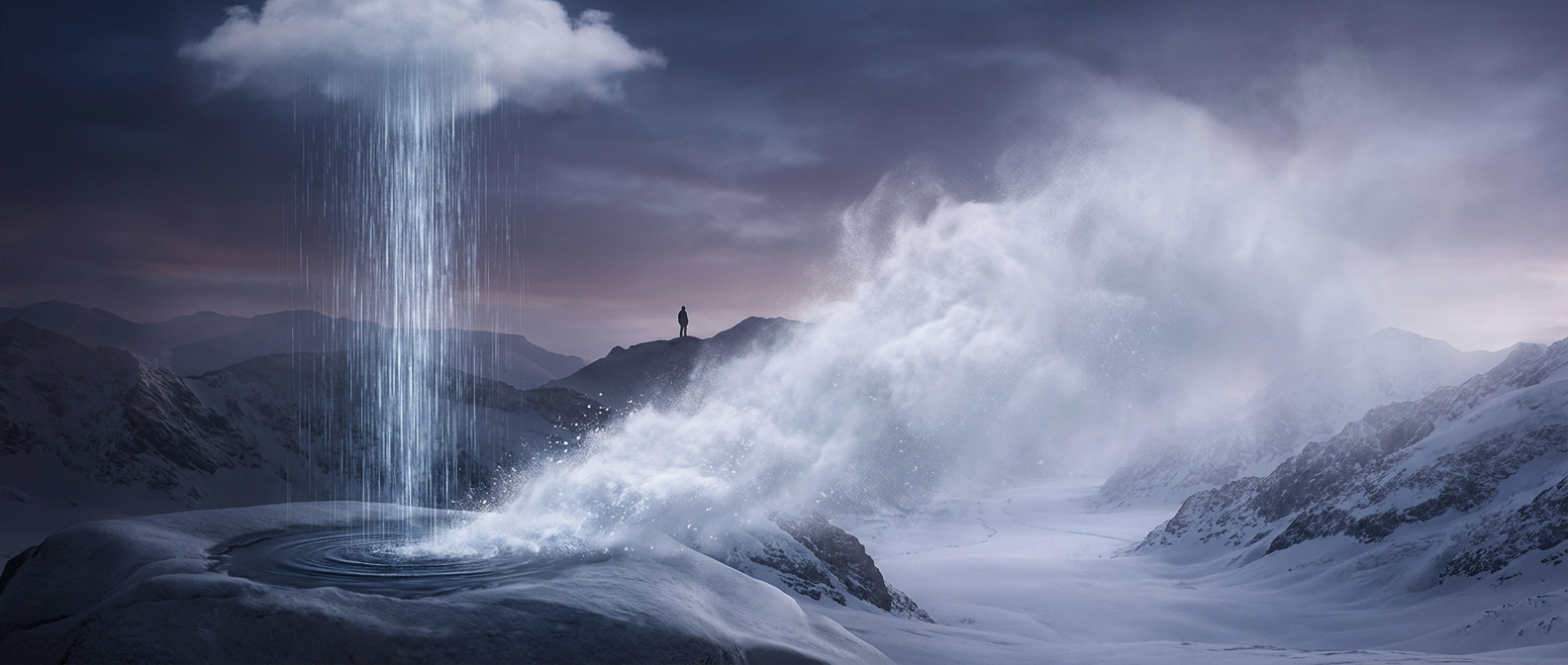
As moist air encounters California’s coastal ranges and the Sierra Nevada, it is forced upward. Rising air cools, and some of its water vapor condenses into tiny droplets or ice crystals inside clouds. Those particles grow as water vapor joins them and as they collide with other particles. When they become heavy enough, they fall as rain or snow.
Dust and sea salt can help clouds form. These microscopic aerosols—tiny particles suspended in air—provide surfaces on which water can condense. But they do not act as a single switch that instantly creates a storm: the amount and timing of precipitation also depend on the air’s moisture, temperature, movement, and the terrain it meets.
Why a narrow corridor can cause widespread damage
The same mountains that wring moisture from the air can concentrate intense precipitation on windward slopes and feed runoff into rivers and valleys. If a storm persists, soils and waterways can become overwhelmed; warmer conditions can also shift some mountain precipitation from snow toward rain, increasing runoff. The risk depends on the event and local conditions, not merely on how much vapor the atmospheric river carries.
That is the striking tradeoff: a mostly invisible ribbon of vapor can deliver water that supports the West Coast, or—when it arrives in excess and meets the wrong ground conditions—turn into floods and landslides.