How sea ice grows its “flowers”
When seawater freezes, its ice crystals mostly leave salt behind. The rejected salt collects in tiny pockets of liquid brine, making that liquid far saltier than the surrounding ocean. As more ice forms, some brine is squeezed through narrow channels toward the surface.
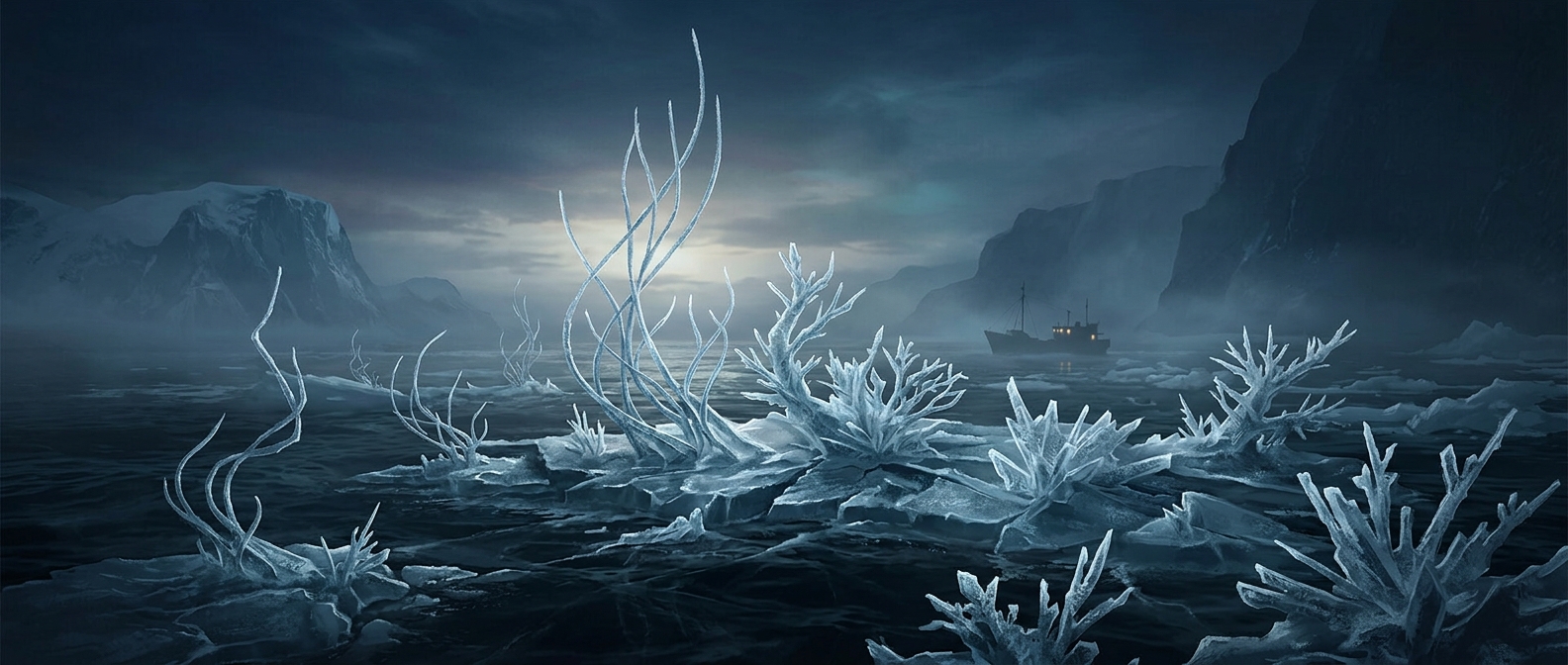
If the air above is much colder than the sea ice, brine can wick onto the surface and freeze into delicate, branching crystals. Moisture in the air also freezes onto them, helping the structures take on a flowerlike shape. They are not plants or salt crystals: they are ice crystals coated with concentrated brine.
A harsh habitat in miniature
That coating is what gives frost flowers their bite. Very salty brine draws water out of cells, a form of osmotic stress that can damage or kill organisms unable to tolerate it. But the flowers are not universally lethal: sea-ice microbes can survive in brine channels, and the effects depend on conditions and species.
The flowers are fragile, too. A change in temperature can melt or evaporate them, returning their salts to the ice or air. For a short time, though, their branching surfaces concentrate brine at the boundary between sea ice and atmosphere—an unusual, shifting habitat where survival depends on coping with intense cold and salt at once.