Why a burger station suits automation
A kitchen is a messy place for a robot: ingredients vary in size, equipment gets hot and greasy, and orders change from one moment to the next. But a burger station also contains repeated steps—placing a patty on a grill, turning it, or moving food between fixed points. Those steps happen in a relatively small, predictable area, making them easier to automate than the whole job of cooking a meal.
A machine can repeat a programmed motion at a steady pace, while sensors or timers help track where food is and how long it has cooked. That consistency can help a restaurant keep orders moving during a rush. It does not mean the machine understands the order as a cook does: the task must be defined in advance, and the equipment must be supplied, cleaned, and maintained.
The job changes around the machine
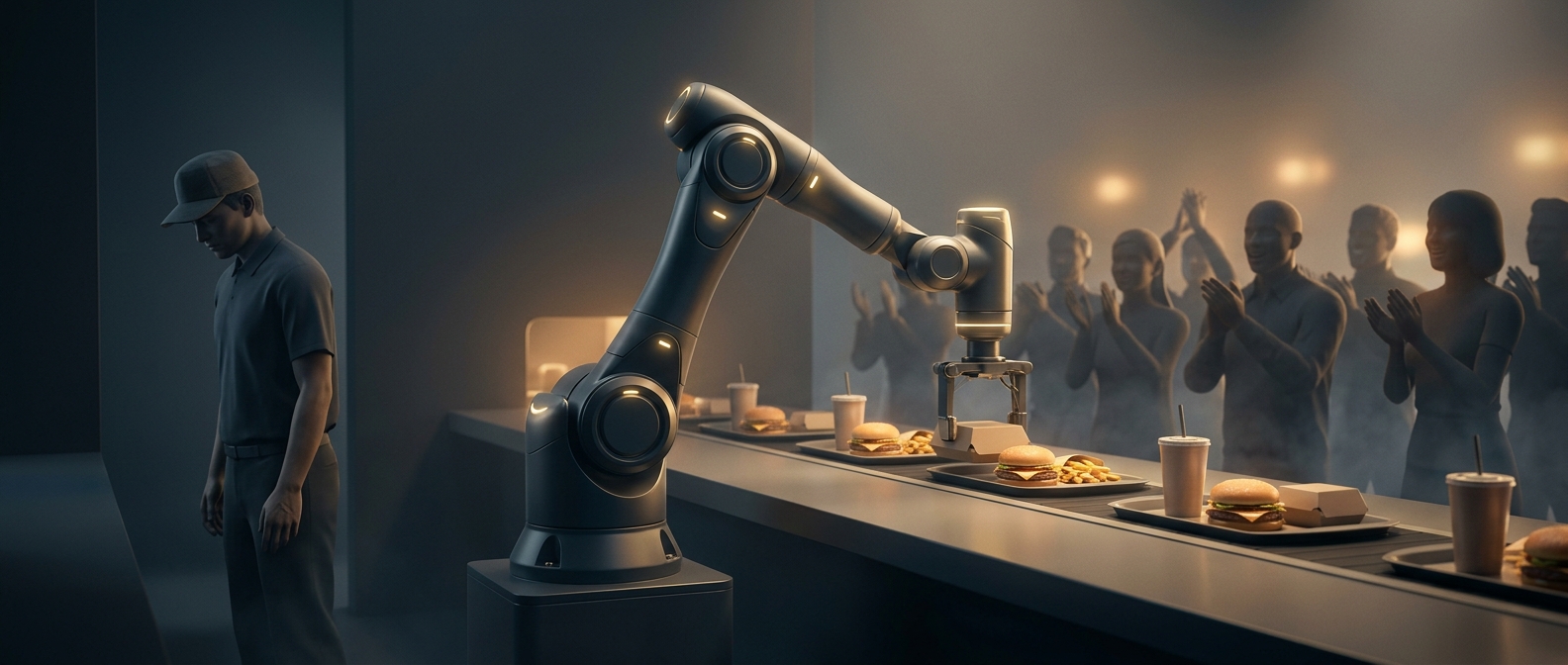
Automating one station does not automatically remove every person from the kitchen. Workers may still prepare ingredients, assemble orders, handle unusual requests, check food, and respond when a machine jams or a process goes off schedule. The practical question is which tasks disappear, which remain, and whether the restaurant needs fewer workers overall—or needs workers to spend more time coordinating and troubleshooting equipment.
That tradeoff can look different from one restaurant to another. A robot may ease a repetitive, hot task, but it also costs money and adds a new point of failure. If the machine cannot keep up with the rest of the kitchen, its speed at the grill may not make the whole meal arrive faster. The consequential change is not simply a robot flipping a patty; it is a redesign of who handles each step between an incoming order and a finished meal.