A Paper Roll Could Type the Same Trash Notice Again and Again
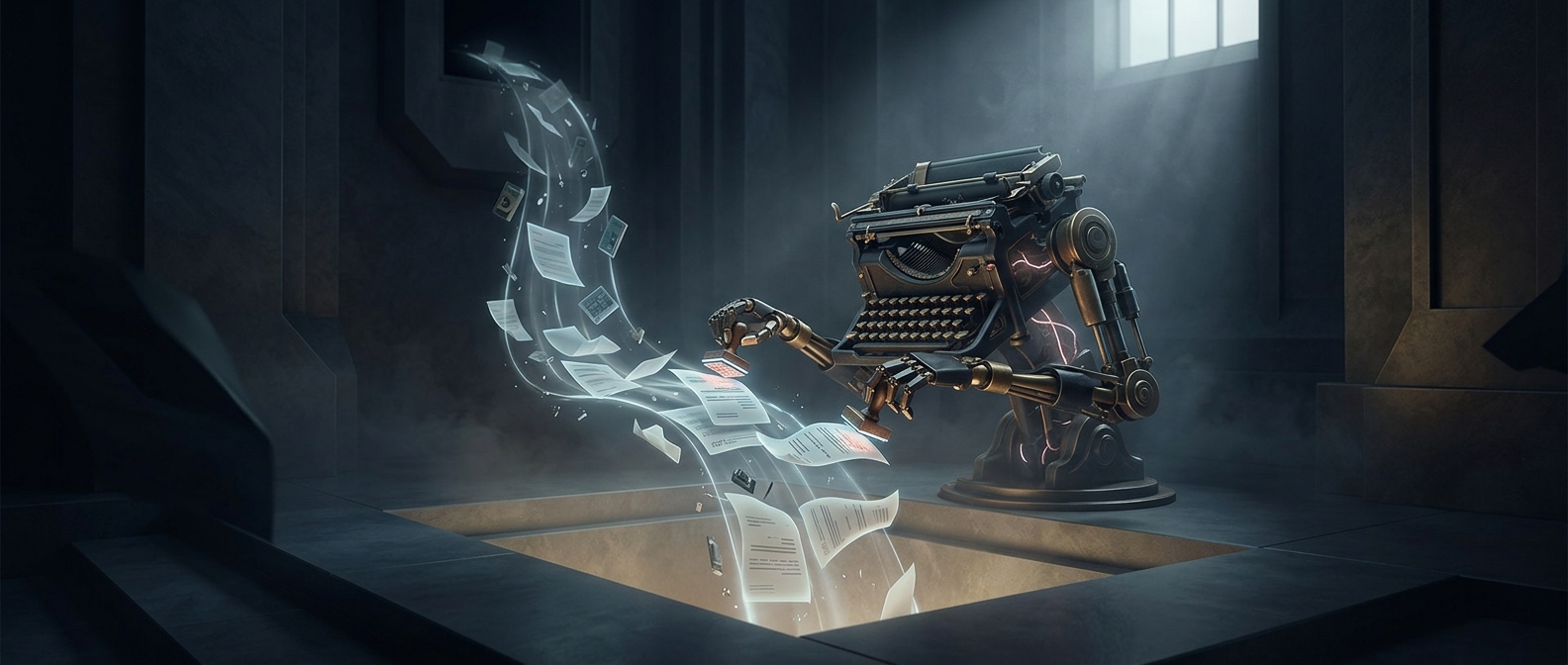
Memphis’s “Auto-Matic” typewriters turned a familiar office task into a kind of mechanical performance. A perforated paper roll guided the machine, much as a player-piano roll guides notes: holes in the paper signaled which keys to strike, letting the typewriter reproduce prepared wording without someone retyping every sentence.
For trash billing, that meant the department could produce a batch of letters with identical language. The machine handled the repetitive text; it did not decide whom to bill or create a complete, personalized letter on its own.
The Human Step That Kept Each Letter Personal
A worker still had to insert each recipient’s name and address by hand. That small task reveals the system’s basic division of labor: the paper roll supplied the reusable message, while a person supplied the details that changed from one household to the next.
The arrangement suited a job with two very different kinds of information. The explanation or notice about trash charges could stay the same across many letters, while the mailing details had to vary. Automating the fixed wording saved repeated typing without requiring the office to automate every part of the process.
Automation With a Visible Limit
These machines were “robots” only in a narrow, practical sense. They followed instructions encoded in paper, but people still prepared the correspondence and handled the recipient-specific information. The surprising image is not a machine independently managing city bills; it is a typewriter reading a roll like sheet music while a worker feeds it the next address.