Two Founders, One Anniversary
John Adams and Thomas Jefferson were not merely former presidents who happened to share a date of death. They had helped make the nation whose birthday Americans were celebrating: both signed the Declaration of Independence in 1776, and both later served as president. By 1826, they were among the last prominent leaders still living from the founding generation.
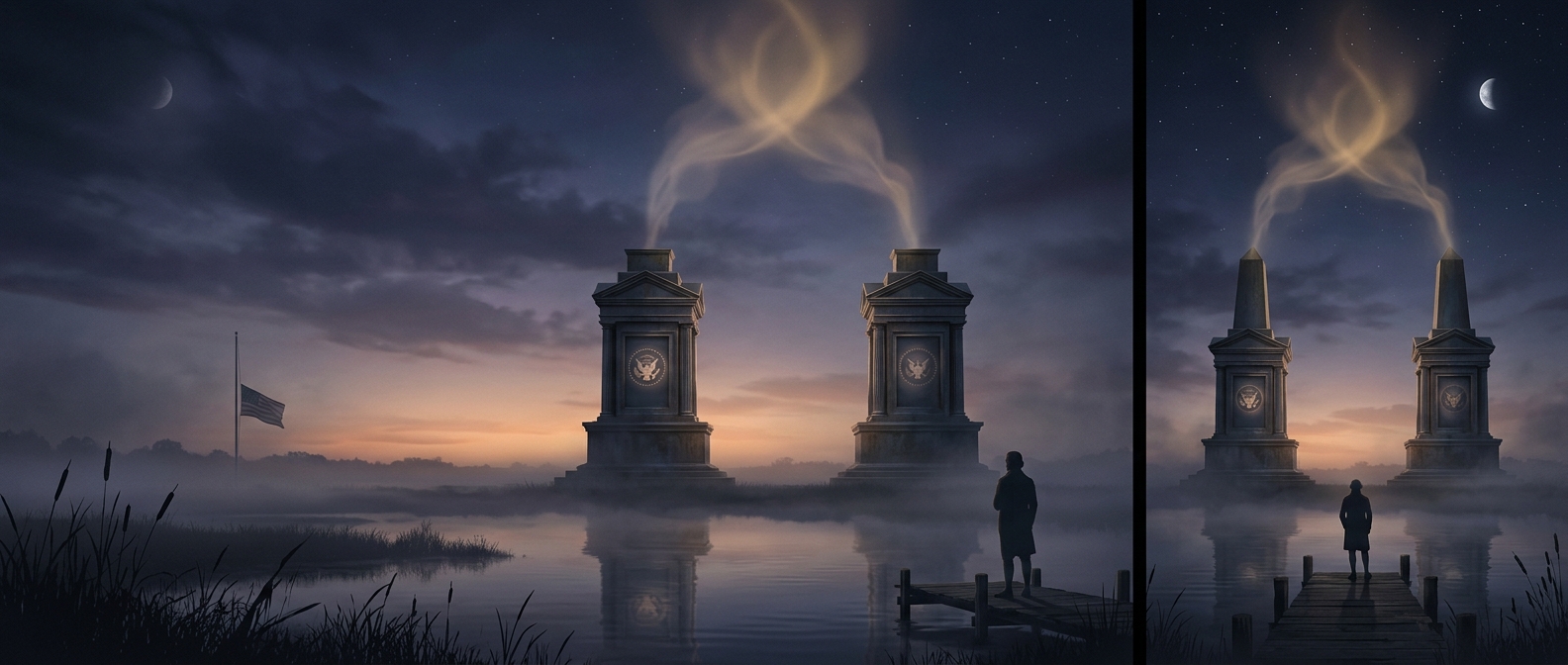
The anniversary gave their deaths an immediate public meaning. News of the Declaration’s fiftieth birthday was already drawing attention to the Revolution and its surviving participants. The deaths of two central figures on July 4 made the day feel like a closing chapter in the country’s founding era—an extraordinary coincidence, not a planned joint event.
From Political Rivals to Correspondents
Their shared history included a bitter split. Adams, a Federalist, and Jefferson, a Democratic-Republican, competed for the presidency in 1800, when partisan conflict was intense. Jefferson won, and Adams left office; the transfer of power between rival parties became an important test of the new republic’s stability.
They later resumed contact through letters, beginning a long exchange about politics, religion, human nature, and the Revolution. That correspondence did not erase their disagreements. It did, however, turn two former rivals back into interlocutors who could reflect together on the experiment they had helped launch.
A Coincidence That Became a National Story
Adams died at his home in Quincy, Massachusetts, while Jefferson died at Monticello, Virginia. They were far apart, and neither could know that the other was dying. Adams’s reported final remark—“Thomas Jefferson survives”—made the coincidence especially affecting: he believed his old colleague was still alive, while Jefferson had already died.
The date linked their private endings to a public ritual. Each July Fourth thereafter could recall not only the Declaration, but also the two men whose lives had carried its arguments from revolution into government. Their deaths did not settle the founders’ disagreements; they made the anniversary a reminder that the nation outlived even its most recognizable founders.