A planet named from the ground beneath us
Most planets in the solar system carry names inherited from Roman mythology. Earth’s name took a different route: it grew from an ordinary word for the ground people stand on. The change reflects a shift in how people used the word, not a deliberate naming decision made when the planet was identified as a world.
From soil to a whole world
Words related to Earth existed in early Germanic languages, where they referred to ground, land, or soil. In everyday life, “the earth” meant the surface underfoot—the place to dig, plant, build, and walk. That was the part of the world people could directly experience.
As the idea of a spherical planet became established, the familiar word expanded to cover the entire globe, including regions far beyond anyone’s immediate surroundings. The old meaning never vanished: even now, “earth” can mean soil, while “Earth” names the planet. Capitalization helps distinguish them in writing, though context often does the work.
A different naming tradition
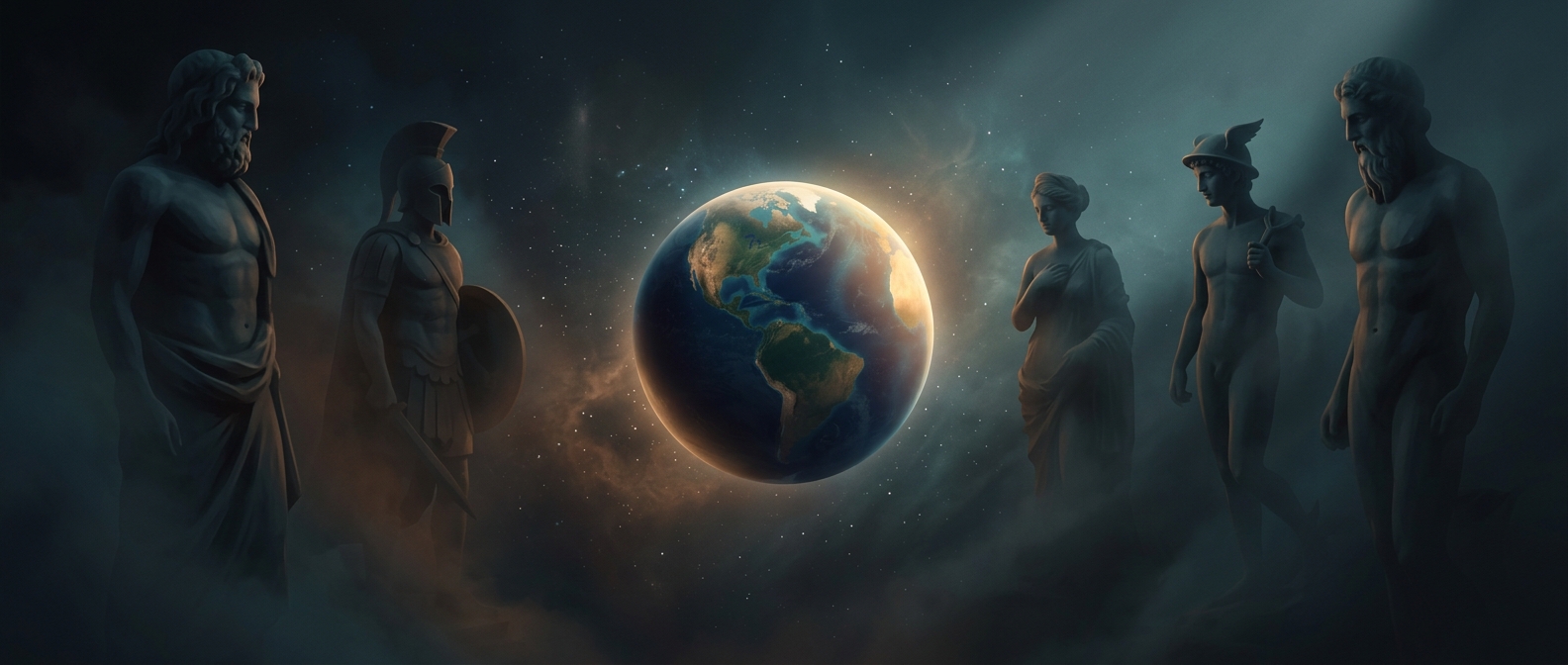
Mars, Jupiter, and the other classical planets visible to ancient observers were associated with Roman gods, continuing a tradition that linked the moving lights in the sky with divine figures. Earth did not appear to be another wandering light among them; it was the ground from which people watched the sky. Its name preserves that everyday point of view.
So the contrast is more than a mismatch between mythological names and a plain one. Earth’s name carries the older human perspective: the planet was first known as home beneath our feet, and only later understood as a world in space.