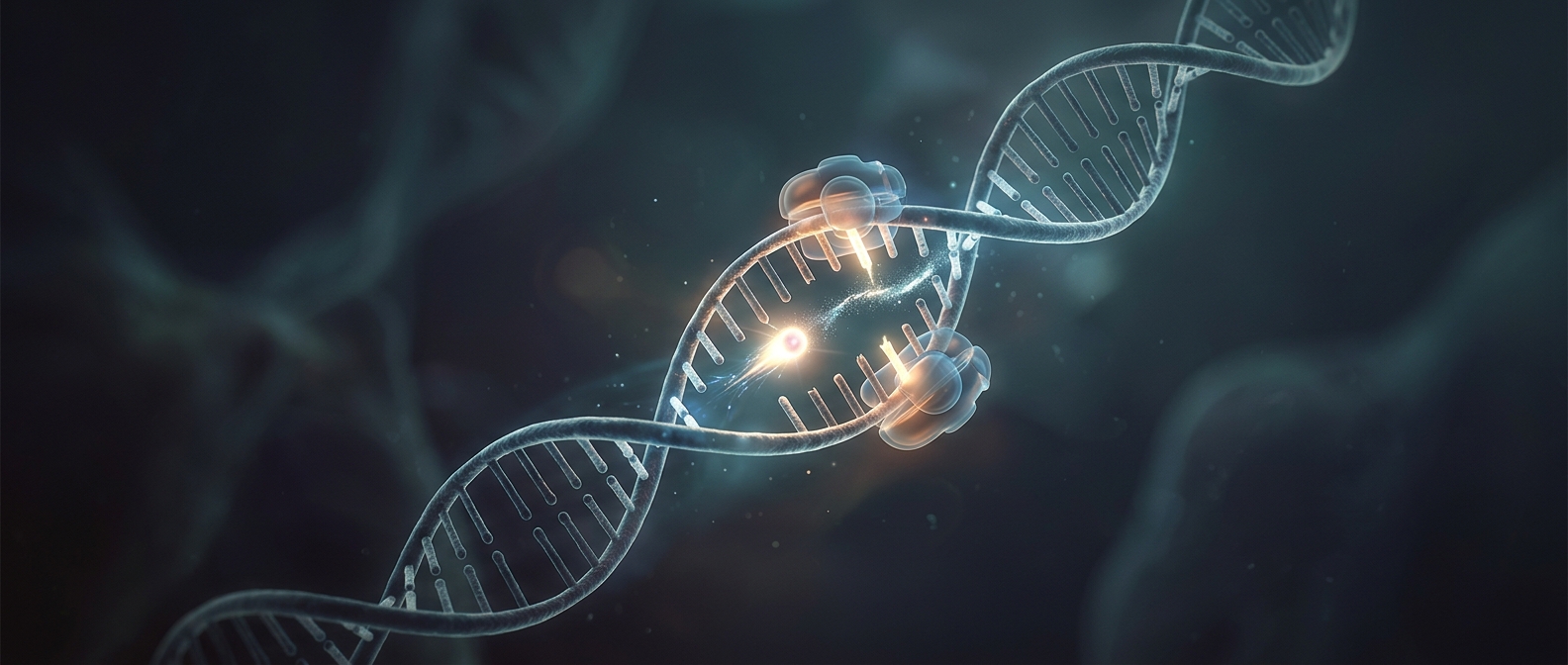
A proton can briefly take an unusual route
DNA’s two strands are held together partly by hydrogen bonds: weak attractions involving hydrogen atoms, including protons—the positively charged nuclei of hydrogen atoms. In the usual picture, a proton moves between two positions only if it has enough energy to cross the barrier between them. Quantum mechanics allows a different possibility: tunneling, in which a particle has some chance of appearing on the other side of a narrow barrier without climbing over it.
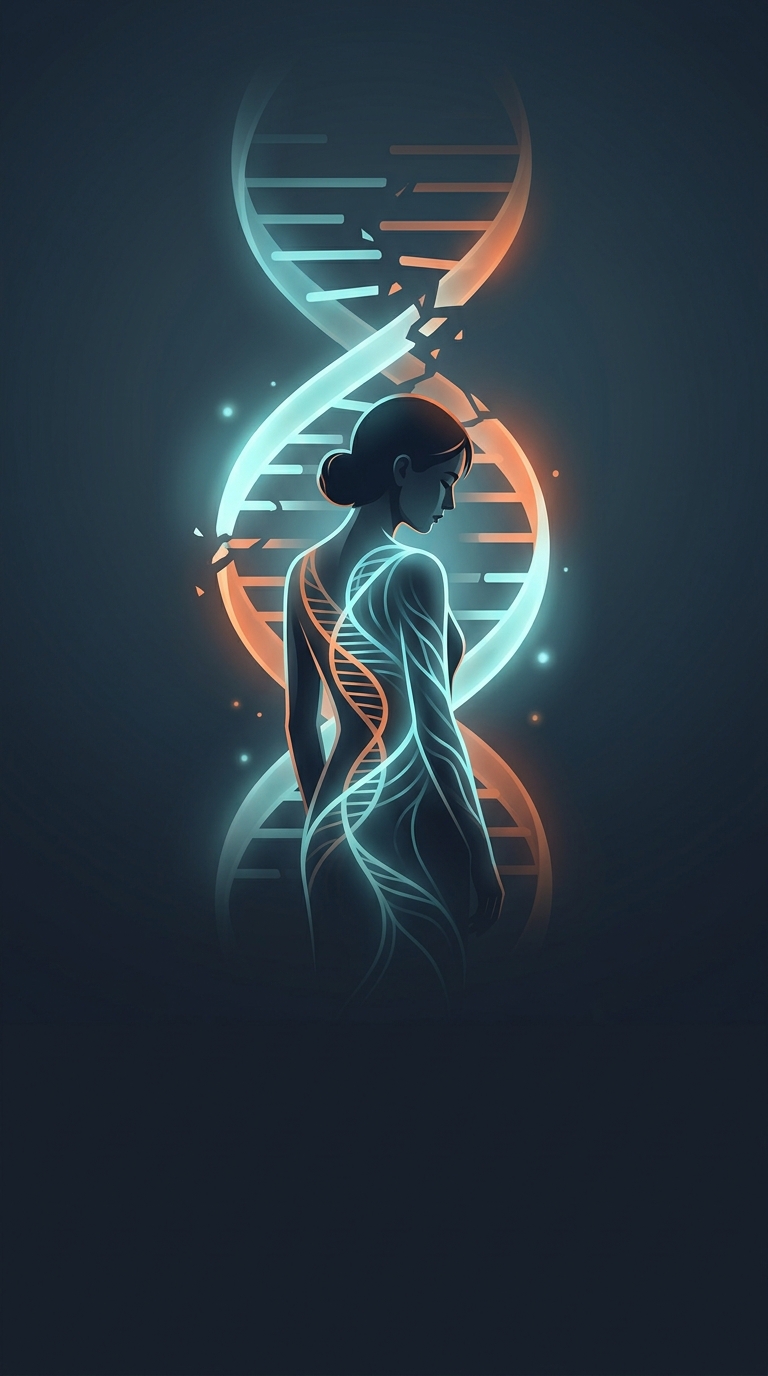
If a proton tunnels within a DNA base pair, it can change where the base’s hydrogen atoms sit. That can briefly alter the base’s bonding pattern and the way it pairs with its partner. A base that normally fits one partner may, in that altered form, pair more readily with another.
From a fleeting mismatch to a lasting change
The altered pairing is not automatically a mutation. The proton may move back, restoring the usual bonding pattern before the DNA is copied. Even if a mismatch remains, cellular repair systems may recognize and fix it.
The change becomes more consequential if DNA replication—the process of copying DNA—takes place while the unusual pairing is present. The copying machinery may then put the wrong base into the new strand. If that altered sequence is copied again, the original mismatch can become a stable change in the DNA sequence.
So tunneling is a possible first step in a chain, not a direct rewrite of DNA: a proton shifts, pairing changes, and only a mismatch that escapes repair and is copied can persist as a mutation.