A ray that vanished when the test changed
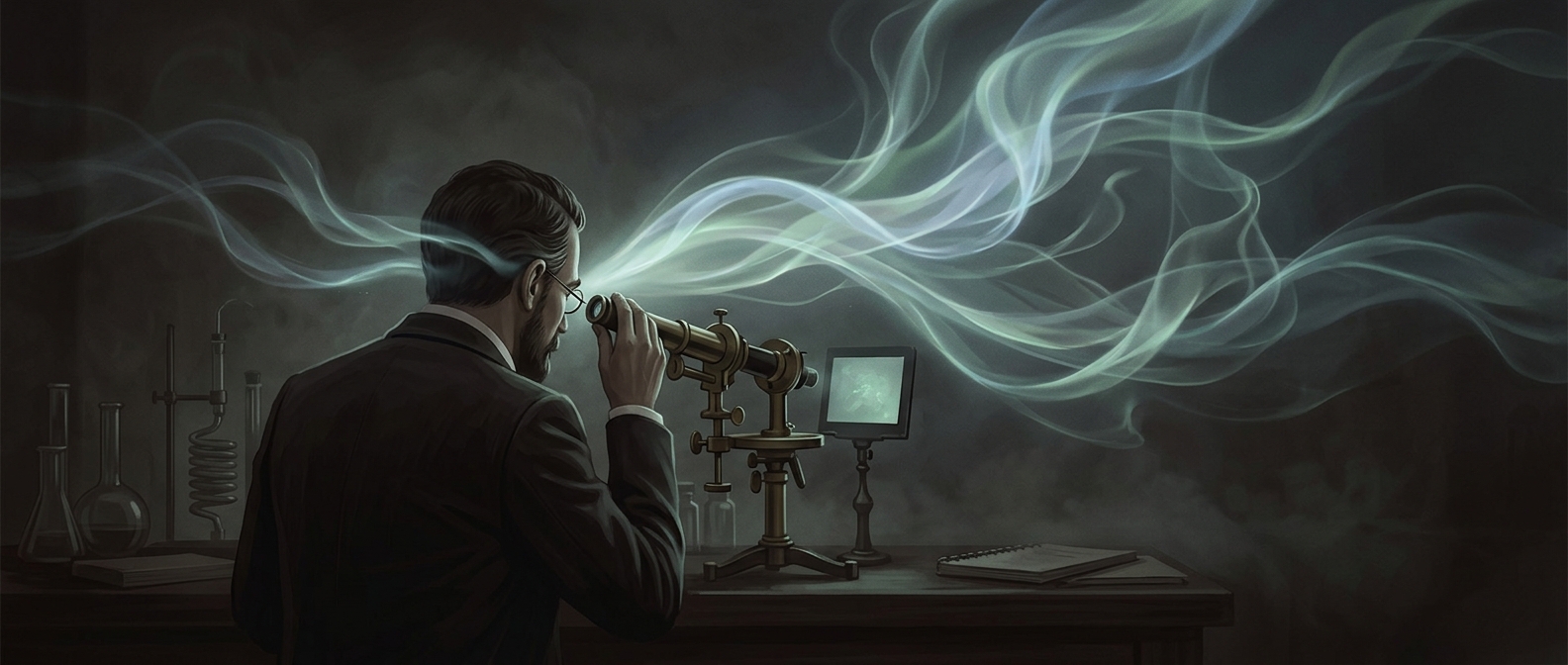
In the early 1900s, French physicist René Blondlot announced a new kind of radiation, which he called N-rays. He said the rays could make very faint objects appear slightly brighter. The effect was so subtle that observers often judged it by looking at a dim glow and deciding whether its brightness had changed.
That made the claim unusually vulnerable to expectation. When the change is barely perceptible, a person who knows when a device is supposed to be working can unconsciously interpret an ambiguous visual impression as evidence that it is.
The crucial test was done in the dark
American physicist Robert W. Wood visited Blondlot’s laboratory in 1904. During a demonstration, Wood secretly removed a prism that was supposed to separate or reveal the N-rays. The observers continued reporting the expected brightness changes, even though the key optical element was gone.
The result exposed a basic problem: their reports followed what they believed the apparatus was doing, not a change that depended on the prism. If N-rays were producing a reliably visible effect, removing the component essential to the demonstration should have altered what observers saw.
Why the claim did not hold up
The episode illustrates why a convincing laboratory observation is not enough when the signal is faint. Scientists need procedures that keep expectations from shaping judgments—for example, hiding from observers whether a test condition is present, then checking whether results can be reproduced independently.
N-rays soon lost support as other researchers struggled to detect them reliably. The episode did not show that observers were deliberately pretending; it showed how ordinary perception can fill in a tiny, uncertain difference. In a dim laboratory, the missing prism mattered less to what people reported than the expectation that they were seeing its effect.