Why a bike can be vulnerable at home
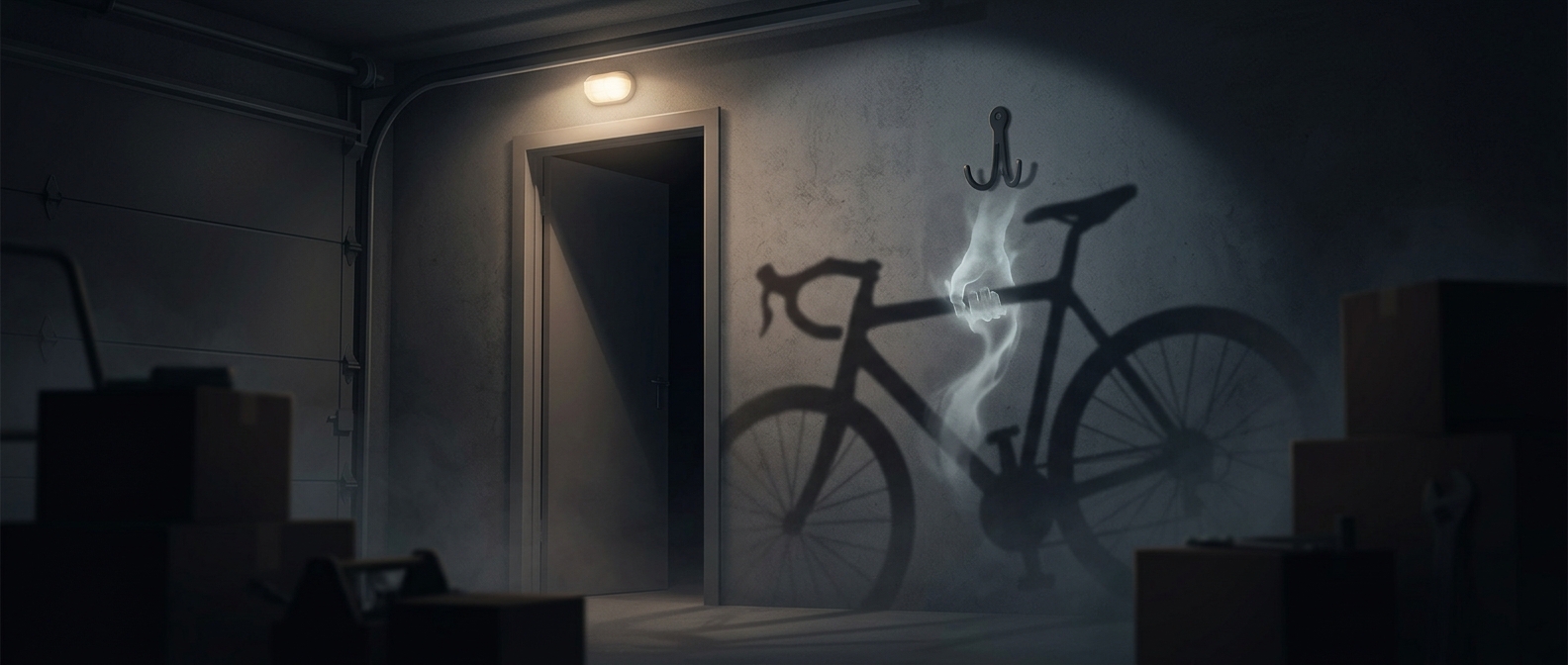
A garage feels safe because it puts a wall and a door between a bicycle and the street. But that protection depends on the building staying secure. A side door left unlocked, a weak latch, or a garage door that is easy to force can give a thief access to several bikes at once—often with less chance of being noticed than on a busy street.
The garage can also make a bike easier to take quickly. It may be stored near an exit, out of neighbors’ view, and without the lock its owner uses when parking outside. Once inside, a thief can work on the bike without drawing the same attention as someone cutting a lock in public.
Secure the bike as well as the building
A door lock protects the room; a bicycle lock protects the bike if someone gets into that room. A strong lock attached to a fixed, sturdy anchor—such as a properly installed ground or wall anchor—makes it harder to carry the bike away or remove it later. Locking the frame matters because a wheel alone can be detached.
The two layers address different weaknesses: the building makes entry harder, while the bike lock makes removal harder. That distinction is especially useful in shared garages or sheds, where someone else may have access even when the owner has locked the door. “Indoors” is a location, not a guarantee that a bicycle is secured.