Why a Wet Backyard Turns Into a Slide
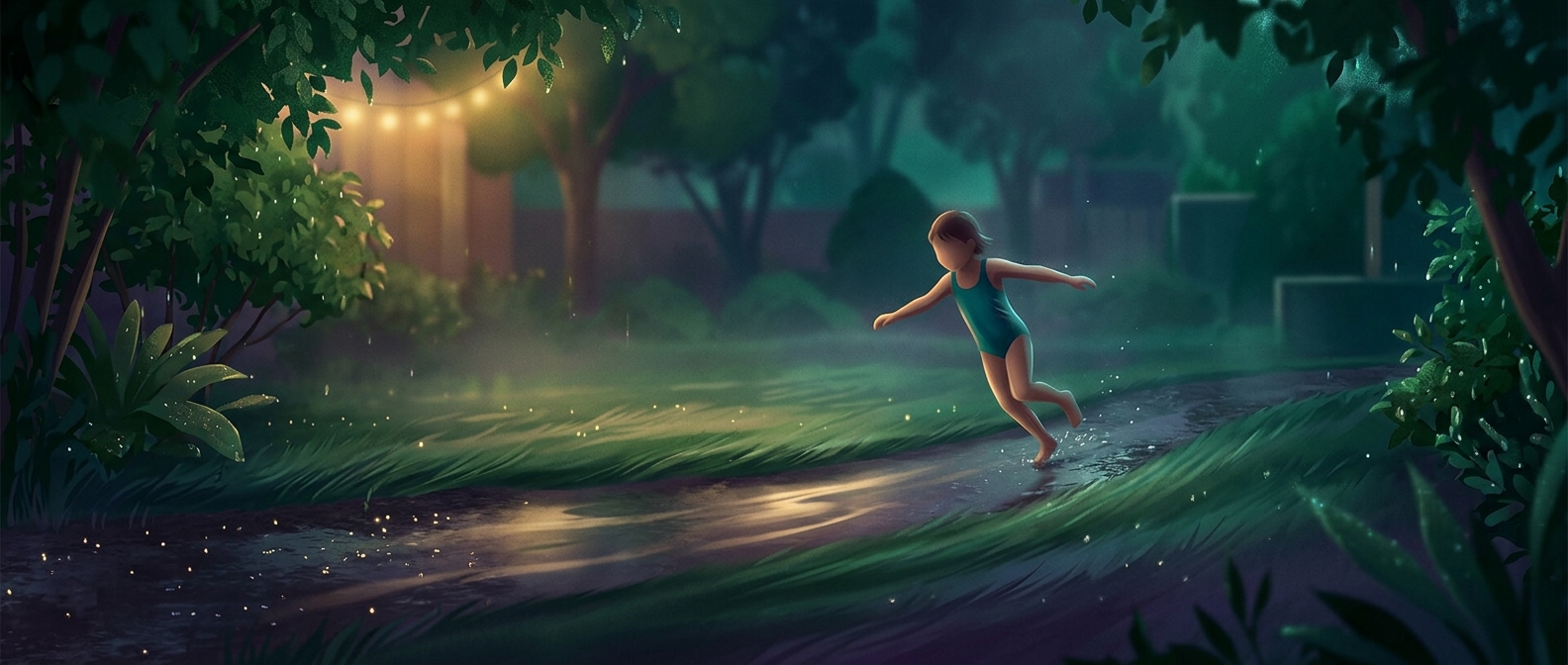
A person running across a wet tarp or slick strip of plastic is using the same basic ingredients as a vehicle on a low-friction surface: forward motion and a thin layer that makes it harder for surfaces to grip each other. Water fills tiny rough spots between skin or clothing and the plastic, reducing the friction that would otherwise slow the body quickly.
The water is not acting like a cushion. It helps the surfaces slip past one another, so a push from the running start can carry the body forward after the feet lose firm traction. The result depends on the surface staying wet and smooth; if it dries or wrinkles, the increased grip can bring the slide to a much quicker stop.
Speed Without Much Steering
A running start adds momentum—the motion an object has because of its mass and speed. Once sliding begins, friction is the main force opposing that motion. On a slick surface, friction is low, so the slide lasts longer than it would on grass. But the body has little control over its path: small differences in posture, surface shape, or where a foot lands can change direction or cause a tumble.
That is the backyard tradeoff. The same low grip that makes the slide possible also makes stopping and steering unreliable. When the plastic ends, the surface changes abruptly: grass grips more than the wet sheet, slowing the body. If that transition is sudden, the person may stop unevenly or fall—an unplanned demonstration of how quickly a change in friction can turn a glide into a halt.