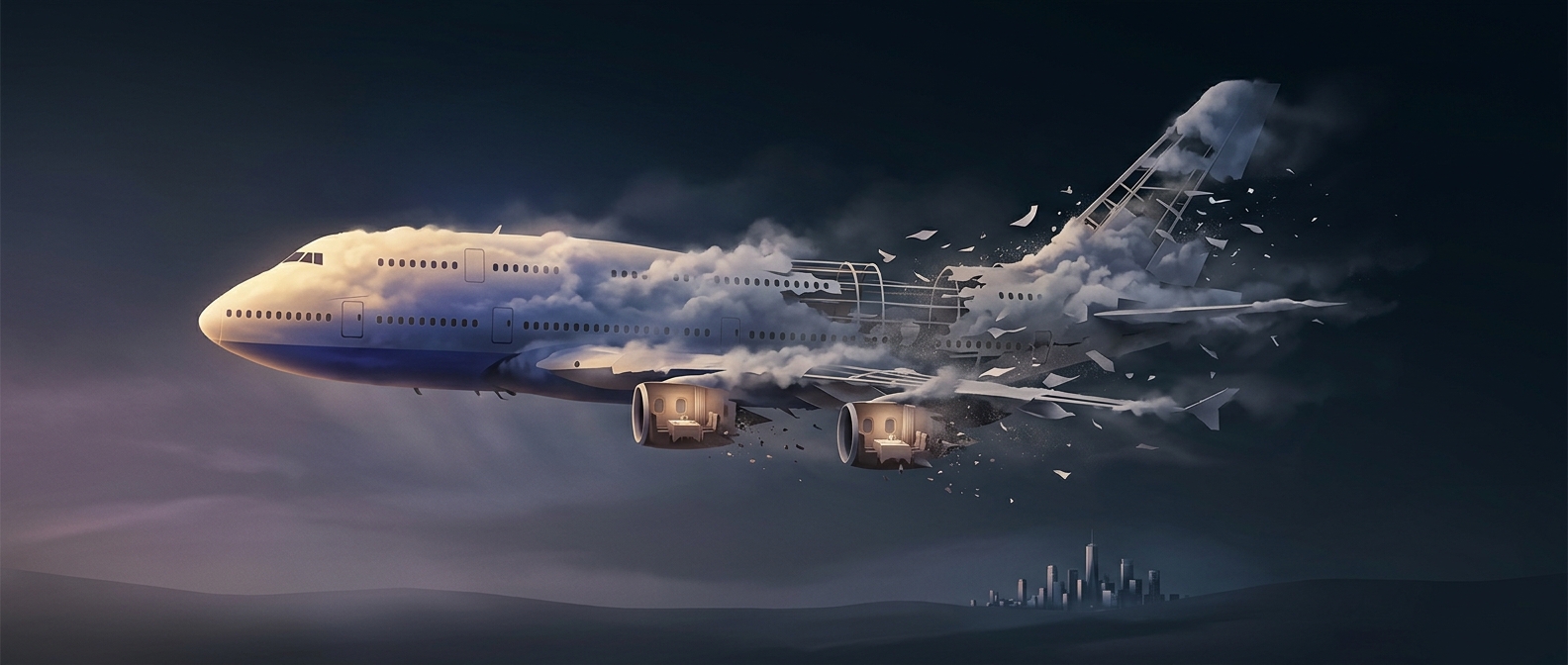
The A380 needed a crowded route, not just a long one
The Airbus A380 was built around a particular bottleneck: busy airports where airlines could not easily add more takeoff and landing slots. Instead of sending another aircraft, a carrier could put more passengers on one flight. Its two full-length passenger decks made that possible—but also made the plane a bet on consistently heavy demand between a limited number of major airports.
That bet shaped the aircraft’s economics. A very large jet spreads some costs, such as the crew and the flight itself, across many seats. But it still burns fuel and requires airport handling whether those seats are occupied or not. If demand dips, the airline cannot shrink the plane to match; the empty seats travel too. And a flight that is too large for its market may run only at selected times, giving travelers fewer options.
Smaller jets changed the network calculation
Modern twin-engine long-haul aircraft can connect many city pairs directly. That lets airlines build routes around where passengers actually start and end their trips, rather than concentrating them into huge connecting hubs. Two smaller flights can also be scheduled at different times or adjusted as demand changes, a flexibility one enormous departure cannot offer.
The tradeoff is that smaller aircraft may require more flights—and therefore more airport slots—to carry the same number of people. Where slots are scarce and demand is dense, a giant still has a role. Elsewhere, flexibility can be worth more than maximum capacity.
Airbus ended A380 production in 2021, but planes already delivered continue to fly. The aircraft’s legacy is not simply that it was too big: it showed how a plane can be technically impressive and still depend on a narrow match between airport congestion, route demand, and passenger schedules.