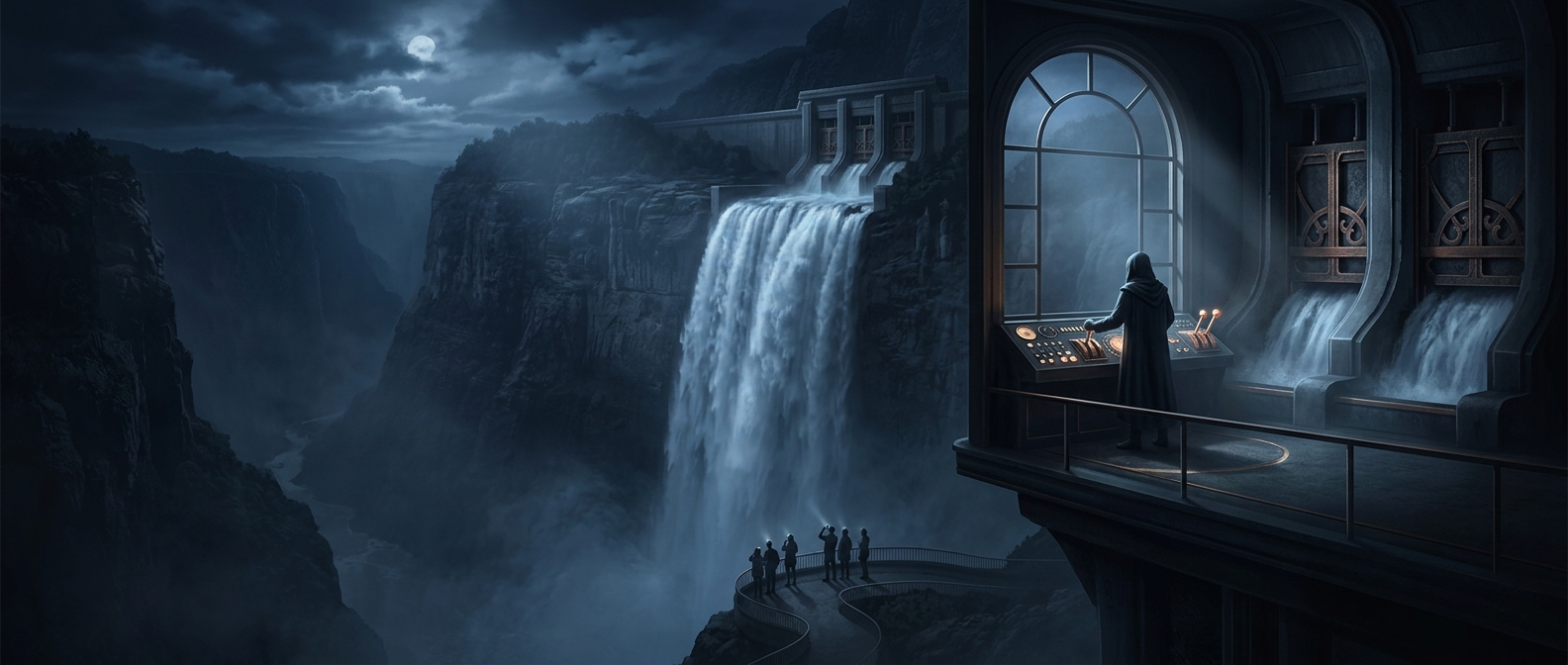
The plumbing behind a dependable waterfall
A natural waterfall looks like a simple consequence of gravity: water reaches a ledge, spills over, and falls. But at some visitor attractions, the visible cascade is also the endpoint of water-management equipment. Hidden pipes and channels can steer water, while pumps push it through a route it would not take on its own. A bypass valve—a control that opens or closes an alternate path—lets operators change where water goes.
That equipment matters most when natural flow is low. In a dry spell, less water may arrive at the falls, so the cascade can thin. Pumping or rerouting water can help preserve the view, even though the waterfall’s appearance then depends partly on infrastructure as well as weather and terrain.
A scenic feature with operating choices
Keeping water moving requires a source and energy to move it. Pumps do not make water; they transfer it, and valves regulate its path. The system gives managers a way to influence the flow visitors see, but operating it is a practical choice rather than a permanent guarantee: conditions, equipment, and water availability still matter.
The result is a subtle travel surprise. A famous waterfall can look like an untouched force of nature while relying, at times, on controls hidden from view. Its familiar curtain of water may be partly maintained by people working behind the scenery.