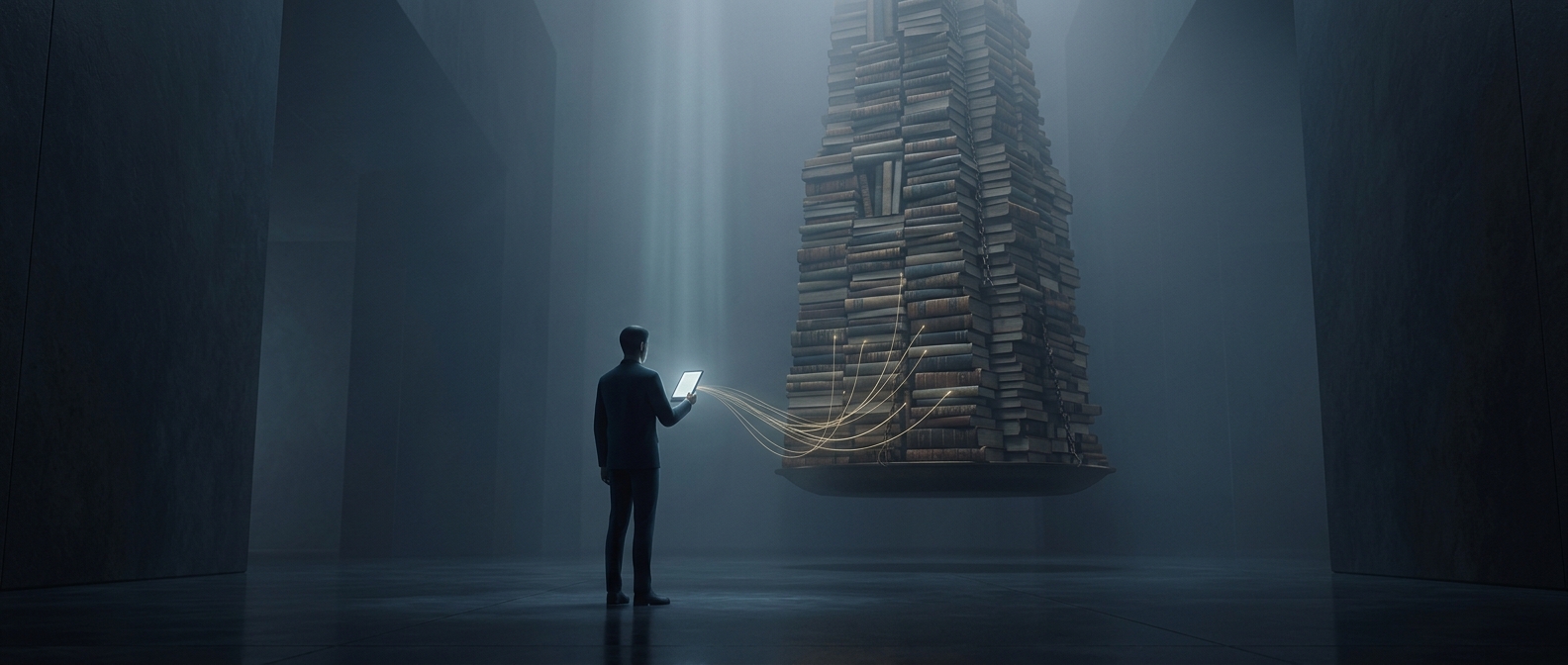
Why a library fits in a reader
An electronic book is stored as a digital file, not as a miniature page-by-page physical object. The words and basic formatting can be represented with relatively little data, so a reader’s built-in flash memory—storage that keeps its contents without power—can hold a large collection. The device retrieves a book when you open it and draws the text on screen a page at a time.
That separation matters: the screen displays the book, but it does not need to contain a separate physical page for every page in the book. E-ink screens, common in dedicated readers, form letters from tiny particles that rearrange to create light and dark areas. They can keep a page visible without continuously refreshing it, helping readers conserve battery power.
What uses the space
A mostly text-based novel takes far less storage than a print copy takes up on a shelf. Images, elaborate layouts, and large illustrations add data, so a richly illustrated title may occupy much more space than a plain-text book. The number of books a particular reader can store therefore depends on its available memory and the kinds of books in the collection.
The practical change is not that the books have become weightless in every sense: the reader still has a screen, battery, and casing. It is that adding another novel usually means adding a small file rather than another bound volume—so a growing reading collection need not grow into another shelf.