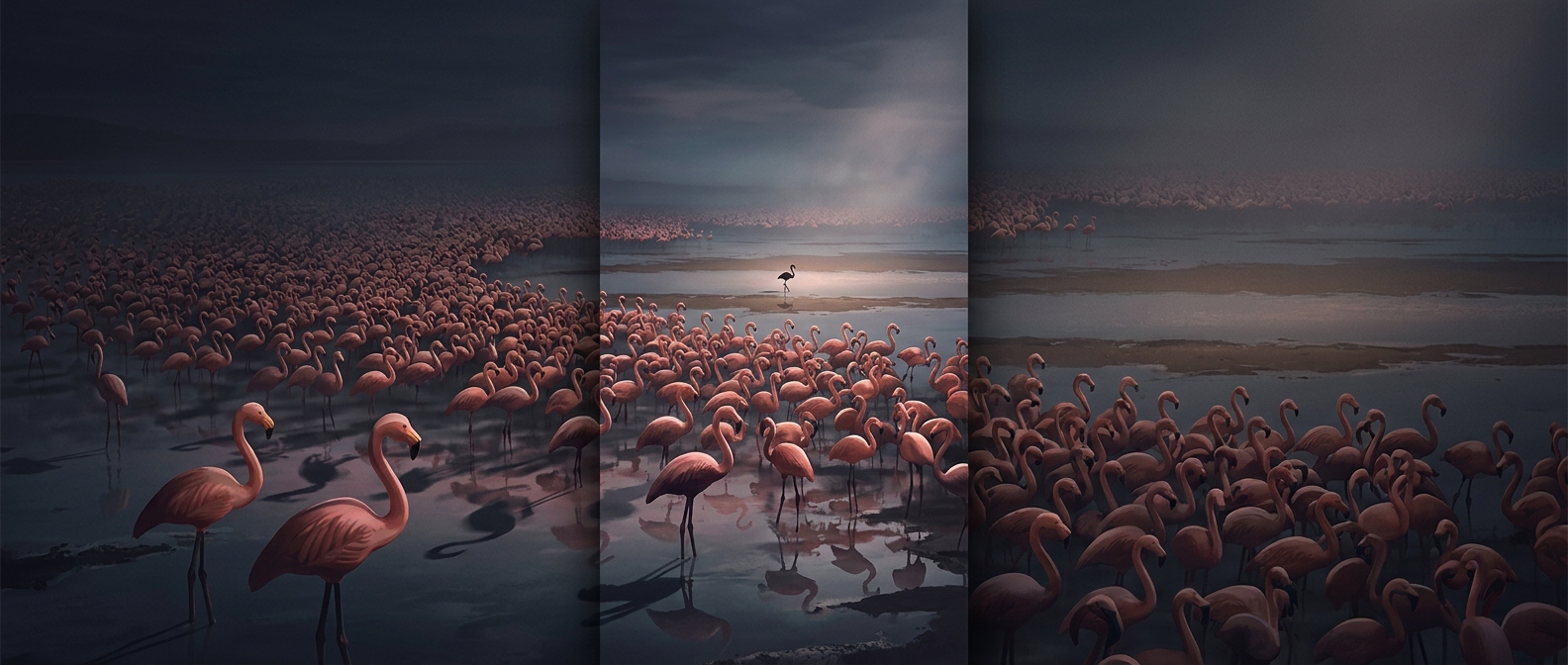
Why a lawn ornament can outnumber a wild bird
The comparison turns on two very different kinds of “population.” A flamingo ornament is a manufactured object: once a design and production process are in place, factories can make many copies, and each one may remain in circulation for years. The total number scattered across lawns, gardens, and collections can therefore build up over time.
Real flamingos face limits that manufacturing does not. Their numbers depend on suitable wetlands, food, breeding success, and survival. A bird count is also a snapshot of a living population, while ornaments can accumulate across decades. That makes a global head count difficult, so the claim that plastic flamingos outnumber real ones is best understood as a plausible comparison, not a precise census.
The economics behind the flock
For a maker, the central advantage is repeatability. A mold can turn the same recognizable shape into a standardized product, while the cost of setting up production is spread across many copies. Buyers, meanwhile, can acquire the familiar pink bird without needing a rare material or a particular landscape. The ornament’s appeal travels easily from one yard to another.
Wild flamingos cannot scale in response to consumer demand. Their breeding and feeding depend on ecosystems that vary from place to place, and habitat loss can constrain those ecosystems. So the contrast is not simply that plastic is popular and wildlife is scarce: it reflects one population expanded by production and another bounded by biology and habitat. A lawn can host a whole flock in a space where a real one could not survive.