A library built around the route
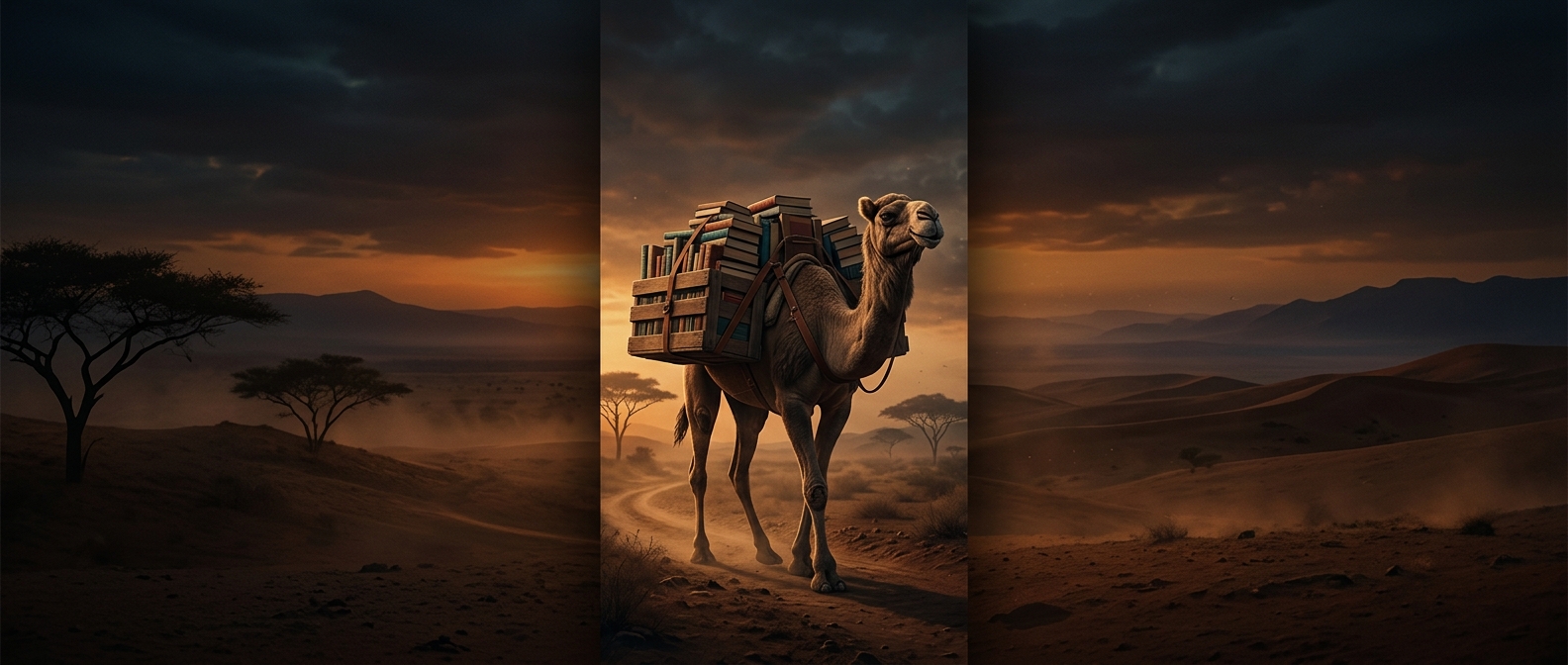
In parts of northern Kenya, distance is not just a matter of miles. Sparse roads and scattered settlements can make a fixed library hard to reach, even when books are available. A camel library reverses the usual arrangement: instead of asking every reader to travel to a building, it brings a small, movable collection closer to where people live.
The camel is the transport solution, not a novelty added to a conventional library. It can carry a load across dry, rough ground where a vehicle may have difficulty getting through. That lets the service reach places beyond the practical edge of a road network, using an animal already suited to travel in arid country.
The tradeoff is reach, not size
A building can hold far more books and offer a permanent place to read. A camel-borne collection cannot match that capacity; its value is that it can move. The books must be selected and carried as a limited, portable stock, so each visit brings a small slice of a larger library rather than a full set of shelves.
That changes what access means. For a community far from a library building, the key question is not how large the collection is, but whether books can arrive at all. Here, the library’s transport is part of its service: a reachable handful of books can matter more than a much larger collection stranded at a distance.