From a milk pouch to a lasting food
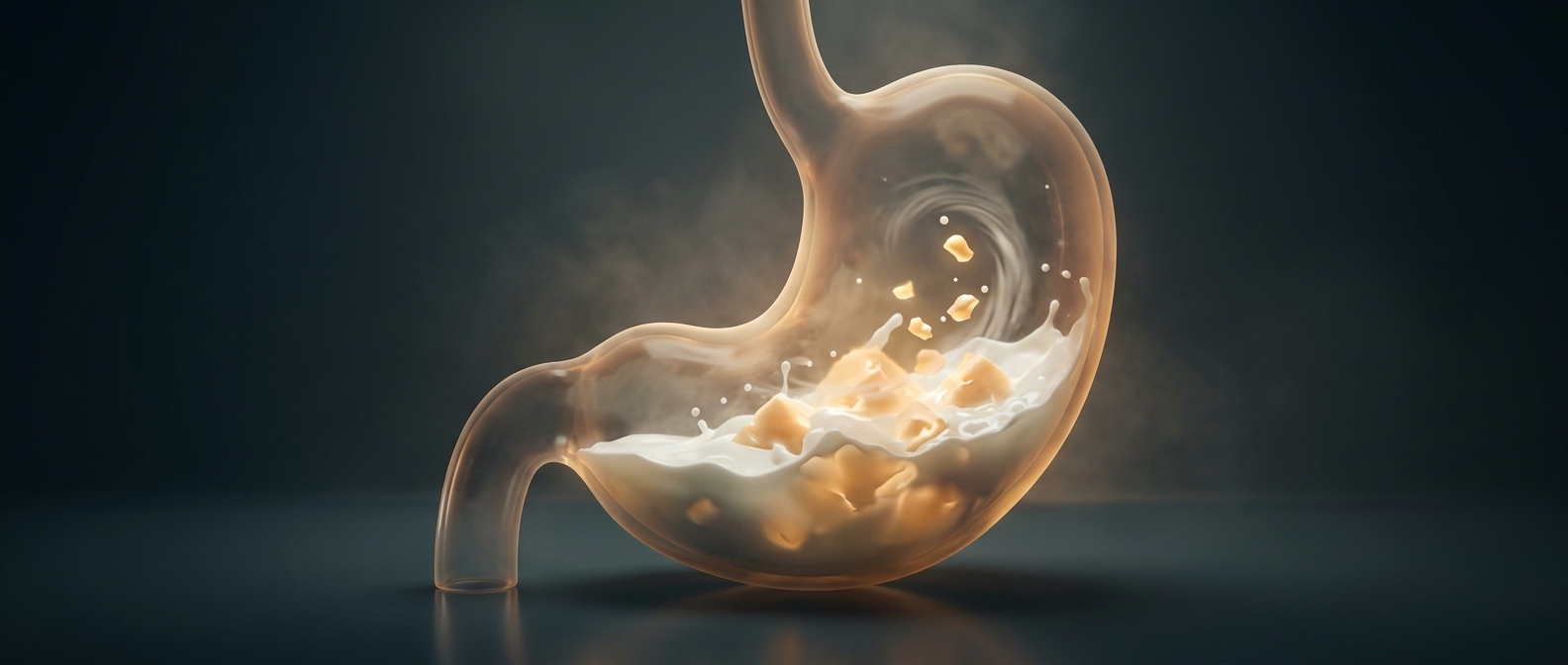
Fresh milk is nutritious but spoils quickly, especially on a long journey. A pouch made from an animal’s stomach could do more than carry it: enzymes in the stomach lining, collectively called rennet, can make milk’s proteins gather into a soft mass. The liquid left behind is whey; the solid mass is curd.
This familiar origin story captures a real cheese-making mechanism, though it cannot tell us exactly when or where people first made cheese. Once the curds were separated and drained, they were easier to carry than liquid milk and could keep longer, particularly when salted or dried.
Why the milk separates
Milk contains casein proteins suspended in liquid. Rennet—especially an enzyme called chymosin—alters the casein so the proteins cling together and form a network that traps fat and some water. As the curd firms, whey can drain away. The result is not just spoiled or thickened milk: it is a different material that can be shaped, salted, aged, or eaten fresh.
The process also made milk useful to people who could not easily digest much lactose, the natural sugar in milk. Some lactose leaves with the whey, and more is broken down as cheese cultures ferment the curd. How much remains depends on the cheese and how it is made.
A chance discovery becomes a craft
A stomach pouch would not reliably produce the same cheese every time: temperature, milk, and handling all affect the curd. But recognizing that the lining could transform milk gave people a repeatable starting point. Over time, cheesemakers learned to control the steps—coagulating, cutting, draining, salting, and aging—turning a useful accident into a way to preserve milk in many forms.