The brake had to answer a simple fear
In the mid-19th century, elevators could move heavy loads, but the idea of riding one depended on a harder question: what would happen if the lifting rope broke? A platform suspended high above the floor made that possibility feel immediate. Elisha Otis’s safety device was designed to make a rope failure stop being a free fall.
How the mechanism caught the platform
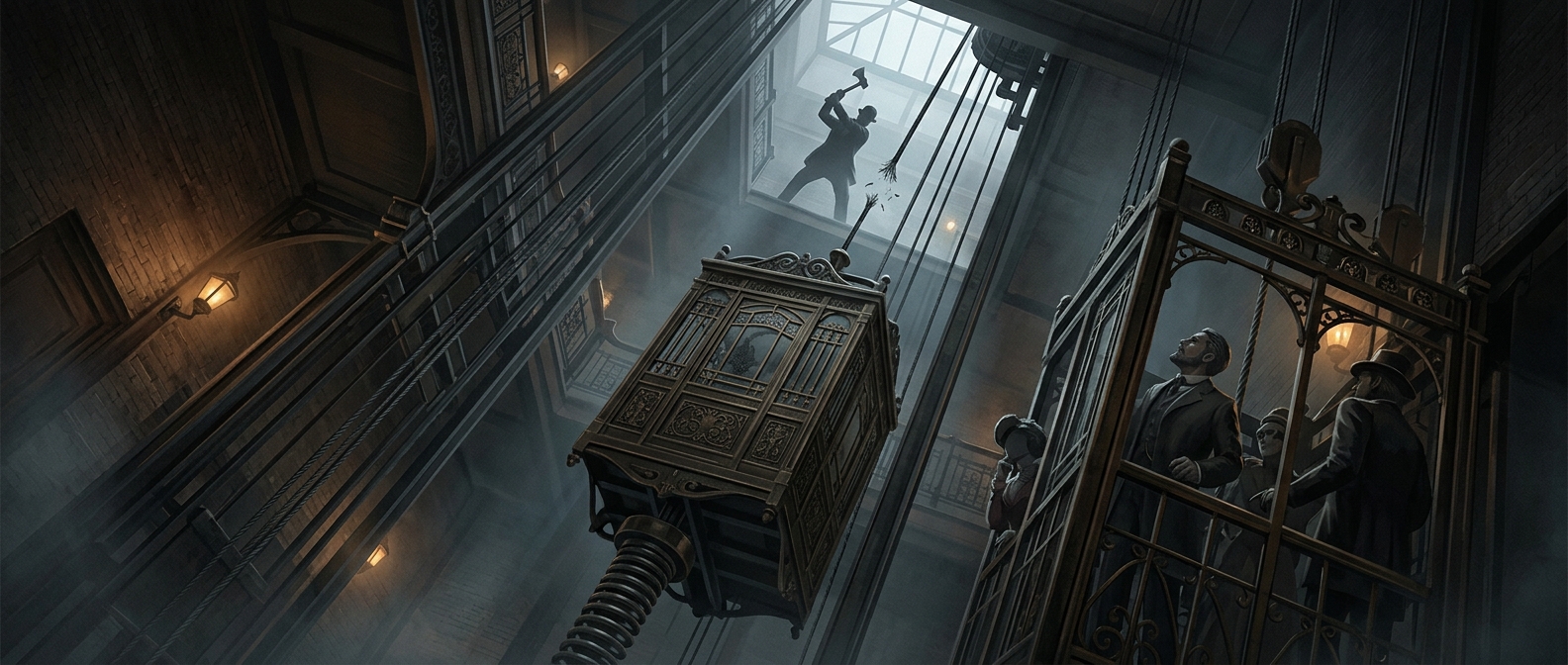
The brake used a spring held back by tension in the hoisting rope. While the rope was taut, the spring stayed restrained. If the rope snapped and its tension disappeared, the spring drove catches against toothed guides alongside the elevator shaft. Those catches gripped the guides and arrested the platform.
The key was that the failure itself triggered the safety system. It did not depend on someone noticing a broken rope and acting quickly; the loss of tension released the brake automatically.
Turning a hidden mechanism into public evidence
Otis demonstrated the device before an audience by standing on a raised platform while a man cut its hoisting rope. The platform moved only a short distance before the catches engaged. The demonstration made an invisible mechanical principle visible: the very event people feared was what activated the brake.
That mattered because an elevator was not useful as public or commercial transport if passengers assumed a single broken rope meant disaster. A dependable safety brake helped make riding upward seem like a controlled journey rather than a gamble—and helped clear a practical obstacle to putting elevators in buildings where people, not just cargo, had to trust them.