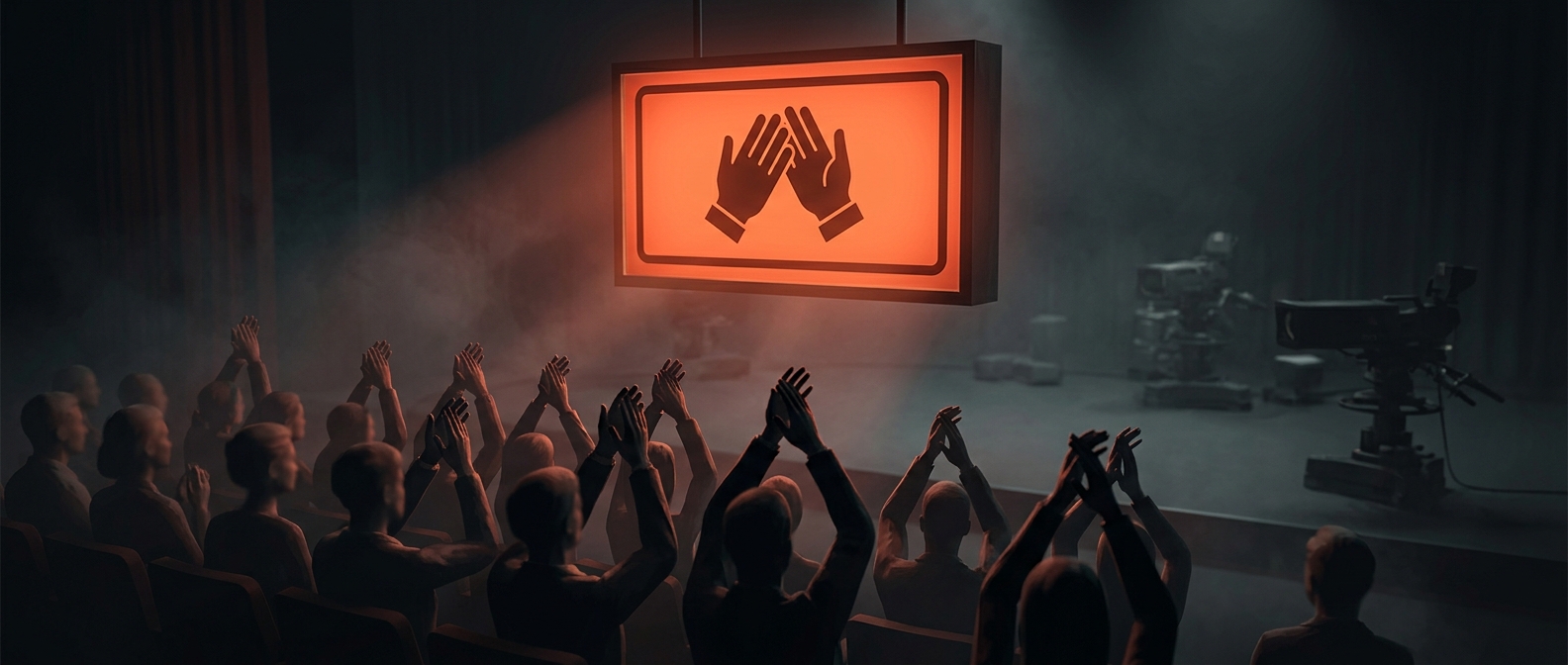
A red light could turn a pause into applause
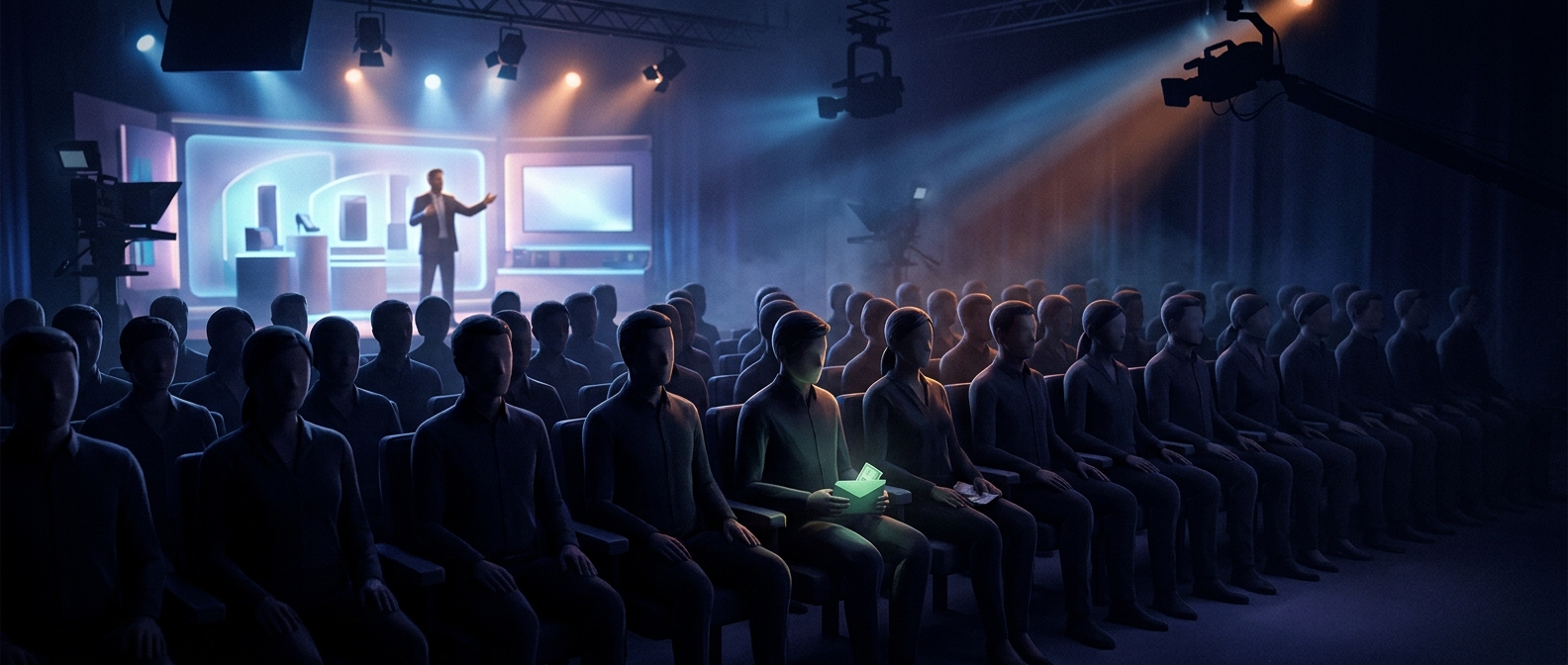
In a sitcom taped before a live audience, the people in the room were part of the recording. A bright red cue light gave them a simple instruction: clap now. That signal mattered because the show was being performed on a schedule, not unfolding like an ordinary conversation. Even a joke that earned only a mild reaction might be followed by applause if the light told the audience to respond.
Why the cue helped the production
A sitcom needs room for laughter and applause without letting either swallow the next line. Performers may pause after a joke, but a crowd’s reaction varies in length and volume. A visible cue gave the audience a shared starting point, helping the director and cast keep the scene moving and making the response easier to capture cleanly.
The light did not make a joke funny; it coordinated the room. The audience still supplied the sound, but the cue could shape when it came—and could prompt a bigger, more uniform reaction than the joke alone might have produced.
The audience was part of the timing
That timing affected what viewers heard at home. A pause for applause or laughter creates space around a punch line, while a prompt response can make a scene feel livelier. The red light was therefore more than a backstage convenience: it helped turn a live crowd’s unpredictable reactions into a usable part of the show’s rhythm.