Why the Crowd Cheers on Cue
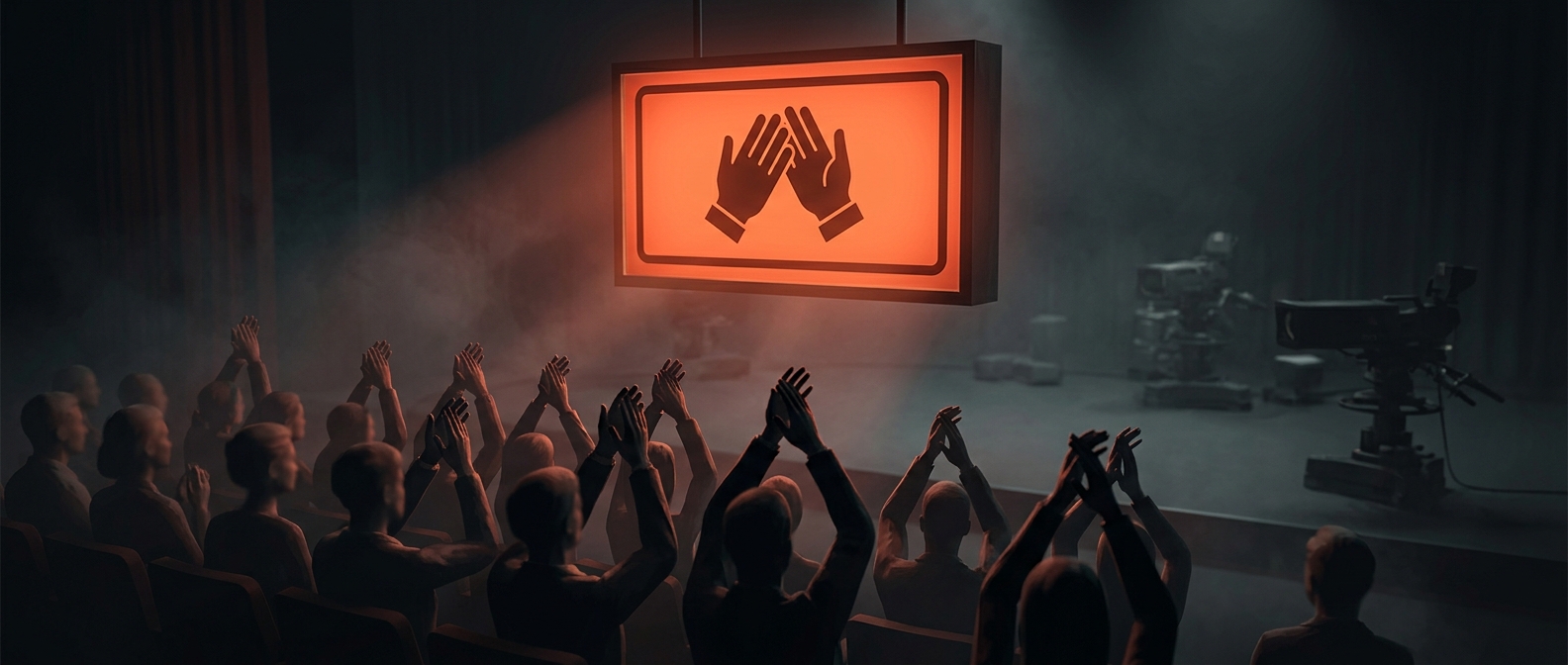
An infomercial demonstration is designed to make a product’s benefits easy to see—and easy to react to. A stain lifts, a surface shines, or a task suddenly looks simpler. The crowd’s response gives that visual change an audible punctuation mark: applause tells viewers, in effect, that this is the moment to notice.
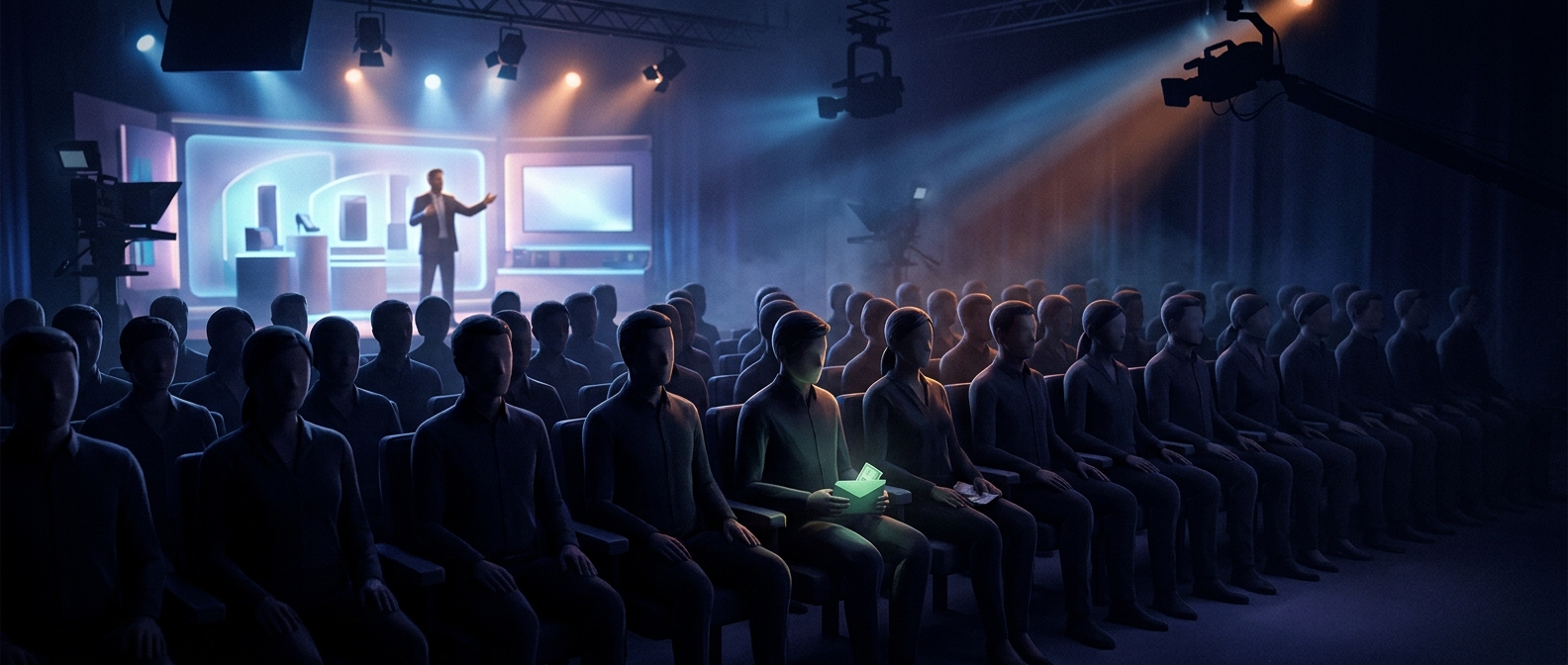
The people in the audience are paid background workers, not necessarily shoppers who happened to wander in. Their job is to help create the lively atmosphere the production wants. They may be coached to respond at particular moments, so cheers and applause land after a demonstration rather than arriving randomly or drowning out the presenter.
A Demonstration Needs a Rhythm
That timing matters because infomercials have to explain and sell at once. Presenters move through a sequence—show a problem, demonstrate a product, then emphasize the result. If the room stays quiet, the segment can feel flat; if reactions come at the wrong time, they can distract from what the camera is showing. Directed crowd reactions help keep the performance moving.
The audience also makes a studio presentation feel more like a shared event than a product pitch delivered to a lens. Viewers at home see the demonstration and hear other people react to it, which can make the moment feel more exciting. The cheers are part of the production, not independent proof that the product works. The demonstration itself is what viewers can inspect; the applause is a cue that shapes how the scene feels.