Applause once had room inside the music
At an 18th-century concert, silence was not yet the universal sign of attention. In Mozart’s era, listeners might applaud after a particularly pleasing passage—even before the larger work had ended. Opera made this especially natural: an aria could offer a singer a self-contained moment to impress the audience, and applause could mark that response while the evening continued.
The performance was a social exchange
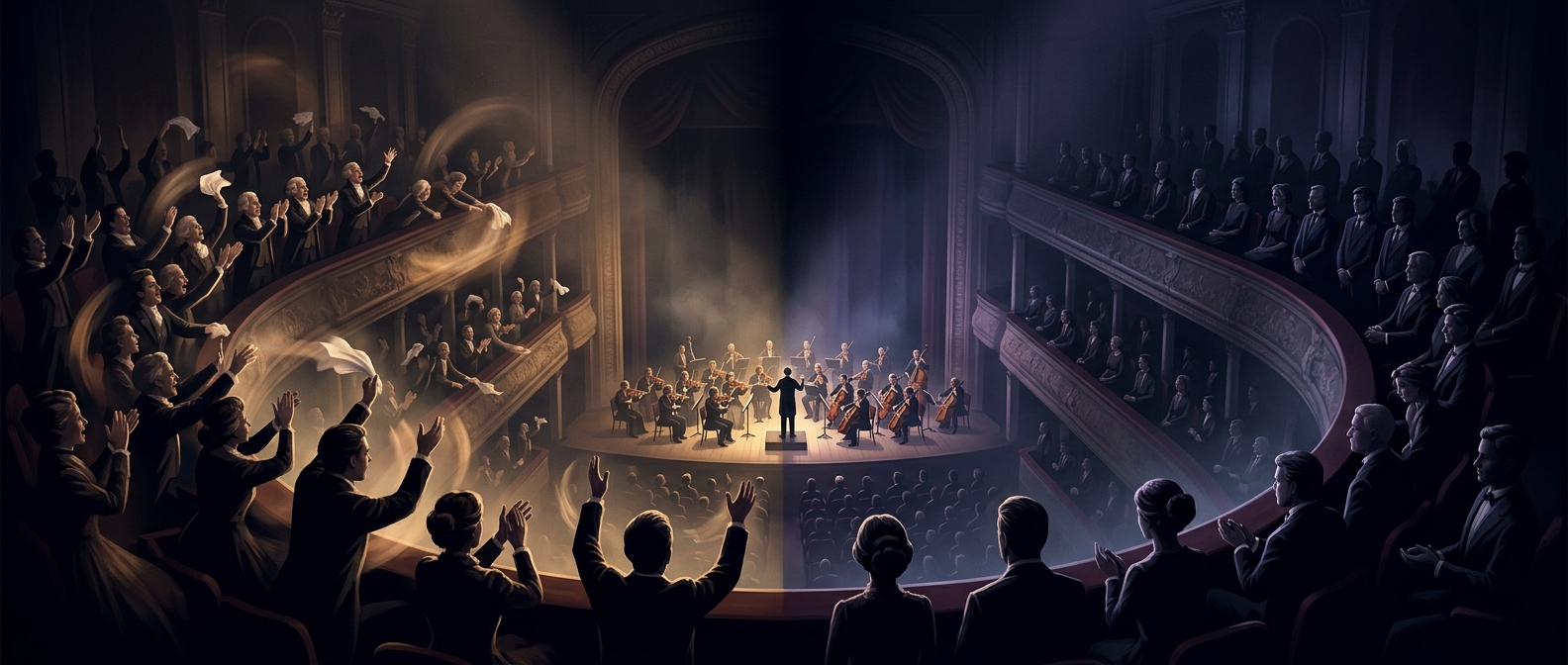
Concerts were less governed by the modern expectation that everyone remain quiet until the final note. Audiences could react audibly, and performers worked within that livelier atmosphere. A burst of clapping was not necessarily a breach of etiquette; it could signal that a melody or performance had landed. The boundary between listening and responding was more porous than it is at many symphony concerts today.
Why the convention changed
The shift toward sustained quiet was gradual, not a sudden rule imposed on all music at once. As concertgoing developed into a more formal practice, uninterrupted listening became a stronger ideal. That change also altered what audiences treated as the natural unit of applause: instead of responding to a favorite moment, they increasingly waited for the whole work to finish.
The familiar hush of a modern symphony hall is therefore a convention, not an eternal feature of classical music. Mozart’s audiences could let a melody stop them mid-performance—and tell the musicians so.