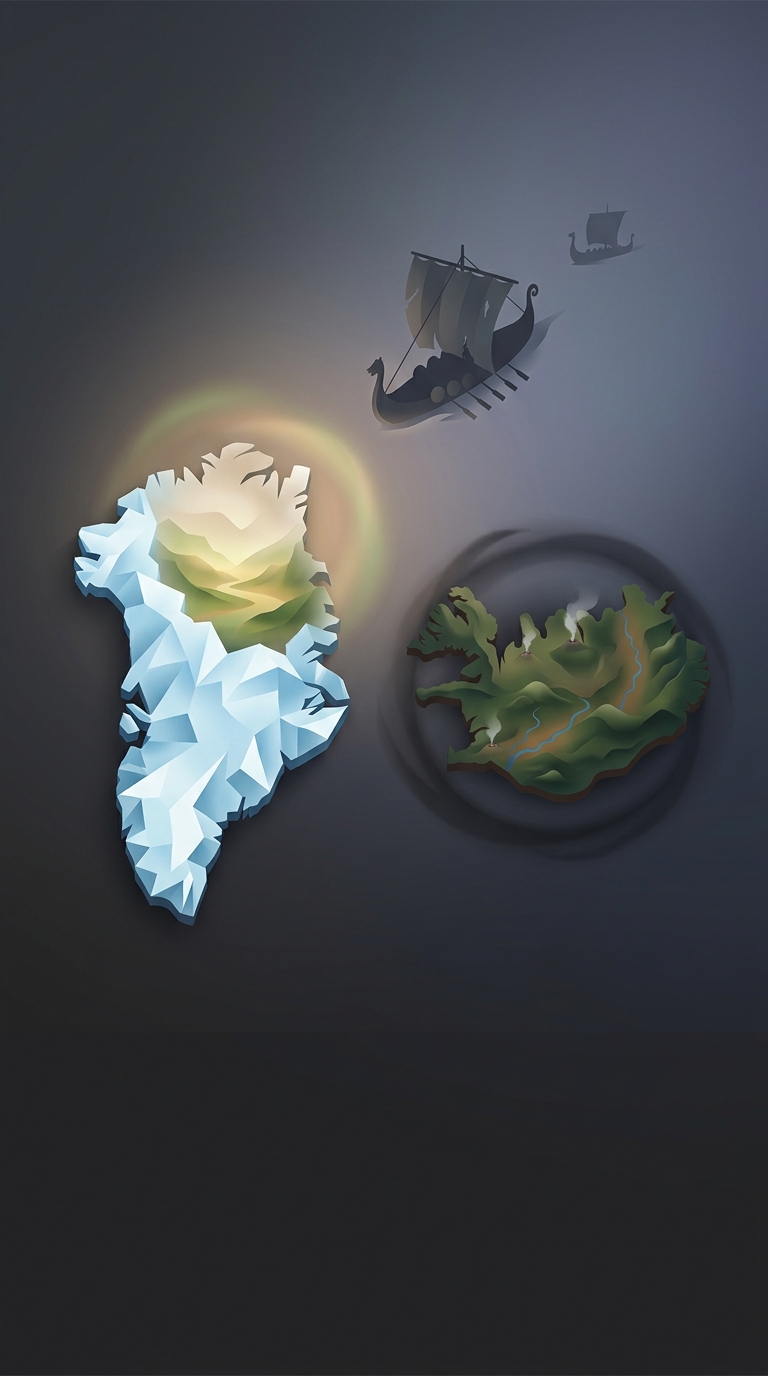
Why Erik the Red Called It Greenland
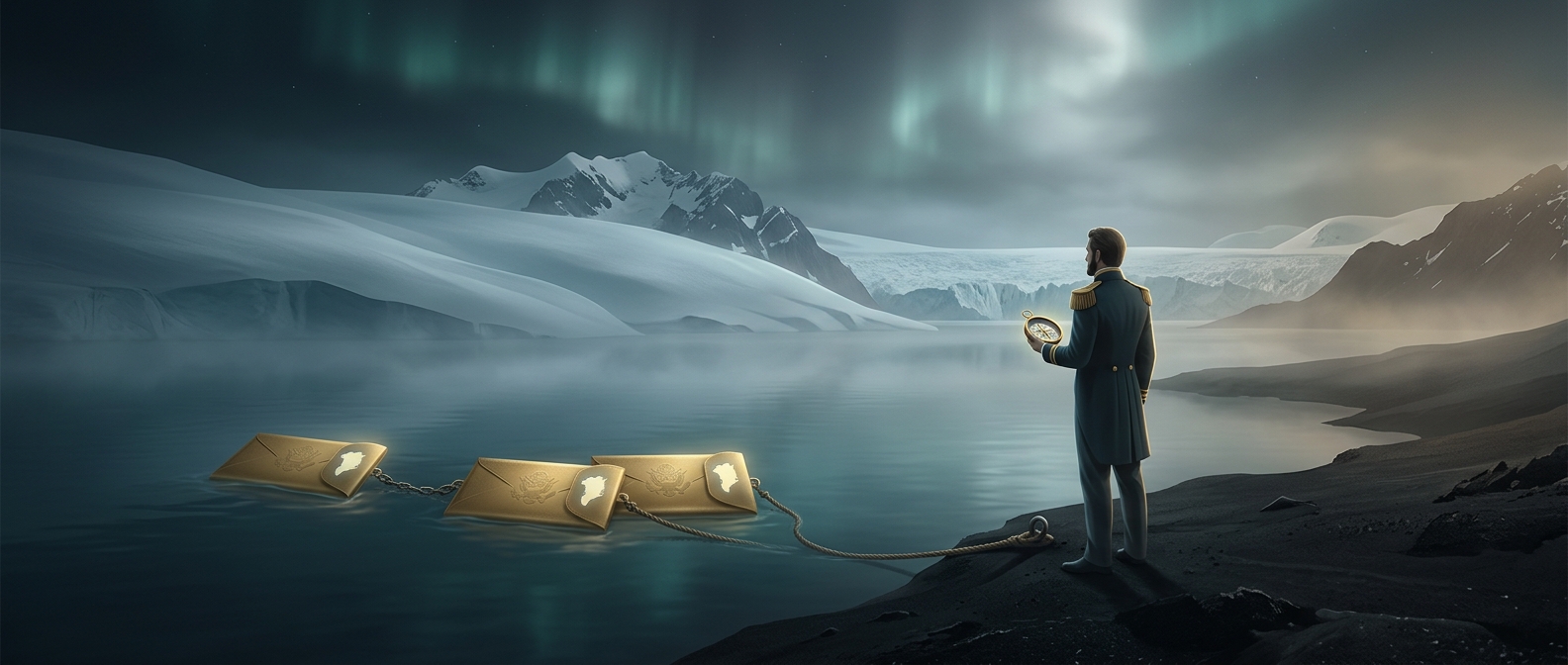
When Erik the Red reached Greenland around 982, he was exploring a place that Norse people in Iceland might actually settle—not looking at an island that was uniformly green. Most of Greenland is covered by a vast ice sheet, but the southwestern coast has ice-free fjords and valleys where grass can grow during the short summer. That inhabited fringe was the part a prospective settler would encounter first.
Later medieval accounts say Erik chose the name because he believed people would be more willing to go there if the land had an attractive name. That makes the name sound like an early recruiting pitch, but it does not establish that the island was a lush paradise or that every detail of the story is certain. A favorable name could help sell the opportunity while still describing, selectively, the coastal land where farms were possible.
The Green Was at the Edge
Norse settlers built farms in the southwestern fjords, raising livestock and growing some crops in a climate far colder than that of much of Europe. Their settlements depended on a narrow strip of usable land between the sea and the ice-covered interior. “Greenland” therefore pointed to a real feature of the settled coast, while leaving out the immense ice sheet that dominates the island.
The contrast with Iceland can be misleading, too. Iceland has green landscapes as well as glaciers, and its name is traditionally linked to an early Norse visitor’s impression of ice. Place-names were not reliable travel brochures: they could reflect a particular encounter, a strategic choice, or both. Greenland’s name may have helped persuade settlers to cross the sea, but the farms that followed had to make do with the island’s brief summers and limited habitable coast.