How an outrigger made an ocean crossing possible
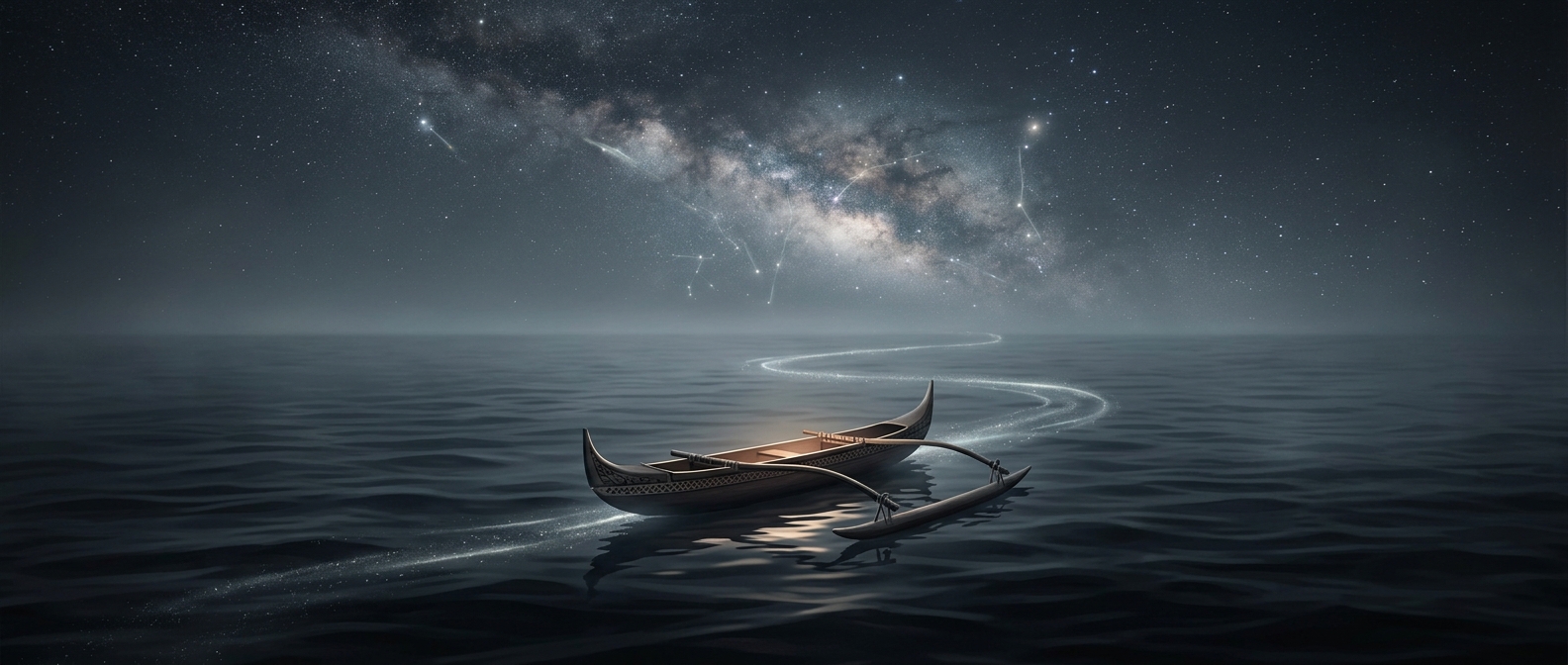
An outrigger canoe carries a narrow float alongside its main hull, joined by crossbeams. That float resists the boat’s tendency to tip when wind presses against a sail or waves lift one side. The design let sailors use a relatively slender wooden hull without relying on a heavy keel—the deep underwater structure that helps many larger ships stay upright.
The outrigger did not make the Indian Ocean calm or eliminate risk. It gave a skilled crew a more stable platform for sailing, carrying people and supplies, and managing the boat in changing conditions. Sailors still had to read the sky and sea: stars helped maintain direction at night, while winds, swells, and currents offered clues about movement and weather.
A voyage with lasting consequences
Austronesian-speaking voyagers from Island Southeast Asia reached Madagascar across the Indian Ocean. The crossing linked distant coasts that had no easy overland connection, and it brought people, language, and seafaring knowledge to the island. Madagascar’s Malagasy language belongs to the Austronesian language family, a striking trace of that connection across thousands of miles of water.
The boats’ balance mattered because an ocean voyage is not a single leap of courage: it is hours and days of keeping a vessel controllable while wind and waves act on it. The outrigger’s practical advantage was simple and consequential—it helped a wooden canoe remain upright far from shore, where there was no nearby beach to make a mistake easy to recover from.