A Fleet Built for More Than Crossing the Sea
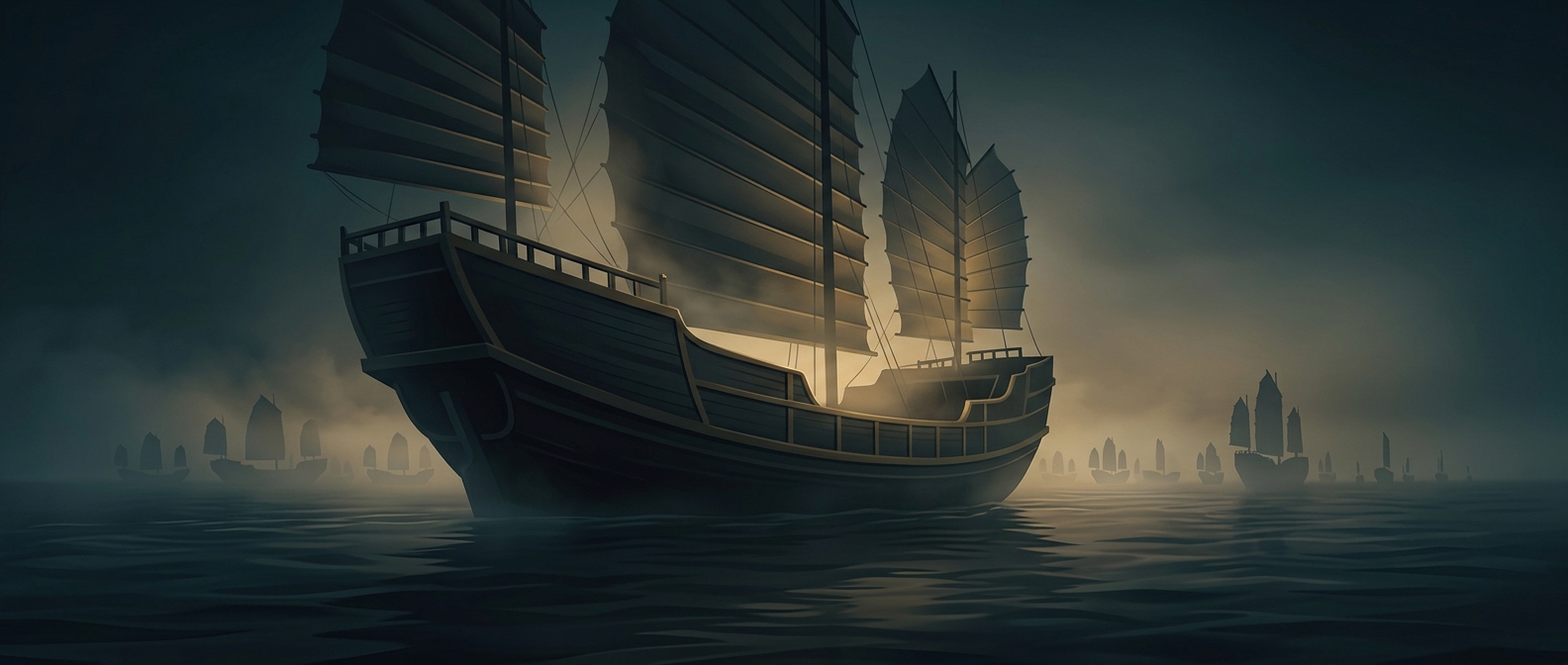
In the early 1400s, the Ming court sent fleets under the command of Zheng He across the Indian Ocean, reaching ports in Southeast Asia, South Asia, Arabia, and East Africa. These were state-organized expeditions, not small crews setting out to discover whether a route existed. Their ships carried envoys, sailors, soldiers, interpreters, supplies, and goods intended for exchange or presentation.
A fleet’s strength came from its range of vessels and people. Large ships provided room for cargo and passengers, while other ships handled tasks such as carrying water and provisions. Together, they formed a mobile network capable of keeping a long voyage supplied and of arriving in port with a striking show of Ming resources.
Diplomacy That Traveled Under Sail
The voyages supported the emperor’s diplomatic ambitions. At foreign courts and ports, the fleet could deliver official messages and gifts, receive visiting delegations, and invite rulers into relationships with the Ming court. Trade and diplomacy overlapped: exchanges of goods took place within a larger political system in which the emperor presented himself as the center of an ordered world.
That display depended on practical organization. Crews had to provision ships for weeks at sea, coordinate movement across a fleet, and negotiate with communities along the route for supplies and access. The expedition was therefore both a political statement and a demanding logistical operation—one backed by the resources of a powerful land-based empire.
The scale changes the familiar story of ocean exploration. Long-distance maritime travel was not simply a European achievement made possible by small sailing ships; Ming China had already sent enormous, government-supported fleets through the Indian Ocean, with diplomacy and imperial authority traveling alongside the cargo.