One eye stayed ready for the dark
Moving from a bright deck into a dim hold could leave a sailor nearly blind for a while. Eyes do not switch instantly between daylight and darkness: in low light, the retina gradually becomes more sensitive, a process called dark adaptation. The light-sensitive cells responsible for seeing in dim conditions need time to recover after exposure to bright light.
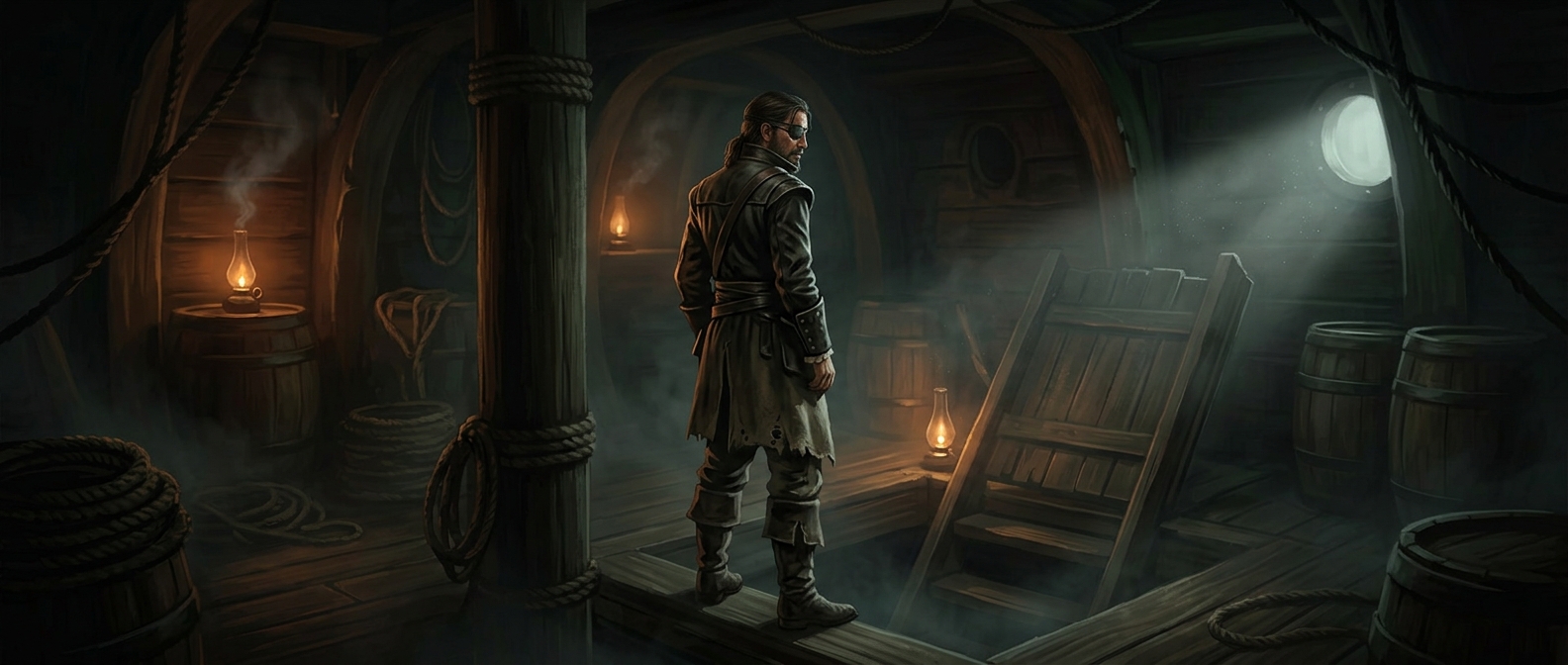
A patch over one eye could shield it from that exposure. Once below deck, the wearer could uncover the sheltered eye and use it while the other adjusted to the gloom. The patch would not make the eye adapt faster; it would help preserve the adaptation it had already gained.
A small advantage in a ship’s dim spaces
A ship’s hold, cramped passageways, or a dark cabin could be hard to navigate after working in sunlight. Being able to see sooner might help a sailor move around or find something without waiting for both eyes to adjust. The trick is simple: keep one eye out of the light, then switch which eye does the seeing when the surroundings change.
That makes the eye-patch explanation a practical possibility, rather than proof that every pirate wore one for this reason. Its appeal lies in the everyday problem it solves: a bit of shade could leave one eye ready for the darkness below deck.