Why a Pigeon’s Head Seems to Move in Reverse
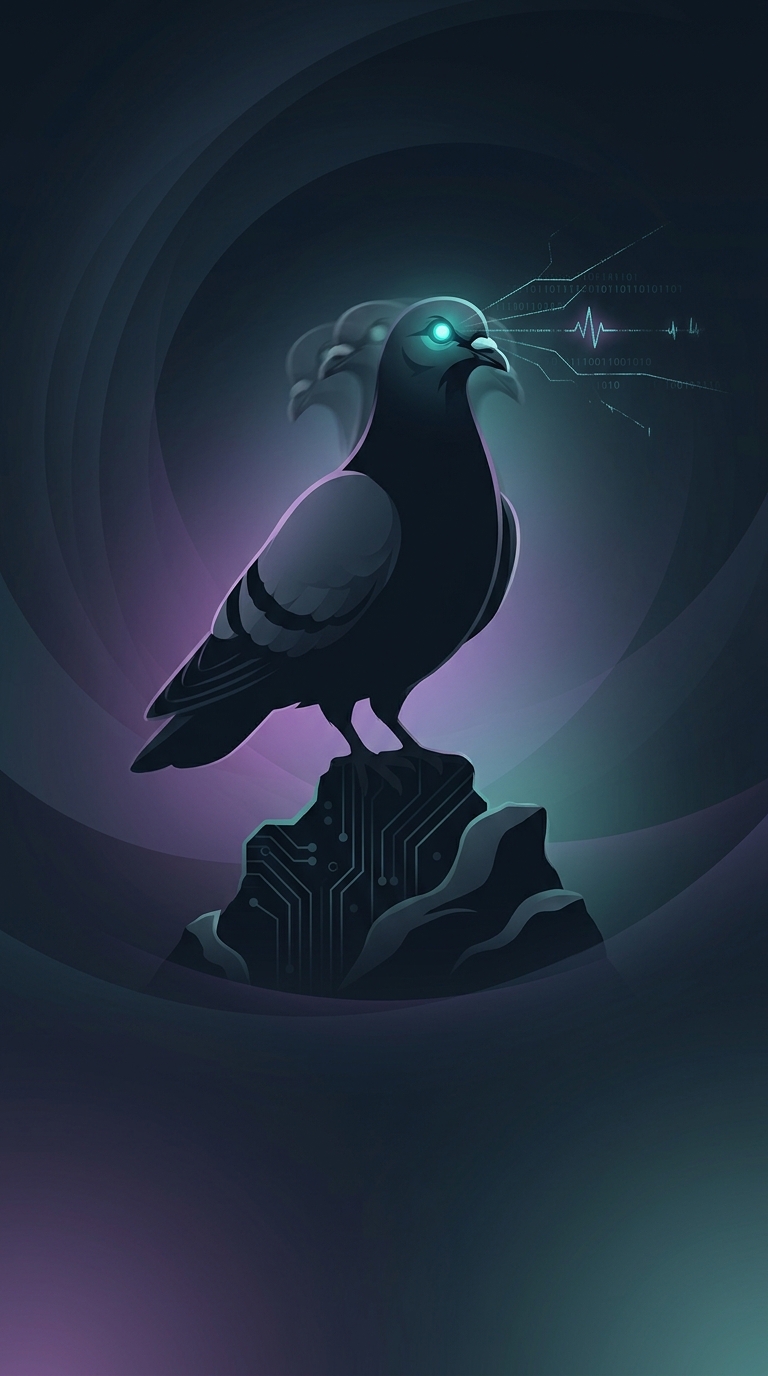
The motion looks like a series of sharp nods, but it is not an aggressive gesture. A walking pigeon uses its head movements to keep the world visually steady while its body moves beneath it.
Each step has two parts. First, the body advances while the head briefly stays in place. Then the bird thrusts its head forward to catch up and holds it steady again. Because the head remains nearly still during the first part, it can appear to slide backward relative to the body—even though the pigeon is walking forward.
A Moving Head That Helps the Eyes
This pattern is called head-bobbing, though the “bob” is mostly a quick repositioning between pauses. Pigeons rely heavily on vision, and their eyes do not move around in their sockets as freely as human eyes do. Holding the head still for a moment helps keep the scene from sweeping across the retina—the light-sensitive tissue at the back of the eye—while the bird walks.
The result is a stop-and-go view: stabilize the image, advance the head, stabilize again. That can help the pigeon spot food, judge its surroundings, and keep track of nearby movement as it crosses uneven ground. The seemingly abrupt motion is therefore less a display of temper than a practical way to see clearly while walking.