How Crows Learn to Recognize a Threatening Face
A crow can connect a person’s face with a dangerous encounter and remember that association. That matters because crows do not rely only on a quick, individual reaction: they live in social groups, watch one another, and can learn from what other birds do.
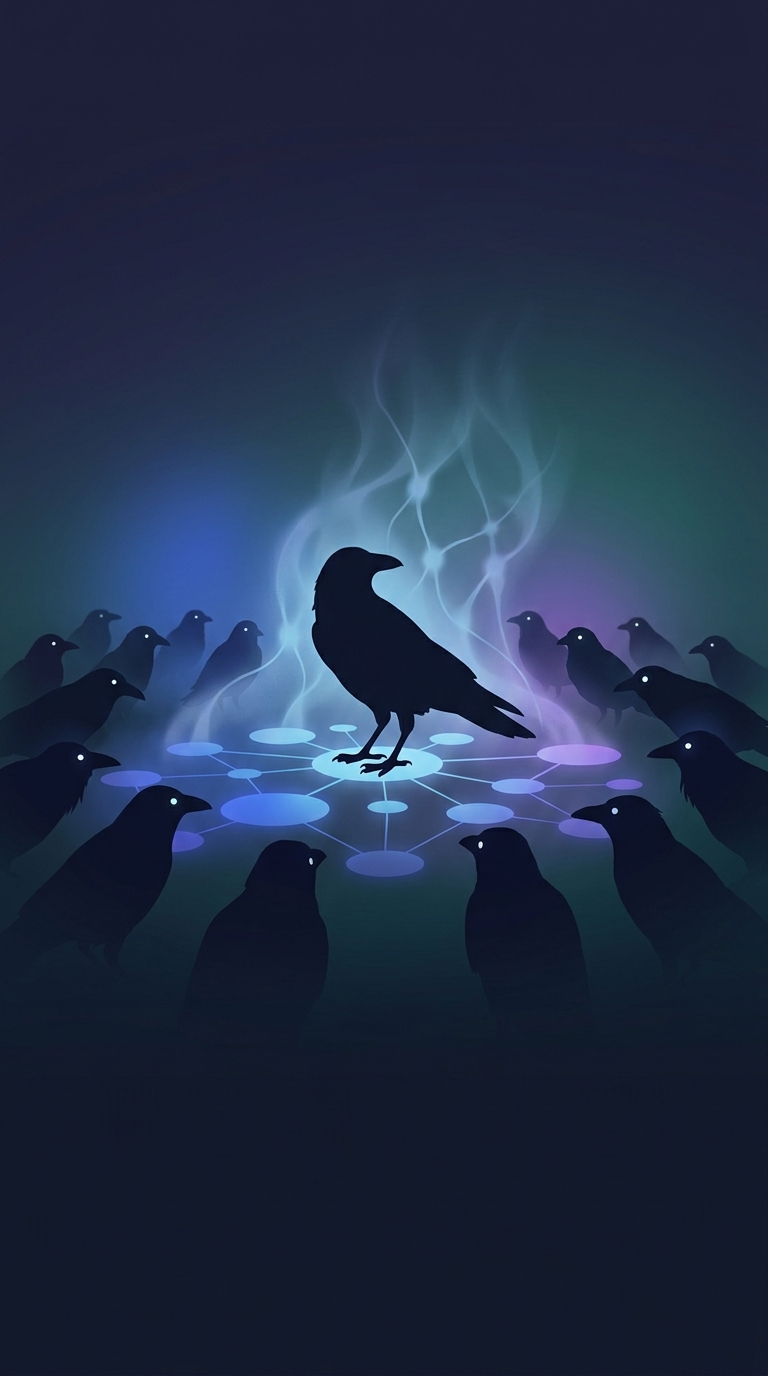
If a crow sees someone as a threat, it may call loudly or gather other crows nearby. Those birds can respond to the alarm even if they did not witness the original encounter. By noticing which person the group is reacting to, they may learn to treat that face cautiously too. The warning can spread through a flock and, over time, to younger birds.
A Learned Warning, Not a Grudge
This behavior is better understood as risk management than as human-like hatred. A face is a useful clue: it helps a bird recognize a person associated with danger without having to repeat the risky encounter. Crows can also distinguish familiar people from strangers, so recognition is not limited to an enemy-like category.
The result can look personal. A person who once threatened a crow may later draw calls or attention from birds that were not present at the time. But the lasting response has a practical cause: crows remember, communicate alarms, and learn socially. One bird’s experience can become information the rest of the group uses.