A continent built from rules
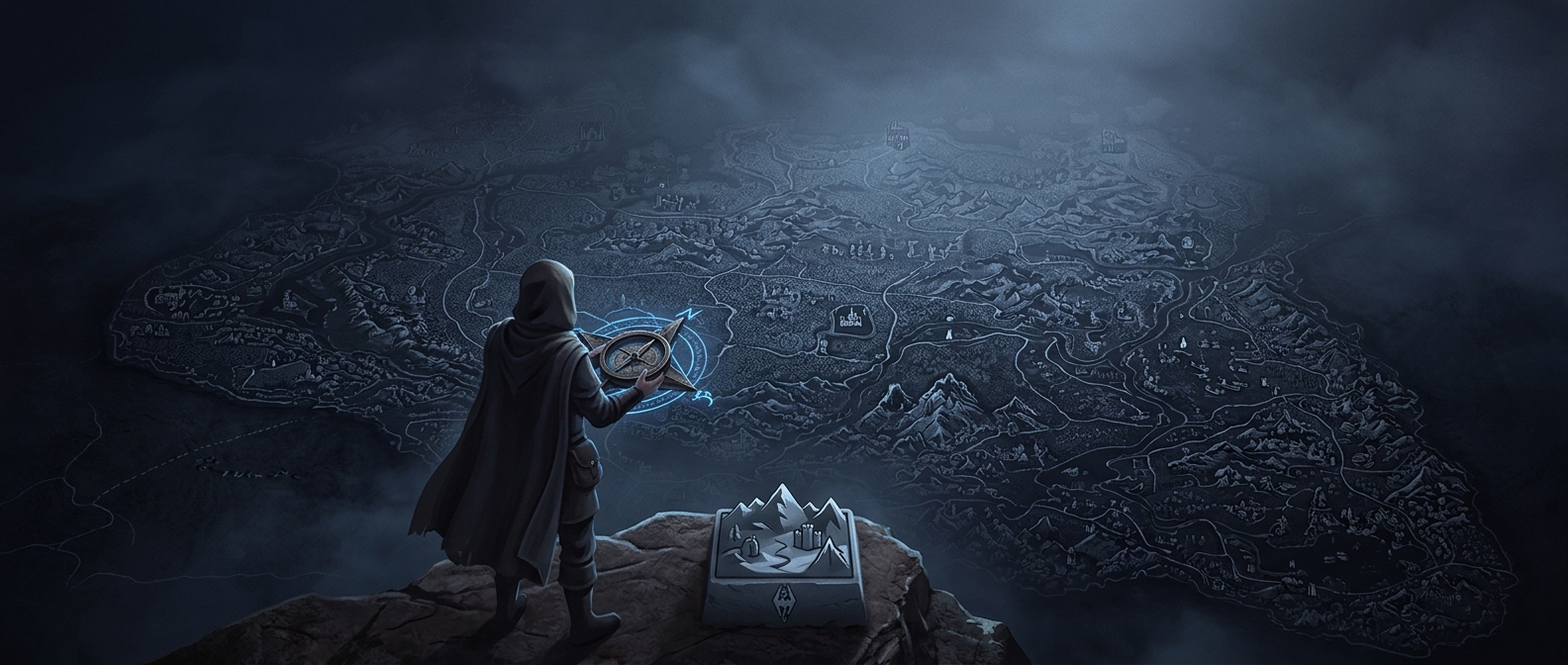
A game world on this scale could not be filled by designers placing every hill, road, and building by hand. Daggerfall instead used procedural generation: software assembled much of the landscape from rules and reusable patterns. The result was a map that felt geographically immense without requiring an equally immense team to author every patch of ground.
That did not mean every place was interchangeable. The system produced terrain and settlements across the map, while the game’s quests and dungeons gave players specific destinations. The contrast mattered: broad stretches could serve as connective landscape, and selected locations could carry the encounters and story beats that made an expedition worthwhile.
Vastness changes how you travel
At this scale, walking everywhere would turn travel into a major part of the game. Daggerfall therefore offered fast travel, letting players cross long distances through an abstracted journey rather than rendering every mile as play. The map’s size became something players could plan around—choosing destinations and routes—rather than a demand to inspect every field.
The tradeoff was that sheer area could not guarantee constant discovery. Much of the world was generated space between points of interest, so its scale conveyed the feeling of a kingdom more than a promise that every corner held a handcrafted surprise. The memorable achievement was making that immense distance playable at all: the landscape could suggest a whole region, while the game concentrated its authored experiences where players were most likely to find them.