How hot water leaves gold in rock
Gold-bearing veins begin when hot water moves through fractures deep underground. The water is not carrying tiny visible flecks: under the right chemical conditions, gold atoms are dissolved in it, much as sugar dissolves in water. Heat, pressure, and dissolved chemicals help keep the metal in this mobile form.
A change in conditions makes the deposit
As the fluid travels, it can cool, lose pressure, mix with other water, or react with the surrounding rock. Any of these changes can alter its chemistry enough that it can no longer hold as much dissolved gold. The excess gold then precipitates—meaning it leaves the fluid and becomes solid—on the walls of the crack or among minerals growing there.
Quartz often forms in the same fractures because the fluids also carry dissolved silica, the material that makes up quartz. As the water’s conditions change, silica crystallizes alongside gold and other minerals. Repeated pulses of fluid can build up a seam in stages, adding new mineral layers to an older fracture.
The vein records an underground route
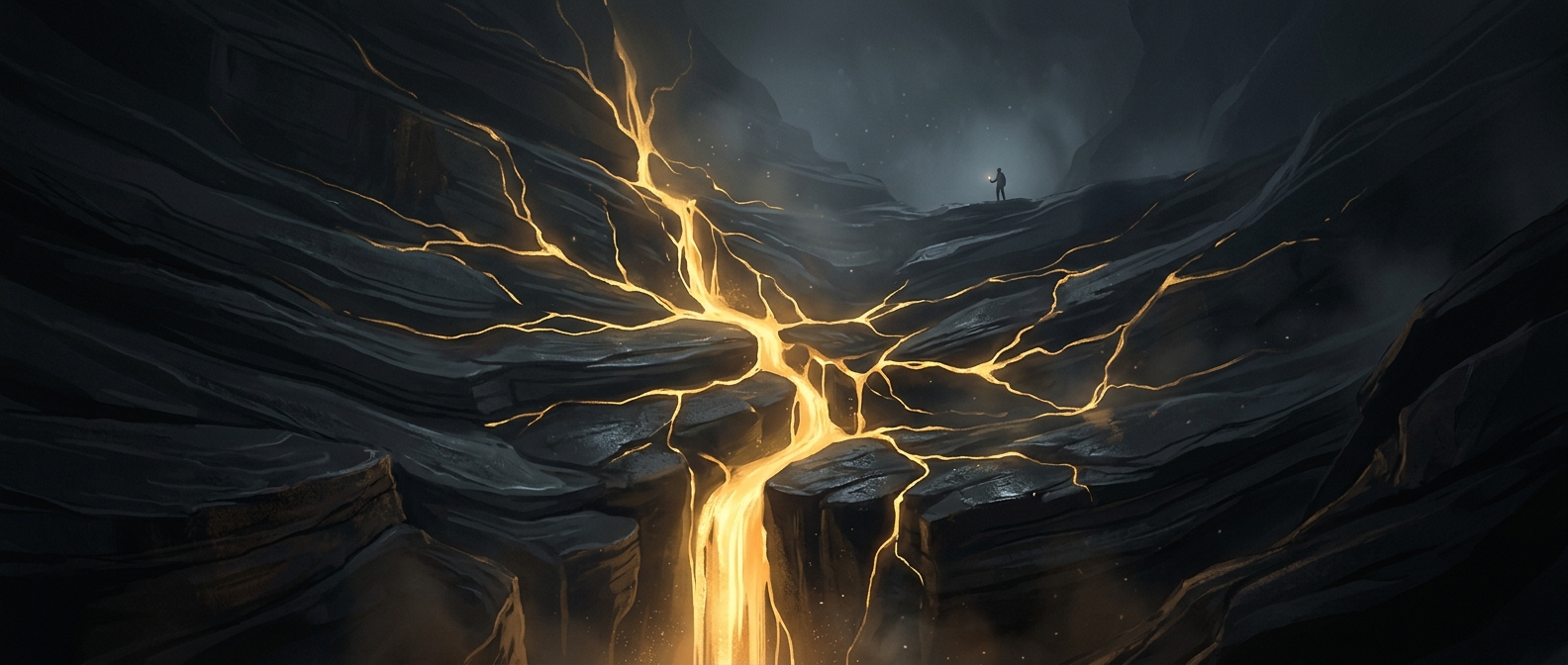
A vein is therefore not simply a gold-filled gap. It is a mineral record of fluid moving through rock and depositing material as its conditions changed. The gold may be spread through the vein in small grains or concentrated in particular bands, so a quartz seam can contain little gold—or, where the chemistry and flow favored deposition, much more. Its visible shape marks a former pathway that once carried hot, mineral-rich water.