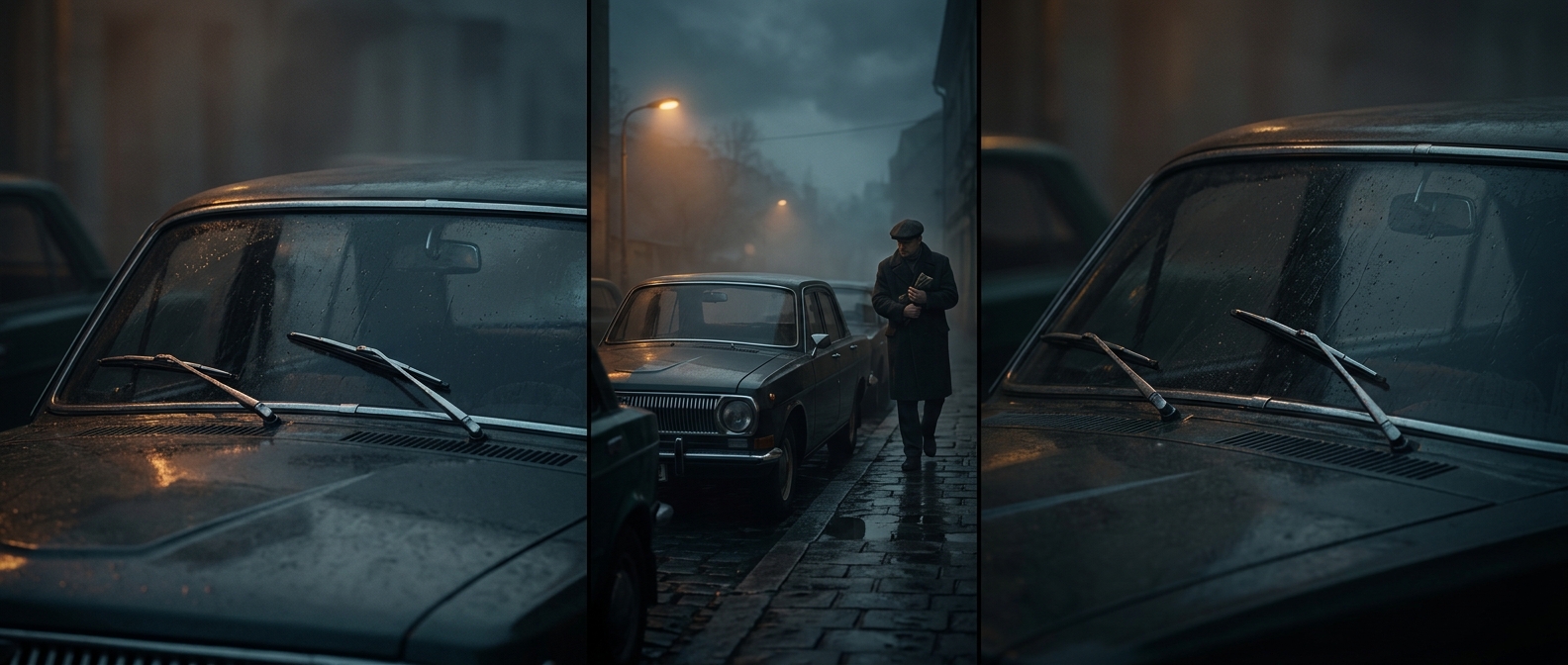
Why old cars became projects
Hot rodding was already established before the 1950s, but the postwar decade helped turn it into a visible youth culture. A used car could be more than a way to get somewhere: it was a machine its owner could take apart, improve, and make unmistakably personal. For teenagers with limited money, a worn car and a home garage offered a hands-on alternative to buying something new.
The work was practical as well as expressive. Builders might change an engine’s components to get more power, remove unnecessary weight, or adjust the car’s setup for acceleration. Those changes involved trial and error: a modification that sounded promising could also make the car harder to control or less dependable. The garage became a place to learn mechanical skills by doing the work, often with friends helping and trading advice.
Performance became a public identity
A modified car announced its owner before the driver said a word. Paint, engine choices, and other visible details turned similar secondhand vehicles into distinct creations. That personalization mattered because a car gave young people mobility—and a way to claim independence from adults—while its appearance and sound made that independence visible.
The culture also had a competitive side. Drivers tested their machines against one another, and showing off a build could be as important as driving it fast. This was not simply a story of rebellion: it depended on tools, money, mechanical knowledge, and places where cars could be worked on and displayed. But the appeal was clear. The car’s owner was not just choosing a vehicle; the owner was helping make it.
From driveways to car culture
As hot rodding spread, clubs, events, and car shows gave builders ways to compare work and share ideas beyond the neighborhood. That helped carry a do-it-yourself practice into a broader scene. The lasting legacy is visible whenever a car is treated as a project and a personal signature, not merely as transportation.