The carousel’s direction made the ring easier to grab
On many traditional carousels, riders could play a ring-catching game while the ride turned. A dispenser beside the track held a row of metal rings, usually with a brass ring among them. Riders tried to snatch a ring as they passed; catching the brass one could bring a prize or another turn.
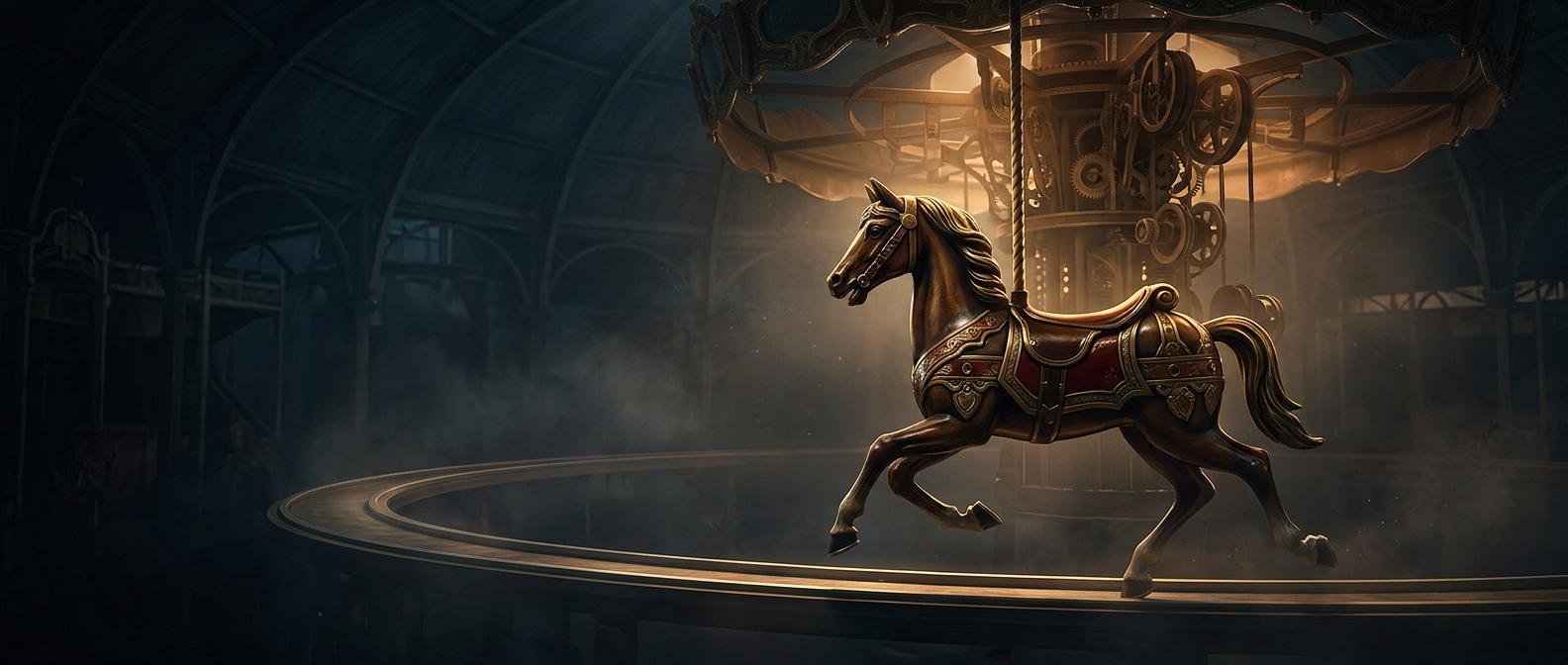
The arrangement worked naturally for a rider using the right hand when the carousel traveled counterclockwise. As a horse moves around the circle in that direction, its right side faces outward—toward the trackside dispenser. The rider can lean out and reach for a ring without stretching across the horse or reaching toward the carousel’s center.
A small design choice with a lasting effect
The direction of rotation was not a mechanical necessity: a carousel can be built to turn either way. But once the ring dispenser and the riders’ reach were arranged around counterclockwise travel, reversing the ride would put the target on the less convenient side for right-handed riders. The game therefore helped make counterclockwise rotation a familiar convention on carousels that included it.
That practical detail is easy to miss when watching the painted horses go by. Their direction can preserve the logic of an old amusement: the ride carries a rider past a target positioned for a quick grab with the right hand.