The smell of a working contact
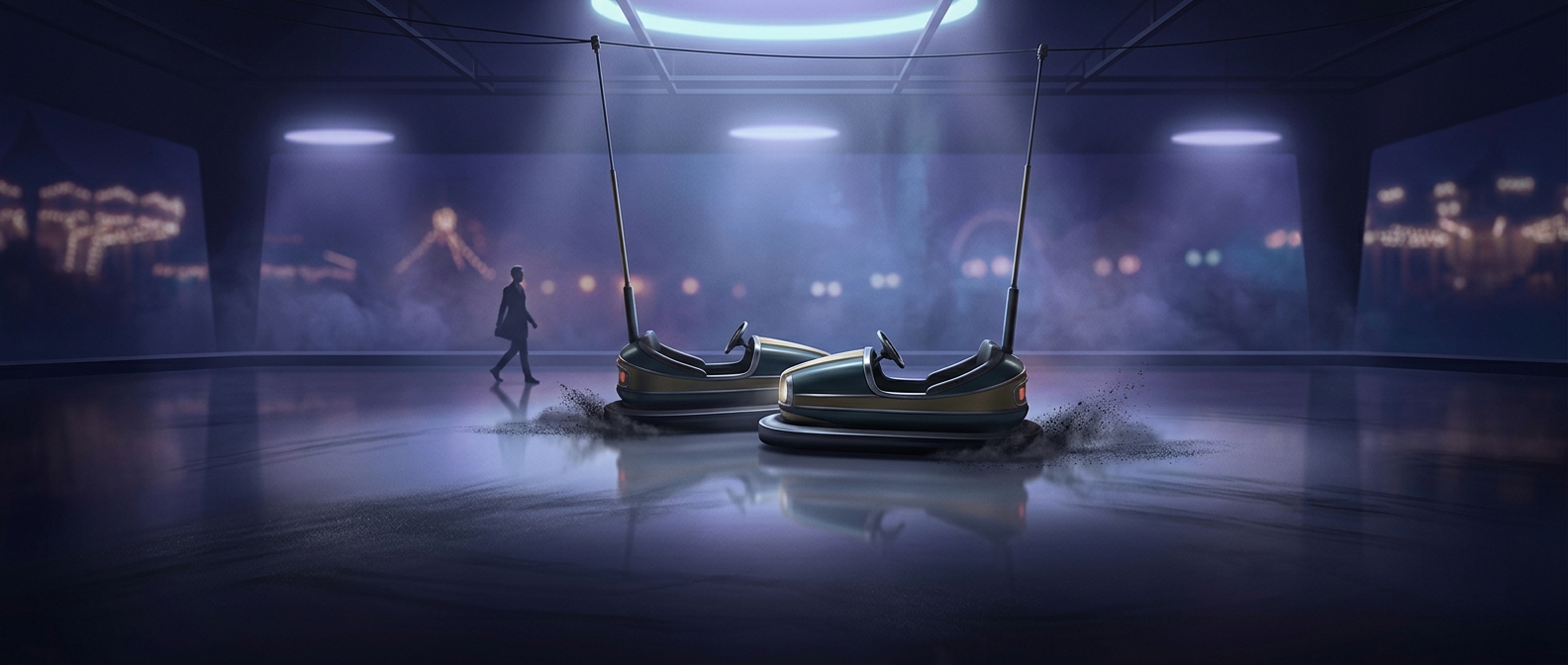
Bumper cars need a steady flow of electricity while they jolt, turn and slide across the floor. In systems that draw power through the floor, the steel plates are part of the circuit: a contact beneath each car picks up current as it moves over them. The connection has to keep working even as the car bounces and the surfaces rub together.
Operators spread conductive graphite powder over the plates to help that sliding contact. Graphite is a form of carbon that conducts electricity, and its fine particles can reduce rough, inconsistent contact between the moving car and the floor.
Heat and tiny sparks make the telltale odor
The contact is not perfectly smooth. As a car crosses plate edges or jolts over the floor, electricity can momentarily jump a tiny gap, creating a small spark, or arc. Rubbing and repeated electrical contact heat the graphite and the surfaces around it. That hot, dusty electrical mixture is what people notice as the familiar metallic smell; it is not the scent of steel itself.
The powder is useful precisely because it helps the current keep flowing, but the contact still works under friction and electrical stress. Some graphite is worn away or heated in the process, adding to the dusty, burnt edge of the odor.
So the smell is a sensory clue to the ride’s hidden mechanism: beneath the clatter and collisions, each car is continually making and remaking an electrical connection with the floor.