Why Fury Road Was Planned in Pictures
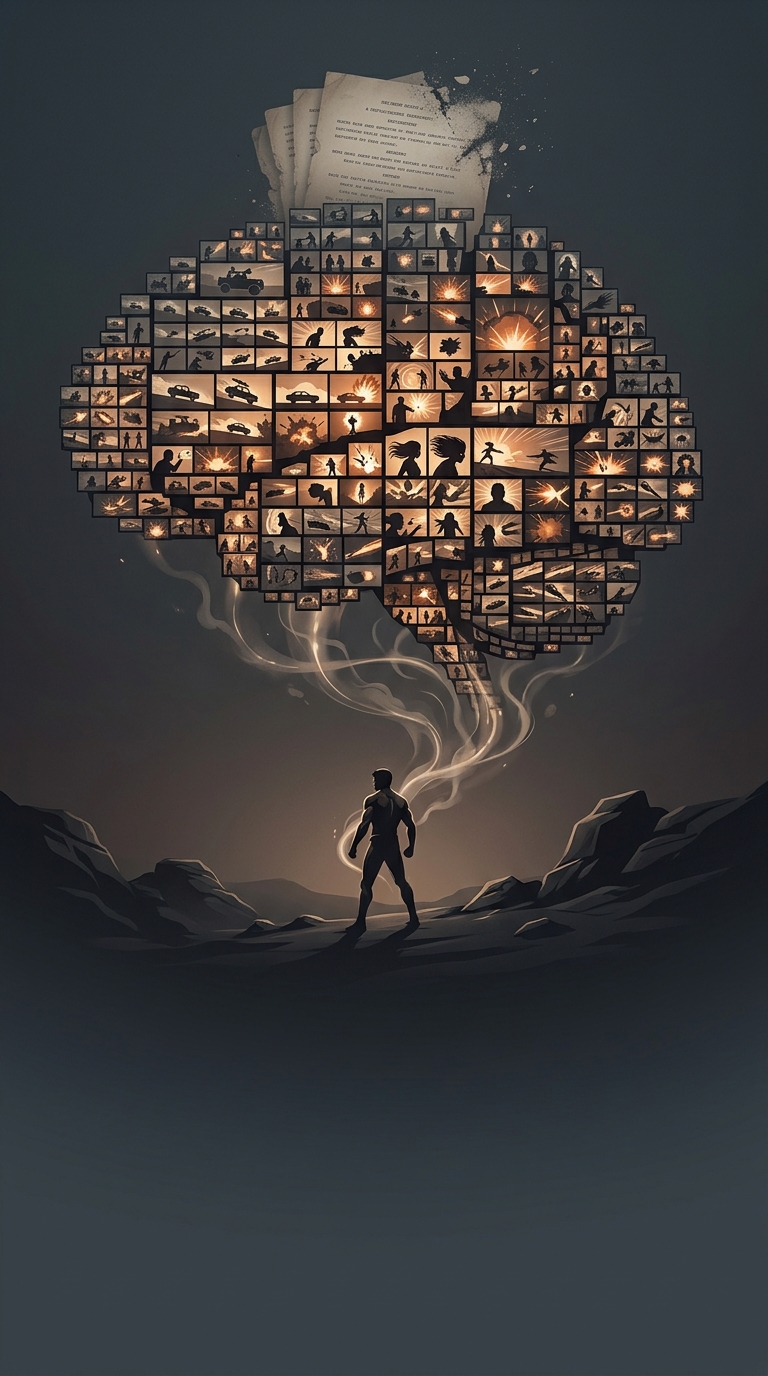
A conventional screenplay organizes a film around dialogue, scene descriptions, and action written in sequence. George Miller’s approach to Mad Max: Fury Road began instead with thousands of storyboard panels: drawings that show what the camera sees, moment by moment. That choice suited a story whose meaning is carried largely by movement—vehicles chasing, colliding, turning back, and surging forward—rather than by extended conversation.
The panels served as a visual blueprint for the chase. They let Miller map how one beat would lead into the next and how characters and vehicles would relate across the frame. For a sequence involving many moving elements, that planning matters: a stunt that looks thrilling in isolation may be confusing if the audience cannot tell who is pursuing whom or where the danger is coming from.
A Blueprint, Not a Script for Every Moment
Working from storyboards did not mean the crew had no plan. The drawings offered a shared reference for what the action needed to communicate, even without a traditional screenplay guiding each scene. Actors could see the physical situation their characters faced; camera and stunt teams could coordinate around the intended movement; and the director could keep a complicated sequence pointed toward the same visual goal.
Nor could drawings dictate every detail of a real desert shoot. Performers, vehicles, cameras, and stunts had to work in physical space, where timing and conditions could affect how a planned beat played out. The panels made the film’s broad action legible before filming, while the production still had to turn that design into workable shots.
Why the Method Fit the Film
The result is a movie whose action feels unusually continuous: each maneuver changes the situation and sets up the next. Storyboarding on this scale shifts much of the storytelling work into the planning stage. Instead of relying on dialogue to explain the chase, the film uses the placement and movement of bodies, machines, and the camera to make the stakes readable. The drawings were not just illustrations of the finished movie; they were the map that helped a sprawling physical production tell its story through motion.